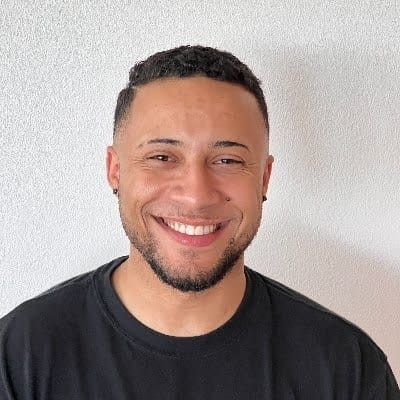
Could you start from the beginning and explain to us what happened?
I was on my way to becoming a professional footballer when my life took a drastic turn. I was fully committed to my goal of playing for the Young Boys in Bern – a club known for their distinctive yellow jerseys. At 23, I was living my dream, but on one fateful Friday evening everything changed.
I went out with friends in Zurich and after a night of partying, dancing in the club is the last thing I remember. The next moment I woke up in the hospital. I was in terrible pain and realized I had lost my legs. I learned from the doctors that I had been in a train accident. I had walked into a railway tunnel while very drunk and a train had passed, resulting in serious injury.
My friend wasn’t with me that night; I was alone. I’ve seen footage of myself stumbling around, but I can’t remember anything from the time I entered the tunnel to the accident itself. When I woke up in the hospital, my parents and friends were visibly upset. I was disoriented and confused at first, but quickly realized the seriousness of my situation.
The doctors told me I had been clinically dead for 20 minutes and was incredibly lucky to be alive. Even though I lost my legs, I remained optimistic and focused on the fact that I was still alive and thinking clearly. It took about a week for me to fully process the gravity of what was happening and adjust to my new reality by managing practical challenges like getting around and completing daily tasks.
Your story is incredibly moving, but I want to understand a little more about what happened. Did the train driver see you on the tracks and did he have a chance to stop? How quickly did the emergency services arrive after the accident and take you to the hospital? How long were you unconscious when you woke up? Was it just a few hours or were you in a coma for days?
When the accident happened, the police actually came to my parents’ house and warned them that I might not wake up for days, weeks, or even months. However, I woke up the same day, which was a surprise to her. I lost a lot of blood as you can see in the photos and was taken to the hospital. When I came to, I didn’t remember anything.
You wake up and learn about the accident and your injuries. Losing both legs is a huge shock, and losing even a small part of yourself can be overwhelming. How could you remain so calm and not collapse under the weight of such a great loss?
To be honest, I wasn’t exactly calm at first. My first reaction was more like, “Okay, what’s next?” I knew life had to go on and I’m very solution-oriented, so I immediately started thinking about how I could adapt. It took about a week for me to accept that my legs were gone for good.
I started researching others who had similar experiences. I found two people who inspired me — a man in the US with no legs and another who had no arms and was a motivational speaker. When I saw their success, I thought, “If they can do it, I can do it too.” Unlike them, I wasn’t born with these challenges, but I realized that I could still lead an active life. Exercising helped me regain my confidence as I was still able to move around and do things on my own, which made me believe I could start my life over.
How long did it take you to get out of bed, move around, and feel ready to leave the hospital?
I spent three weeks in the hospital and then six months in rehab. I was back home in June or July 2019. Surprisingly, I started my business just a week after the accident and used the time I had to be productive despite the pain. Within two weeks I was able to move around a little — like going to the toilet on my own — and started light fitness training two and a half weeks later. Staying active was crucial for me to maintain my physique and self-confidence, which promoted my recovery and the success of my business.
What about football? There must have been days, if not weeks, when you thought, “My dream has been taken away from me.”
Yes, I thought so, but I quickly realized that even if I had continued playing football until I was 30 or 34, especially in Switzerland, I would still have to find a new career afterwards. So I decided to use this time to build something that would secure my future and no longer require me to work in the traditional sense.
Of course, as a businessman, I’m always working, but it’s different. Sometimes I miss football — it was the love of my life — but I accepted that it was over and focused on what else I wanted to achieve.
How did people react? What about your family, your friends and your ex-girlfriend? Did their behavior or the way they saw you change after the accident?
They didn’t treat me differently because I took away their fear by reassuring them: “I’m here, I can talk, everything is fine.” At the beginning I needed some help because I couldn’t move much , but they behaved no differently. They saw that I was still the same person. People who knew me treated me normally because I behaved normally, and that made everything feel natural and comfortable. That was the beauty of it.
You mentioned that you are no longer friends with the person you were with that night. Did the accident have something to do with it?
No, it has nothing to do with the accident. He was just a part of my life back then, someone I went to parties with. I’ve since moved on and don’t enjoy parties as much anymore — unless there’s a business success to celebrate. I have distanced myself from many people from that time because you need to move on and surround yourself with those who align with your current goals. It’s not personal against him; It’s all about evolving and letting go of things that no longer fit.
How can people looking at your situation improve their mindset, become more resilient and stronger? I recently interviewed someone with a similar story – a woman who escaped sex trafficking, faced numerous hardships, and eventually became a personal trainer and motivational speaker. Despite her harrowing experiences, she overcame them and built a positive life.
How have you grown through your challenges and what can others learn from your journey to apply to their own lives?
Absolutely. I believe that anyone can overcome challenges by facing the harsh realities of life and changing their mindset. Nothing will change unless you change your own thinking. If you’re unhappy with your life, it’s often a reflection of what’s going on in your head.
You must take responsibility and realize that you can change your situation by changing your perspective. I’ve done it myself, so I know it’s possible. People often get bogged down by minor problems, but even after losing my legs, I rebuilt my life and succeeded. It’s about maintaining a mindset that refuses to accept defeat.
Football taught me that you always keep going, no matter what happens. I wish more people would hold themselves accountable and adopt a tougher mindset to achieve their goals.
You mentioned two key ideas that resonate with me: taking responsibility for everything in my life and only focusing on what I can control. I’ve faced challenges myself, like going bankrupt at 27 but rebuilding myself after that loss.
However, I understand that losing something permanent, such as your own legs, is very different than losing money, which is replaceable. This illustrates the varying degrees of loss and resilience.
I was in a similar situation with my money. When dropshipping, especially at my scale, you often have multiple companies and bank accounts. I made the mistake of consolidating everything into one account, which ended up getting banned. With around $2 million in this account, it was difficult to prove ownership even though it was mine. This resulted in serious bankruptcy and $300,000 in debt to American Express.
Interestingly, I met my girlfriend at this time and she didn’t know about my financial difficulties. I knew that if I completed this challenge I would come out stronger, and that’s exactly what happened.
And where is the money now? The money in the confiscated account is simply gone. You’ll never get it back?
In Switzerland it was in a personal bank account. Maybe I’ll get it back eventually, but like I said, I’m not stressing about it because I have the skills to recover.
Tell me about your everyday life and how it has changed or how you have managed to keep things as normal as possible. For example, you mentioned that you enjoy traveling and moved from Switzerland to Dubai. How has losing your legs affected these aspects of your life? Do you still feel like you’re living as normally as possible?
Even though I no longer play soccer, I stay active in the gym and continue to travel and socialize. Interestingly, losing my legs has brought with it some unexpected benefits. For example, I can skip the lines at places like Disneyland and get on the flight earlier. These benefits have had a surprising impact on my daily life and made some aspects of travel and business easier. My focus now is on self-improvement and surrounding myself with positive people while I have moved away from activities such as excessive alcohol consumption. Overall, I find that being in a wheelchair has opened up new possibilities and made life very enriching, especially in places like Dubai, where my situation often leads to conversations and contacts.
Do people you meet often ask about it, or do you feel like they avoid the topic out of politeness?
In Dubai, people tend to ask directly about my situation, unlike other places where they might ask staff or avoid the topic. I agree with this and usually share my story openly. This often leads to meaningful connections and opportunities that I may not have had otherwise.
What does the future look like?
I focus on continuous self-improvement – becoming the best version of myself, expanding my knowledge, and improving my relationships and business. My goals include expanding my network, increasing my income, and seeking funding for a new brand. I also want to start mindset coaching to show people that if I can overcome challenges, they can too. My approach will be based on real experiences, unlike some trainers who have not had major problems.
Additionally, I plan to launch a sports brand called “No Limit,” which reflects the idea that our mindset knows no limits. I have a clear vision for these projects, but realize that plans can change unexpectedly, be it a relocation or a change in my business strategies.
How do you imagine your coaching program? Will it include one-on-one sessions with individuals?
I would prefer to offer individual coaching because this brings the greatest benefit. While principles and frameworks can be shared in courses, face-to-face interactions offer the best chance of success. In e‑commerce, for example, courses can be quick and provide information in a short amount of time. However, mindset coaching requires a longer commitment, often lasting six months to a year, as it brings about profound, lasting changes. It is a continuous process that varies from person to person. I find real-time, face-to-face interactions to be the most rewarding and allow me to directly see and support clients’ progress.