Bramley, a picturesque Surrey village, is the unfortunate poster child of a modern disease plaguing Britain: the disappearance of accountability.
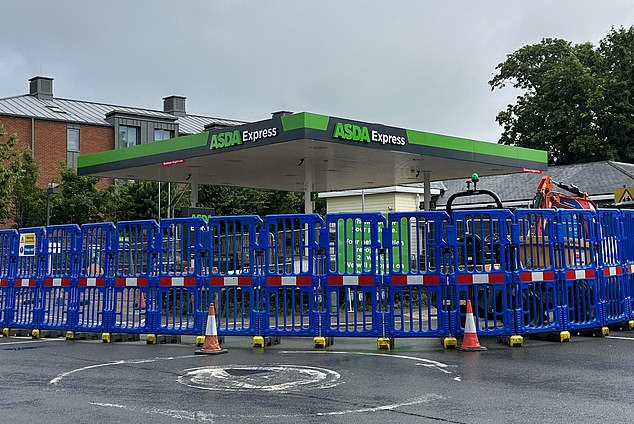
What started as a mysterious stench in the basement of a pub has turned into a full-blown environmental and bureaucratic disaster, with petrol seeping into the earth and local authorities shrugging their shoulders. A petrol station once owned by the Co-op and now run by Asda has been leaking fuel for years, causing significant damage to the environment, residents and their livelihoods. But the most disturbing part of the saga? Nobody wants to take responsibility.
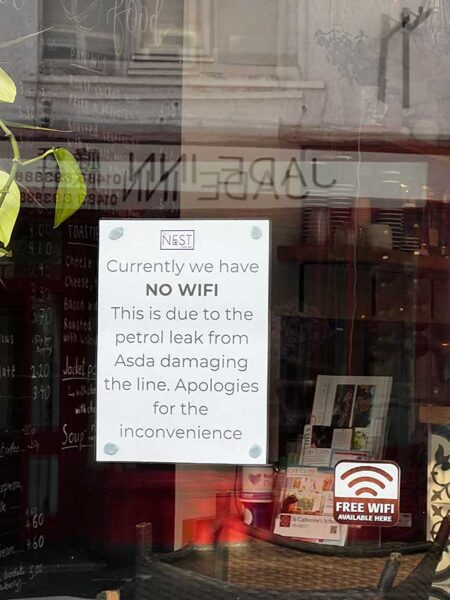
To outsiders, the story of Bramley’s suffering reads like a Kafkaesque nightmare. A broken pipe beneath the Asda forecourt leaked fuel into the village’s water system, contaminating supplies, killing fish and requiring pipe replacement. Since May, 600 households have no longer been able to drink their tap water safely. Thames Water is doing what it can, but residents are leaving behind a village scarred by constant roadworks and disrupted shops, while their homes may now be sitting on toxic petrol levels. Your concerns about property values seem to be falling on deaf ears.
Asda, the petrol station’s current owner, has masterfully distanced itself and described the problem as “historic”. The supermarket chain is now majority owned by private equity giant TDR Capital, a fact that only reinforces the feeling of faceless corporate negligence. In the meantime, Surrey County Council is handing responsibility to Waverley Borough Council, which claims no power to intervene. The Environment Agency remains silent, citing an ongoing investigation, while the UK Health Safety Authority insists its role is “advisory rather than regulatory”.
Asda chairman Lord Rose, who it was announced this week will succeed Mohsin Issa, told a residents’ meeting in the village there would be “no quick fix”.
For the residents of Bramley, this constellation of authorities, councils and businesses theoretically exists to protect them. But when their small village fell into crisis, everyone pointed the finger to the other side, leaving the villagers confronted with a troubling reality: When something goes wrong, no one is willing to take responsibility. Nor is this just a local problem, but a much wider problem in Britain today.
Dan Davies examines this abdication of responsibility in his book The irresponsibility machinewhich paints a bleak picture of how large systems are structured to avoid accountability. The Kafkaesque dance of passing the buck seen in Bramley is a perfect example of what Davies calls a “responsibility sink” – a place where decision-making is so fragmented that no one is to blame if something goes wrong. Bramley has unwittingly become a symbol of this modern plight, in which sprawling bureaucracies and corporations have lost the ability, or perhaps the will, to respond to human problems with anything other than indifference.
The Bramley saga is not just an unusual event; It is the result of a long-standing trend toward irresponsibility. This mindset began in the early days of corporate structures, when limited liability allowed investors to reap the rewards of risk without having to bear the full consequences of failure. Davies explains that this made sense if the risk was spread among individual shareholders, like a widow investing her savings in a railway company. However, in today’s world, private equity giants and multinational corporations benefit from this protection — they are shielded from blame if something goes wrong.
So what happens when the system becomes so unwieldy that the feedback loops between action and consequence completely break down? For Bramley residents this means having to navigate a maze of authorities and authorities, none of whom appear to have any real interest in solving the problem. Companies like Asda, which are backed by private equity firms, like to claim that the problem predates their ownership, leaving villagers frustrated and feeling abandoned. It’s a game of passing the package where there are no winners, only losers.
Davies points out that systems designed to deal with the complexities of the modern world often break the direct link between decision-making and responsibility. As organizations grow and processes become more industrialized, the people within them lose their sense of agency. It’s not that no one cares — it’s that they operate within a framework designed to prevent anyone from caring. This is what Davies likens to a “debrained cat” – a system that can function in a technical sense but is unable to respond meaningfully to real-world problems.
For the people of Bramley, this cold, dispassionate system is all too real. They face the frustration of speaking to low-level officials who simply lack the power or authority to take decisive action. In many ways, the problem goes beyond the specifics of the gasoline leak: it points to a much larger crisis in our institutions and corporations, in which the pursuit of efficiency and profit has made problems of human proportions invisible.
What is particularly distressing is the realization that this could have been avoided if someone somewhere had made enough effort to act sooner. In a simpler time, a leak would have been fixed, an apology made and compensation offered. But now it seems impossible to find out who owns the problem. Residents are left in a void where corporate interests, local governments and national authorities all act as if the issue is for someone else to resolve.
The truth is that the system is designed to fail them. The rise of private equity ownership, the fragmentation of regulatory responsibility and the erosion of local government power all contribute to a culture in which it is easy to evade responsibility. And unless something changes, Bramley’s experience won’t be unique. Other villages and towns across the country may soon find themselves ensnared in similar webs of indifference and inaction.
The plight of Bramley is a warning. It shows what happens when you allow responsibility to fall through the cracks, when systems are designed to protect organizations and not the people they serve. If we do not begin to address these sinkholes of responsibility, the question will not be whether another village suffers, but how quickly it happens.

Richard Alvin
Richard Alvin is a serial entrepreneur, former UK Government Small Business Adviser and Honorary Teaching Fellow in Economics at Lancaster University. A winner of the London Chamber of Commerce Businessman of the Year award and a Freeman of the City of London for his services to business and charity. Richard is also Group MD of Capital Business Media and SME business research firm Trends Research, recognized as one of the UK’s leading experts in the SME sector and an active angel investor and advisor to start-up businesses. Richard is also the host of the US business advice show Save Our Business.