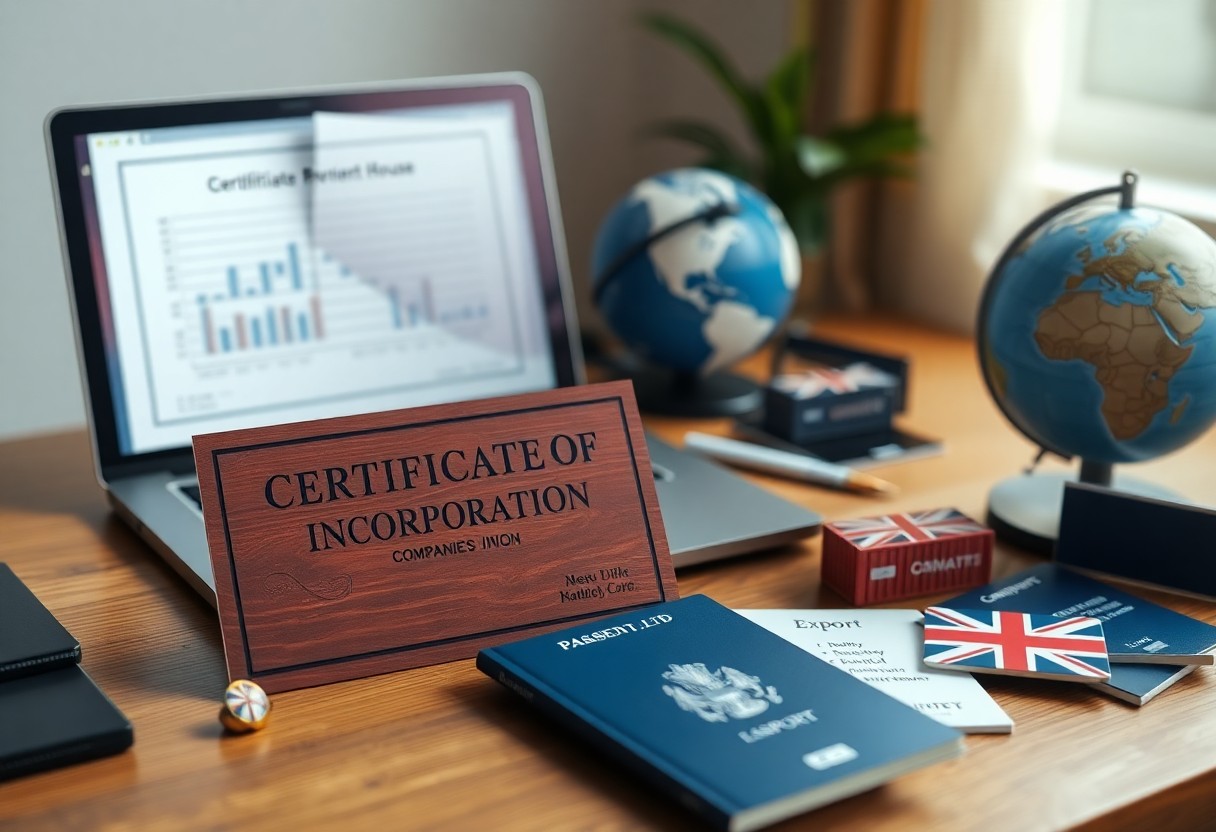
Ireland offers a unique gateway for entrepreneurs, but UK company formation has its own distinct advantages. As you consider establishing your business, it’s crucial to understand the nuances of both systems. This article will guide you through the processes, highlighting key differences and similarities that will inform your decision. Whether you’re drawn to Ireland’s favorable tax regime or the UK’s robust legal framework, knowing what to expect can make your journey smoother and more successful.
Company Formation Overview
The process of company formation in the UK and Ireland can seem daunting to many new entrepreneurs. However, understanding the definitions, purposes, and implications of choosing the right jurisdiction will provide you with clarity as you begin on your business journey. Whether you are looking to establish a sole trader, limited company, or any other business structure, each jurisdiction has distinctive characteristics that can either facilitate or hinder your business ambitions.
Definition and Purpose of Company Formation
Definition and purpose of company formation lie at the heart of establishing a credible business entity. Forming a company means creating a legal structure that shields you from personal liability, allowing you to conduct business under a distinct name. Your company will operate independently of your personal affairs, which can provide you with both financial and legal protections. Additionally, a well-formed company can enhance your business’s reputation, making it easier to attract clients, secure investment, and establish partnerships.
The purpose of company formation goes beyond mere legal compliance; it shapes the framework within which your business will operate. By formalizing your operations, you create an environment for growth and stability, enabling you to focus on your core objectives while adhering to regulatory requirements. A solid foundation can also help facilitate future expansion, as potential investors often look favorably on a structured and compliant business.
Importance of Choosing the Right Jurisdiction
An often-overlooked aspect of company formation is the critical importance of choosing the right jurisdiction. Your decision between the UK and Ireland can significantly impact your business operations, taxation, legal responsibilities, and access to markets. Different jurisdictions come with varying regulatory environments, and understanding these nuances is crucial for your long-term success.
Understanding the implications of your jurisdiction choice can empower you to make informed decisions. For instance, some regions may offer tax incentives or more straightforward regulatory frameworks, which can alleviate the burden on your new enterprise. Conversely, the compliance costs and regulations in another area may hinder your business’s growth. By properly analyzing your needs, market goals, and the distinct features offered by both the UK and Ireland, you can select the jurisdiction that best aligns with your aspirations and requirements.
UK Company Formation Process
Assuming you are considering starting a business in the UK, it is crucial to understand the company formation process. The UK offers a variety of business structures, each designed to fit different types of enterprises. By knowing the different types available, you can determine which structure best suits your business goals.
Types of Companies in the UK
With several options, choosing the right company type is an important first step in your formation process. In the UK, there are mainly three types of companies you can establish:
| Company Limited by Shares | The most common type for profit-making businesses. |
| Company Limited by Guarantee | Often used by non-profit organizations, where profits are reinvested. |
| Public Limited Company (PLC) | A company that can sell shares to the public and must meet specific criteria. |
| Limited Liability Partnership (LLP) | A hybrid between a company and a partnership, providing limited liability. |
| Sole Trader | The simplest form, where a single individual runs the business. |
- Company Limited by Shares — ideal for most businesses.
- Company Limited by Guarantee — suitable for charities.
- Public Limited Company — access to public funding.
- Limited Liability Partnership — offers flexibility.
- Sole Trader — easy to set up and manage.
This variety allows you to choose a structure that aligns with your business aspirations and risk profile.
Registration Requirements and Procedures
With the right company type decided, the next step is navigating the registration requirements and procedures. To set up your company in the UK, you must typically register with Companies House, the official registrar of companies. The process is relatively straightforward and can often be completed online without the need for extensive paperwork.
Key requirements generally include choosing a unique company name, preparing a Memorandum and Articles of Association, and appointing directors and shareholders. You will also need to provide information relevant to your company’s structure and funding. Understanding these requirements before you begin can save you time and ensure a smoother registration process.
Understanding the registration procedures in detail allows you to avoid common pitfalls and delays. Consider engaging with a professional service to help guide you through the intricacies of the application, ensuring that all important elements are in order. This will help you focus on your entrepreneurial vision more effectively, rather than getting bogged down by administrative tasks.
Ireland Company Formation Process
One of the first steps in establishing your business in Ireland is to understand the different types of companies recognized under Irish law. Knowing your options can help you select the appropriate structure that aligns with your business goals. Below are the common types of companies available for formation in Ireland:
Types of Companies in Ireland
| Type of Company | Description |
|---|---|
| Private Company Limited by Shares (Ltd) | Most common form; shareholders’ liability is limited to their shares. |
| Designated Activity Company (DAC) | Limited companies set up for a specific purpose. |
| Public Limited Company (PLC) | Can raise capital through the sale of shares to the public. |
| Company Limited by Guarantee (CLG) | Typically used for non-profit organizations; members’ liability is limited to their guarantee. |
| Unlimited Company | No limit on the liability of the owners. |
The choice of company structure is crucial as it will determine the legal obligations and financial implications you face. Consider your long-term goals and funding needs when making this decision.
Registration Requirements and Procedures
Formation of a company in Ireland involves a systematic process that requires compliance with local regulations. You must decide on a company name that is unique and not already in use. Once you have your name, you’ll need to prepare crucial documentation, which typically includes a Memorandum and Articles of Association. This documentation details your company’s structure, aims, and operational guidelines. You also need to designate directors and a company secretary, ensuring they meet the eligibility criteria outlined in the Companies Act.
Registration is conducted through the Companies Registration Office (CRO), where you will submit your required documents along with the appropriate fee. The processing time can vary, with online applications often being approved more quickly than paper-based submissions. Ensure that your application is complete and accurate to avoid delays. The registrar will issue a Certificate of Incorporation once your application is successful, officially marking the establishment of your company. The
Key Differences in Company Formation Processes
Unlike the process in Ireland, where you typically encounter less bureaucratic red tape, forming a company in the UK can be more complex and sometimes daunting. The UK offers a highly regulated environment, which might seem overwhelming at first glance. However, this regulation is designed to protect investors and the public interest. As you navigate through these processes, it’s important to appreciate the distinctions in legal requirements and how they impact your business operations. You may find, for instance, that different jurisdictions impose unique obligations on directors, shareholders, and compliance with local tax laws.
Jurisdictional Advantages and Disadvantages
An important consideration when forming a company is the jurisdictional advantages and disadvantages. The UK presents significant benefits like a stable economy, extensive access to resources, and a robust legal framework. Alternatively, Ireland, with its favorable tax regime, particularly for corporations, makes it a desirable location for start-ups and tech companies. If you’re seeking to build a globally recognized brand while paying minimal taxes, Ireland might seem more attractive. Yet, this could come with trade-offs in terms of regulations that are less developed compared to those in the UK.
Regulatory Compliance and Governance
Company registration in the UK is often accompanied by stringent regulatory compliance that affects how you manage corporate governance. The UK requires a variety of documentation, including Memorandum and Articles of Association, which outlines the structure and governance of your company. You’ll also need to appoint directors and comply with annual financial reporting requirements. This process can entail ongoing obligations that may seem formidable.
With the environment in Ireland, while there is regulatory compliance to consider, the process may not be as extensive as that of the UK. You will have obligations, including maintaining your company register and fulfilling tax requirements; however, the path to forming your company might feel more straightforward due to a lack of extensive rules. This difference can be a deciding factor in your choice of jurisdiction when forming your company, especially if you value simpler governance structures.
Company Structure and Share Capital
Many entrepreneurs looking to establish their businesses in the UK or Ireland may find themselves assessing the differences in company structure and share capital requirements. Understanding these aspects is crucial as it can shape your company’s operations and influence its financial stability. Whether you opt for the UK or Ireland, knowing what each jurisdiction entails will guide you in making an informed decision.
UK Company Structure and Share Capital Requirements
To start a company in the UK, you must decide on the type of structure that best suits your goals. The most common form is the private limited company (Ltd), which limits your liability and requires at least one director and one shareholder. In terms of share capital, the UK has relatively flexible requirements; you can register a company with a minimum share capital of just £1. This flexibility allows you to tailor your financial commitments according to your business needs while maintaining the necessary legal framework.
Ireland Company Structure and Share Capital Requirements
Capital requirements in Ireland are similarly flexible but offer a slightly different regulatory environment. When setting up a private limited company in Ireland, you must also appoint at least one director and one shareholder. However, the minimum share capital requirement for a private limited company is €100, which must be issued upon incorporation. This ensures that your company is well-capitalized from the outset, fostering trust with potential partners and clients.
A crucial aspect to note is that while the minimum share capital is low in both jurisdictions, it’s advisable to consider higher capital levels to support your business plans adequately. This consideration not only reflects your commitment to the enterprise but also helps in securing funding and establishing credibility. Careful planning of your share capital and company structure will ultimately play a significant role in your business’s success, regardless of whether you choose the UK or Ireland as your chosen base.
Directors and Shareholders
After examining the similarities and differences between the company formation processes in the UK and Ireland, understanding the roles and responsibilities of directors and shareholders further delineates the choices you may face. The composition of your company’s leadership can affect not only daily operations but also long-term strategy and compliance with local regulations.
Roles and Responsibilities in the UK
To set up a company in the UK, you must appoint at least one director, though there is no maximum limit. Directors are tasked with the straightforward responsibility of acting in the best interests of the company, overseeing its operations, and ensuring compliance with statutory obligations. They must adhere to fiduciary duties, which include acting in good faith, promoting the success of the company, and avoiding conflicts of interest. Additionally, you will also need at least one shareholder who can be a director as well, facilitating a more streamlined approach to small business governance.
To maintain transparency, UK regulations require records of your directors and shareholders to be filed with Companies House. This information is publicly accessible, emphasizing the importance of accurate documentation. Ultimately, as a director, you must also ensure that your company follows proper practices and keeps up with financial reporting, which underlines the weight of your responsibilities in steering the company towards success.
Roles and Responsibilities in Ireland
For company formation in Ireland, similar requirements exist, where you must appoint at least one director, but you also need to have a separate secretary. The secretary can be one of the directors or an external individual, provided they meet the legal criteria. Directors in Ireland bear similar fiduciary duties to those in the UK, emphasizing the importance of acting in good faith and making informed decisions for the benefit of the company. You should be aware that Irish law also mandates that companies have at least one shareholder, which can overlap with your director appointments, creating flexibility in governance.
For those considering forming a company in Ireland, it is vital to realize how the legal framework shapes your responsibilities as a director. Directors must ensure compliance with company law, preserve the company’s assets, and keep proper accounting records. They have an obligation to convene regular board meetings and to maintain thorough minutes, fostering good governance practices. These practical steps not only help you stay compliant but also establish a culture of accountability within your business.
Directors are also tasked with safeguarding the welfare of stakeholders, which could extend beyond just shareholders to include employees, customers, and the community. Each decision you make must carefully balance the interests of these groups, reinforcing the integral role that responsible leadership plays in a successful enterprise. Ultimately, whether you choose the UK or Ireland for your company formation, understanding these roles will empower you to navigate the complex landscape of corporate governance effectively.
Registered Office and Business Address
Once again, the differences in registered office and business address requirements between the UK and Ireland can significantly affect your decision on where to form your company. Understanding these distinctions will help you navigate the respective legal obligations and choose the most suitable location for your business operations. Your registered office acts as the official address for your company, where important documents can be sent, and it is also publicly listed on the company register. Each jurisdiction has unique requirements that you must adhere to while selecting this crucial location.
Requirements in the UK
With regard to the UK, you are required to have a registered office address that must be situated in the country, specifically in England, Wales, Scotland, or Northern Ireland, depending on where your company is registered. This address must be a physical location and cannot be a PO Box. It is also important to note that your registered office must be displayed on all official correspondence, ensuring transparency for customers and stakeholders alike. Failure to comply can result in penalties, including fines and potential restrictions on company activities.
Requirements in Ireland
Requirements in Ireland dictate that you must have a registered office address that is located within the country. This address serves as the official location for correspondence with the Revenue Commissioners and other regulatory bodies. Similar to the UK, it must be a physical address and cannot merely be a PO Box. Additionally, you are required to display this registered address on all business documents, including invoices and official letters, ensuring that anyone can reach you upon necessity.
The registered office address also plays a vital role in compliance and notification responsibilities. In Ireland, the Companies Registration Office expects certain documents and filings to be submitted from this address, and thus, you must ensure that it is manned and capable of receiving official communications. Having a reliable registered office can hence enhance your business’s credibility while ensuring that you meet regulatory obligations efficiently.
Accounting and Taxation
Your choice of location for company formation can significantly impact your accounting and taxation responsibilities. Both the UK and Ireland have their own sets of regulations and obligations that every business owner must adhere to. By understanding these requirements, you can better navigate the financial landscape of your new venture.
UK Accounting and Taxation Obligations
For businesses in the UK, the accounting and taxation obligations are structured around the Companies Act 2006. You are required to keep accurate financial records, prepare annual accounts, and submit them to Companies House. The type of accounts you must submit varies depending on your company size, with smaller companies benefiting from simplified reporting. Additionally, if your turnover exceeds the VAT threshold, you will need to register for Value Added Tax and charge it on your taxable sales.
Your corporation tax rate in the UK currently stands at 19%, although this figure may be subject to legislative changes. You are also responsible for paying National Insurance contributions for yourself and any employees. It’s advisable to maintain a clear financial record and consult with a qualified accountant to ensure compliance with ongoing obligations and to optimize your tax position.
Ireland Accounting and Taxation Obligations
Ireland has its own array of accounting and taxation responsibilities. As a business owner, you are required to maintain proper books of accounts and prepare annual financial statements. These statements must comply with the guidelines set forth by the Companies Act 2014 as well as the accounting framework applicable to your company. Furthermore, corporations must file their tax returns and pay Corporation Tax, which currently stands at 12.5% for trading income, a competitive rate in comparison to many jurisdictions.
Another key aspect to consider is the requirement for a local auditor if your company exceeds certain thresholds, such as turnover levels or balance sheet totals. This necessitates engaging a qualified audit professional in Ireland, which adds an additional layer of compliance. Both the tax regime and the auditing requirements can be complex, so partnering with a knowledgeable accountant can help simplify these processes. Understanding these obligations is crucial for maintaining your company’s legal standing and financial health in Ireland.
Compliance and Reporting
Not all company formation processes are the same when it comes to compliance and reporting requirements, and understanding these differences between the UK and Ireland is crucial for your business. This chapter investigates into the specific obligations you will encounter after establishing your company, shedding light on the bureaucratic frameworks that govern each jurisdiction.
UK Compliance and Reporting Requirements
Compliance in the UK involves adhering to a set of regulations that ensure transparency and accountability in business operations. You must file annual accounts with Companies House and submit a confirmation statement at least once a year. Your company’s financial statements need to reflect an accurate picture of your business’s financial health, and failure to comply can lead to penalties, including fines or, in severe cases, the dissolution of your company.
Moreover, you are required to maintain proper records and ensure that your company pays the appropriate taxes on its profits. This includes Corporation Tax, which must be paid within nine months of your company’s accounting period’s end. In this landscape, regular compliance checks and a clear understanding of your legislative obligations serve as vital pillars for your business’s sustainability.
Ireland Compliance and Reporting Requirements
Compliance in Ireland demands that you undertake similar reporting obligations, though the specifics may vary. Every year, you need to prepare and file annual returns with the Companies Registration Office (CRO), alongside financial statements that comply with the relevant accounting standards. Your reports must provide an accurate view of your company’s activities and financial standing, as failures in this regard can also lead to financial penalties or adverse legal consequences.
In addition to the annual requirements, you must also register for taxes, including Corporation Tax, Value Added Tax (VAT) if applicable, and Pay As You Earn (PAYE) for employee taxation. This multifaceted compliance landscape requires vigilance and an understanding of the financial regulations to ensure that your operations remain above board and your company continues to thrive.
Icelandic regulations further enforce compliance through auditing for certain types of companies, ensuring that those with significant public interest cannot escape scrutiny. Overall, maintaining compliance in Ireland demands a proactive approach, with regular engagement with regulatory bodies to stay updated on any changes in legislation that may affect your operations.
Business Banking and Financial Services
Keep in mind that navigating the landscape of business banking and financial services is crucial for your company’s success, whether in the UK or Ireland. Understanding the specifics of each region can help streamline your operations, allowing you to focus on building your business rather than getting bogged down in red tape.
UK Business Banking and Financial Services
The UK offers a diverse range of business banking options tailored to meet the needs of various enterprises, from small startups to large corporations. The process generally begins with choosing a business bank account that aligns with your company’s requirements. Many established banks, such as HSBC, Barclays, and Lloyds, provide comprehensive services including credit facilities, merchant services, and investment advice. You may also explore digital banking solutions like Monzo and Revolut, which cater specifically to modern businesses with their agile and user-friendly platforms.
In addition to standard banking services, UK businesses often benefit from access to various financial support schemes. The UK government and financial institutions promote initiatives such as the British Business Bank, which offers funding options designed to bolster your enterprise’s growth. It’s imperative to assess these available resources to maximize your financial potential.
Ireland Business Banking and Financial Services
Banking in Ireland is characterized by a strong emphasis on customer support and tailored financial solutions. Traditional banks like Bank of Ireland and AIB remain popular, while newer fintech companies are emerging to provide innovative services that can facilitate your business operations. As an entrepreneur, you might find it beneficial to work with financial advisers who understand local market dynamics and can guide you through the process of selecting the right banking solutions.
To further enhance your understanding, it’s important to note that the Irish financial landscape is bolstered by various government initiatives aimed at supporting startups and small businesses. Programs like the Microenterprise Loan Fund and the Credit Guarantee Scheme provide opportunities for securing necessary funding. Familiarizing yourself with these resources can significantly impact your ability to grow and sustain your business in Ireland.
Employment and Labor Laws
UK Employment and Labor Laws
Laws governing employment in the UK present a complex framework designed to protect both employers and employees. You will find that the UK has a comprehensive set of regulations, which includes the Employment Rights Act 1996, the Equality Act 2010, and various directives surrounding working time and leave entitlements. These laws ensure that you, as an employer or employee, have a clear understanding of rights and responsibilities, including protection against unfair dismissal, discrimination, and harassment. Furthermore, you must also adhere to the National Minimum Wage Act, which guarantees fair compensation for labor provided.
In addition, the process of hiring and managing staff in the UK incorporates several important elements, including contracts of employment, health and safety regulations, and pension contributions. It’s crucial for you to familiarize yourself with these requirements, as failure to comply can lead to costly disputes and penalties. Whether you are forming a new company or expanding an existing one, a solid understanding of UK employment laws will significantly contribute to your success in navigating the workforce.
Ireland Employment and Labor Laws
Laws governing employment in Ireland have evolved significantly over the years, providing a robust framework designed to safeguard the welfare of workers. The primary legislation includes the Employment Equality Acts, the Workplace Relations Act 2015, and the Industrial Relations Acts. As you begin on your journey to form a company in Ireland, it is crucial to understand these laws, as they help to protect employees’ rights in areas such as discrimination, redundancy, and unfair dismissal. In Ireland, you must also adhere to the National Minimum Wage Act, which establishes baseline wages for various sectors.
Moreover, Ireland emphasizes employee rights regarding work hours and leave policies. You will need to ensure compliance with regulations on maximum working hours, rest breaks, and statutory leave entitlements, including maternity and paternity leave. To navigate these complexities effectively, it’s advisable to seek expert legal advice or partner with local agencies that specialize in employment law, as this can mitigate potential legal challenges in the future.
To further enhance your understanding, be aware that Ireland is also committed to transparent and fair workplace practices. The system of “Codes of Practice” is designed to guide employers and employees on best practices regarding equality and health and safety. As you create your business framework, you should pay close attention to these codes; they not only help in fostering a positive work environment but also serve as a blueprint for legal compliance.
Intellectual Property Protection
All entrepreneurs and business owners understand the importance of safeguarding their innovations, branding, and creative works. When choosing to form a company in the UK or Ireland, you must consider how each country protects intellectual property (IP). Understanding the nuances of IP laws in these two jurisdictions can help you navigate potential legal challenges as you establish and grow your business.
UK Intellectual Property Protection Laws
For businesses operating in the UK, intellectual property protection is governed by a combination of statutory laws and common law principles. The UK has established a robust framework that includes copyright, trademarks, patents, and design rights. You can apply for registration through UK Intellectual Property Office (IPO), a straightforward process that allows you to secure your IP rights effectively. This framework not only protects your innovations from infringement but also enhances the overall value of your brand in the market.
Furthermore, the UK adheres to various international treaties, including the Paris Convention and the TRIPS Agreement, which provide additional layers of protection beyond domestic laws. As you navigate your business journey, you will benefit from the comprehensive resources and support offered by the IPO to help you understand and enforce your rights in the UK.
Ireland Intellectual Property Protection Laws
Property rights within Ireland are also well-defined, providing effective mechanisms for protecting your intellectual assets. Similar to the UK, Ireland offers protection through copyright, trademarks, patents, and design rights. The Irish Patents Office facilitates the registration process, enabling you to establish your IP rights efficiently. You will find that having your intellectual creations legally protected is crucial for maintaining a competitive edge in the Irish market.
A significant advantage of choosing to protect your intellectual property in Ireland is the country’s strong commitment to international conventions. Ireland is a member of the European Union, which means your trademark registration through the EU Intellectual Property Office (EUIPO) offers protection across all EU member states. This can be particularly advantageous for businesses looking to expand their market reach within Europe. Moreover, the continuous alignment of Irish IP laws with EU directives ensures that you are in compliance with leading practices in IP protection.
Business Culture and Environment
Despite the geographic proximity of the UK and Ireland, their business cultures and environments exhibit distinct characteristics that can significantly impact your company formation process. Understanding these nuances is necessary to making an informed decision about where to set up your business. Each region offers different advantages and challenges, shaping how you interact with clients, partners, and employees.
UK Business Culture and Environment
Business in the UK is characterized by a formal culture that values punctuality and professionalism. You will likely encounter a hierarchy within organizations, where respect for titles and roles can influence interactions and decision-making. You may find that building relationships takes time, but once established, they can be incredibly rewarding. Meetings are typically structured, with agendas outlining discussion topics, reflecting a commitment to clarity and efficiency.
Additionally, the UK boasts a diverse business environment brimming with opportunities across various industries. Whether you’re exploring finance in London or technology in Manchester, the UK’s vibrant market welcomes innovation and entrepreneurship. However, you should be prepared for a competitive landscape that demands adaptability and strategic thinking to stand out.
Ireland Business Culture and Environment
Business in Ireland presents a more relaxed atmosphere, known for its friendliness and openness. You will notice that personal relationships hold significant value, often serving as the foundation for successful business dealings. Networking is integral, and social events play a vital role in establishing trust and rapport with potential partners or clients. This more informal approach can facilitate communication and collaboration, making it easier to foster connections.
A close-knit business community exists in Ireland, which can work to your advantage as you navigate the company formation process. The government actively supports entrepreneurship through various grants and incentives, making it an attractive destination for startups. With a young and educated workforce, Ireland is poised for growth, especially in tech and pharmaceuticals. Understanding these cultural elements will help you align your business approaches accordingly, optimizing your chances for success.
Final Words
From above, you should now have a clearer understanding of the nuances involved in the company formation processes within the UK and Ireland. While both jurisdictions offer relatively straightforward paths to establish a business, notable differences exist in regulatory requirements, tax implications, and the bureaucratic landscape. If you find yourself inclined towards a specific location, your choice will likely hinge on these factors and how they align with your business goals. Remember that comprehending these elements will not only facilitate your decision-making but also help you navigate the complexities of your entrepreneurial journey.
Ultimately, the decision to form a company in the UK or Ireland is one that requires careful consideration of various aspects—be it the ease of registration, ongoing compliance obligations, or financial incentives. You must weigh these factors based on your unique circumstances and future aspirations. By taking the time to reflect on and analyze the insights presented, you empower yourself to make an informed decision that aligns with your ambitions, leading you towards a successful business venture.