

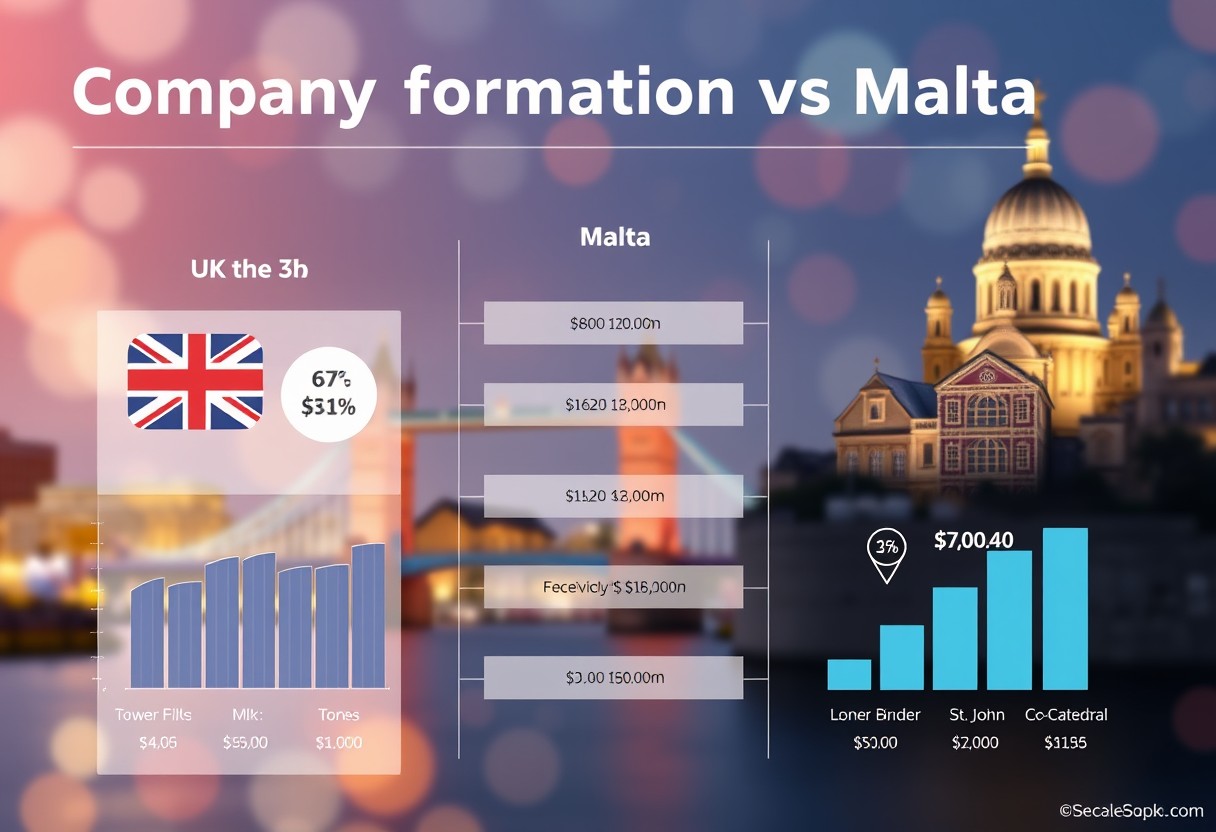
With the growing trend of international business, understanding the financial implications of company formation is crucial for your success. This post explores the comparative costs of forming a company in the UK versus Malta, shedding light on why the UK might offer a more advantageous financial framework for your business needs. By examining the various fees, regulatory considerations, and potential hidden costs, you will gain valuable insights that can help you make an informed decision tailored to your entrepreneurial aspirations.
Understanding Company Formation Costs
Before plunging into the specifics, it’s crucial to grasp the overall landscape of company formation costs. When you are considering starting a business, understanding these expenses is vital for budgeting and long-term financial planning. Costs can vary significantly depending on the jurisdiction you choose for your company formation. In this chapter, we will explore what you can expect in terms of expenses when forming a company in both the UK and Malta.
Overview of Company Formation Costs
An overview of company formation costs typically includes registration fees, legal expenses, and ongoing compliance costs. In the UK, the costs can be relatively straightforward, while Malta might introduce additional layers of complexity. Each region has its own requirements, influencing the overall financial commitment you need to make. Therefore, having a clear understanding of these costs will help you make an informed decision about where to establish your company.
Breakdown of Costs in the UK
To understand the breakdown of costs in the UK, you should look at the various elements involved in the formation process. Initially, you’ll encounter registration fees, which can be as low as £12 when using the online service to register your company with Companies House. Additionally, you may want to budget for professional services if you choose to work with an accountant or legal advisor, which can add to your initial costs.
Formation costs in the UK generally remain lower than those in Malta due to the streamlined online registration processes and fewer regulatory hurdles. In most cases, you can expect to factor in costs like company name reservation, registered office fees, and annual filing requirements. Notably, many services are available virtually, making it more accessible for you to navigate the formation process.
Breakdown of Costs in Malta
Costs associated with company formation in Malta can sometimes be higher than in the UK. When forming a company in Malta, it is vital to be aware of the initial registration fee, which is considerably more than what you would pay in the UK. In addition to the registration fees, you may also incur costs related to a registered office, legal documentation, and notary services, which are standard practice in Malta. These additional services can lead to a more complex and costly formation process.
It is also worth noting that Malta has annual maintenance fees and compliance costs that can accumulate over time. While these may not seem steep individually, they can add up, impacting your overall budget. This complexity makes it imperative for you to factor in these ongoing expenses as you evaluate the feasibility of registering your business in Malta.
Key Factors Affecting Formation Costs
Even as you consider forming a company, it’s crucial to understand the various elements that influence the overall costs involved. Formation costs can vary significantly depending on several factors, which can affect your decision on where to establish your business. Here are the main aspects to keep in mind:
- Legal requirements and fees
- Administrative expenses
- Professional fees
Recognizing these factors will help you make informed choices and ultimately save money in the long run.
Legal Requirements and Fees
One of the primary components influencing formation costs is the legal requirements and associated fees. Each country has its own regulations governing company formation, which can lead to variances in costs. In the UK, you may encounter registration fees, company name registration, and compliance with local laws, all of which contribute to your initial expenses. In comparison, Malta has its own set of legal requirements that may include higher registration fees or additional taxes for foreign entities, making the cost comparison quite significant.
Additionally, you might need to consider ongoing compliance costs that will emerge post-formation, such as annual reporting and filing fees. These ongoing expenses are imperative to factor into your decision, as they play a significant role in the total cost of maintaining your business in the UK or Malta. Understanding these ongoing obligations can prevent unexpected financial burdens down the line.
Administrative Expenses
Affecting your overall company formation costs are the various administrative expenses that arise from setting up your business. These can include costs related to obtaining necessary permits, licenses, and approving your business structure. In the UK, the process may be streamlined, resulting in potentially lower administrative burdens compared to Malta, where more complex bureaucracy may affect the speed and ease of forming a company.
Administrative expenses can also encompass costs associated with communication, office supplies, and any necessary travel related to the setup process. It’s important to estimate these costs as part of your overall budget so that you can allocate resources effectively and avoid overspending during this critical phase of your business.
Administrative costs can vary depending on your specific industry and the complexity of your business model. Thus, it is beneficial to research the various administrative requirements specific to your business and gear up your budget accordingly.
Professional Fees
Legal fees are another major factor that can impact your company formation costs. When forming a company in the UK, you may need to engage legal professionals to ensure compliance with all applicable laws and regulations, which can contribute to upfront costs. These fees can vary depending on the expertise of the professionals you hire and the complexity of your business structure. In Malta, legal fees may also be a consideration, often inflated by the need for specialized guidance in navigating local regulations.
Furthermore, in the UK, there are options to utilize online services and platforms that can streamline the process and potentially lower your legal fees. By comparing various service providers, you can find a solution that fits your budget while ensuring adherence to legal requirements effectively.
With the right planning, you can manage professional fees more efficiently. Assessing your needs upfront and working with professionals who offer transparent pricing can significantly mitigate unexpected costs and help you get your business off to a solid start.
Comparing UK and Malta in Company Formation
Not all jurisdictions are created equal when it comes to company formation. In this section, you will find a comprehensive comparison of the formation costs between the UK and Malta, highlighting the clear advantages that the UK offers for entrepreneurs looking to start their business.
| Cost Type | UK | Malta |
|---|---|---|
| Startup Costs | £12 to £100 (depending on registration service) | €100 to €300 (minimum share capital) |
| Annual Maintenance Costs | £50 to £250 (depending on services used) | €400 to €800 (additional compliance fees) |
| Tax Implications | 19% corporation tax | 35% corporation tax (effective rate can be lower) |
Startup Costs
With the UK, you can enjoy significantly lower startup costs to establish your company. Forming a limited company can cost as little as £12 if you opt for online registration. Even with added services, the total will still be relatively low, making it accessible for most entrepreneurs. In contrast, Malta demands a minimum share capital of €1,165, with registration costs typically starting around €100 to €300, which can be a substantial burden for some startups.
This initial cost difference can affect your decision on where to establish your business. The UK not only provides a more affordable entry point, but its streamlined registration process can set you on a path to begin trading quickly, whereas Malta’s higher costs might delay your startup plans as you gather required funds.
Annual Maintenance Costs
Any business formation choice comes with ongoing costs that you should factor into your decision. In the UK, annual maintenance costs generally range from £50 to £250, depending on whether you opt for basic services or additional assistance like bookkeeping and filing. This level of affordability ensures that your annual expenses remain manageable, allowing you to invest more in your business growth.
Conversely, Malta imposes higher annual maintenance costs, typically between €400 and €800, which includes compliance fees. These costs can accumulate quickly and may eat into your cash flow, making it crucial to consider how these ongoing expenses align with your business financial strategy.
Plus, it’s necessary to recognize that while Malta does present lower initial costs with its tax credit scheme, these benefits may not always outweigh the higher annual expenses in the longer term. This could result in a scenario where, despite a favorable initial setup, spending continues to rise, diverting resources from your core business activities.
Tax Implications
Formation of a company in the UK versus Malta also brings significant differences in taxation. The UK corporation tax is set at 19%, which is relatively lower compared to Malta’s base rate of 35%. However, it’s important to note that Malta has a complex tax system that allows for significant tax refunds, effectively lowering your overall tax rate depending on the structure you choose.
Furthermore, UK businesses benefit from additional tax incentives, such as research and development tax credits, which encourage innovation and growth. These advantages allow you to retain more of your profits, which can be reinvested back into your company. In contrast, while Malta offers tax credits, the complexity can lead to confusion and unforeseen costs related to compliance.
Malta may grant advantages like reduced effective tax rates through rebates but balancing this with the higher operational and maintenance costs is vital as you make your decision. You should thoroughly evaluate how tax obligations will affect your cash flow and, ultimately, your business success.
Advantages of Formation in the UK
Once again, when considering the establishment of your business, the advantages of forming in the UK cannot be overstated. One of the primary benefits lies in the transparent and stable regulatory framework that governs UK companies. The legal system in the UK is well-established and public trust is high, which helps to create a positive business environment. You can rely on clear guidelines and consistent application of laws, making it less likely that you will encounter unexpected legal challenges.
Transparency and Stability
Advantages also extend to the level of transparency and stability in the UK business environment. The UK Companies House ensures that all registered companies maintain transparency by requiring regular filing of financial statements and disclosures. This not only builds trust among stakeholders but also amplifies your credibility in the eyes of potential investors or partners. Such a stable regulatory environment allows you to focus on growing your business without worrying about sudden legal or operational disruptions.
Access to Financial Services
Advantages abound when it comes to accessing financial services in the UK. The UK is renowned for its robust financial services sector, which includes a plethora of services ranging from banking to investment. You will find it easier to establish relationships with esteemed banks and financial institutions, positioning your business for success when seeking funding or partnerships. Moreover, the competitive landscape of financial services in the UK means you can find solutions tailored to your specific needs.
For instance, as you explore financing options, you can take advantage of a variety of loans, grants, and investment opportunities available exclusively to UK incorporated companies. This means that not only do you have access to a wealth of financial professionals, but also to tools and funding designed to help your business flourish right from the outset.
Business Growth Opportunities
Growth opportunities in the UK are plentiful, driven by its unique position as a global business hub. The country boasts access to its rich market, not only within the UK itself but also to international markets. Being based in the UK allows you to tap into a diverse pool of potential clients and partners, enhancing your prospects for expansion. Furthermore, the UK government often provides support for start-ups and small businesses through various initiatives, which can give your business an even greater edge.
Another significant advantage lies in the networking potential you can harness by establishing your business in the UK. The presence of various business incubators, conferences, and networking events allow you to connect with like-minded entrepreneurs and industry leaders. This can lead to partnerships that might otherwise not be accessible in a less vibrant business environment, further augmenting the growth potential of your business.
Disadvantages of Formation in Malta
Your decision to form a company in Malta might come with several disadvantages that could impact your business operations. Understanding these challenges is crucial for making a well-informed choice about where to establish your business. Malta may present a favorable image for overseas business, but several factors detract from its attractiveness compared to other locations, such as the UK.
Regulatory Challenges
With an increasing number of businesses seeking to form companies in Malta, the regulatory framework has grown more complex. You may find that navigating the local laws and regulations can be daunting. Compliance with these regulations is not just a bureaucratic hurdle; it could incur additional costs and time delays in the formation process. The potential for regulatory changes or additional requirements can complicate your ability to operate smoothly.
Furthermore, the challenge of keeping up with evolving legal standards in Malta may require you to invest in experienced legal counsel or expert consultants. This added layer of complexity can divert your focus from core business operations, leading to inefficiencies and frustration as you endeavor to remain compliant.
Hidden Costs
Hidden costs are another significant concern when considering company formation in Malta. While the initial setup fees may appear attractive, you must account for various ongoing expenses that may catch you off guard. These can include administrative fees, legal costs for necessary compliance, and additional taxes that may not be immediately apparent during the initial stages of planning.
To avoid financial surprises down the line, it’s important that you conduct thorough research and potentially budget for unforeseen costs. Many entrepreneurs overlook expenses associated with property rental, utilities, and staffing, which can markedly increase your overall expenditure beyond the initial projections.
Limited Market Access
One of the drawbacks of forming a company in Malta is limited market access. Despite its strategic location in the Mediterranean, Malta is a small island nation with a relatively small domestic market. This limitation may constrain your potential for growth if you rely primarily on local consumers or businesses. Without a broader market reach, scaling your business could present significant challenges.
Malta’s reliance on specific industries could also pigeonhole your business. If you’re looking to tap into diverse markets, you will need to invest additional effort into identifying opportunities beyond Malta’s shores. Connecting with international partners and customers can be more complicated, requiring extensive networking and sometimes higher operational overheads.
Navigating the Formation Process
Despite the complexities involved in establishing a company, both the UK and Malta offer structured processes that can guide you towards a successful formation. Understanding the specifics of each system is crucial to ensure a smooth start for your business. Not only will this save you time, but it will also help you avoid unnecessary costs that may arise from missteps during the formation process. In this comparison, you will see how UK company formation stands out, providing a clearer and more streamlined approach than that of Malta.
Step-by-Step Guide for UK Formation
One of the primary advantages of forming a company in the UK is the straightforward process that you can easily follow. Below is a step-by-step guide that outlines the important stages required for successful company formation.
| Step | Description |
| 1 | Choose a suitable company name that adheres to UK regulations. |
| 2 | Decide on the company structure (e.g., private limited, public limited). |
| 3 | Select your company directors and shareholders. |
| 4 | Prepare necessary documentation including the Memorandum and Articles of Association. |
| 5 | Register your company through Companies House. |
Upon completion of these steps, your company will be officially recognized, and you can commence business operations. The entire process typically takes less than a week when all paperwork is in place, making it an efficient option for entrepreneurs.
Step-by-Step Guide for Malta Formation
For those considering Malta for company registration, the formation process involves several intricate steps that may require more time and resources. Below is a breakdown of the phases you will need to undertake to establish your business in Malta.
| Step | Description |
| 1 | Choose a unique company name and ensure it’s not already reserved. |
| 2 | Determine the type of company you wish to set up (e.g., limited liability). |
| 3 | Draft the Memorandum and Articles of Association, usually requiring legal assistance. |
| 4 | Open a bank account and deposit the required share capital. |
| 5 | Submit your application for registration with the Malta Financial Services Authority (MFSA). |
Although the process is detailed, it can take several weeks before your company is fully registered, and you can begin trading. The involvement of legal entities at various stages often complicates the process, making it relatively lengthier than that of the UK.
A deeper exploration into the Maltese formation process reveals additional requirements such as obtaining necessary licenses depending on your business type, which could further extend the timeframe and complexity of registration. Ensuring you have local expertise can help you navigate through these intricacies more efficiently.
Common Pitfalls to Avoid
With the amount of paperwork and steps involved in company formation, there are several common pitfalls that you should watch out for, especially in Malta. Failing to ensure your company name adheres to local regulations or neglecting to register for necessary permits can lead to setbacks that delay your business launch. Additionally, the requirement for minimum share capital can be confusing if you are not familiar with local laws.
Malta’s bureaucratic nuances can sometimes lead to unexpected complications, particularly for foreign entrepreneurs who are not accustomed to local requirements. Thorough research and possibly hiring local advisors can mitigate these risks and streamline your formation process, thus saving you time and capital in the long run.
Final Words
From above, it is clear that UK company formation costs present a distinct advantage over Malta, particularly when considering the overall business environment, inclusivity of services, and operational flexibility. By choosing the UK as your business headquarters, you benefit from transparent pricing structures and a variety of options tailored to different business needs. This means not only lower initial costs, but also a broader range of services that can help streamline your business operations from the start. Your investment in setting up your company in the UK can yield better returns due to its robust economy and supportive regulatory framework.
Moreover, the administrative efficiency and the ease with which you can set up a company in the UK bolster its attractiveness. You can enjoy rapid processing times, professional discretion, and accessibility to international markets—all important factors for future success. As you weigh your options for company formation, embracing the UK’s cost-effective environment may very well enhance your entrepreneurial journey, ultimately allowing you to allocate resources more strategically for growth and profitability. In closing, your decision to form a company in the UK could pave the way for a successful business venture that thrives on both competitive pricing and diverse opportunities.
FAQ
Q: What are the typical costs associated with forming a company in the UK compared to Malta?
A: The costs for forming a company in the UK can vary depending on the type of company and the services used. Generally, basic registration for a private limited company (Ltd) is around £12 if done online through Companies House. Additional costs for services such as registered office address, accounting, and legal advice may amount to £300-£1,000 or more annually, depending on the complexity of your business. In Malta, the registration cost can be higher, with fees ranging from €150 to €500, in addition to a minimum capital requirement of €1,165 for a private limited company. Thus, while the initial registration cost may seem lower in Malta, ongoing operational costs may be more expensive compared to the UK, especially when considering professional fees and corporate compliance requirements.
Q: What advantages do UK company formation costs provide compared to Malta?
A: One key advantage of UK company formation costs is the overall simplicity and transparency of the process. The UK boasts a user-friendly online registration system that can be completed quickly, often within 24 hours. Additionally, UK companies benefit from robust infrastructure, efficient banking services, and access to a broad market, which can lead to lower long-term operational costs. Malta’s higher regulatory costs and capital requirements can create financial barriers for small to medium enterprises. Moreover, UK companies tend to have easier access to funding opportunities and a larger pool of investors, enhancing their prospects for growth and reducing overall costs associated with raising capital.
Q: Are there any ongoing costs after forming a company in the UK that should be considered, and how do they compare to Malta?
A: Yes, there are ongoing costs associated with maintaining a company in the UK. These include annual filing fees, Corporation Tax on profits (currently at 25%), and costs for accounting and bookkeeping services. A small private limited company might expect to incur annual costs ranging from £500 to £2,000, depending on its complexity and turnover. In comparison, Malta also has annual compliance requirements and Corporation Tax of 35%, which can result in an effective tax rate that may be lower for certain scenarios due to tax refund mechanisms but can still amount to significant overall costs. Therefore, while both jurisdictions incur ongoing costs, the UK may provide a more predictable and stable cost structure for many businesses, particularly startups and SMEs.

