How to use it:
- Urgent and Important: Tasks that require immediate attention and directly impact your business. These should be your top priority.
- Important but not urgent: Tasks that are critical to long-term success but do not require immediate action. Schedule these tasks so that they are completed without the pressure of urgency.
- Urgent but not important: Tasks that require immediate attention but do not significantly contribute to your business goals. Delegate these tasks if possible.
- Not urgent and not important: tasks that have little impact and can be viewed as a distraction. Minimize or eliminate these tasks to free up time for more important activities.
By consistently applying the Eisenhower Matrix, you can ensure you focus your time and energy on impactful activities that advance your business. You can read more about it Eisenhower matrix here.
Delegation.
Delegation is a powerful time management strategy that gives you time for strategic planning and high-priority tasks. Gerber emphasizes that effective delegation involves entrusting tasks to capable team members so you can focus on growing your business.
Delegating tasks increases efficiency by ensuring the right people are doing the right tasks. For example, if you spend hours on administrative tasks, delegating these tasks to an administrative assistant will allow you to focus on strategic activities such as business development or innovation.
Gerber’s E‑Myth emphasizes that successful delegation requires clear communication and trust. Provide detailed instructions and expectations, but also give your team the autonomy to complete tasks in their own way. This approach not only improves efficiency, but also strengthens your team and promotes a culture of accountability.
Understand the difference between delegation and abidiaction. You can read that here.
Time blocking.
Time blocking is a time management technique where you divide your day into blocks of time, each dedicated to a specific task or activity. This method helps you manage your time more effectively by ensuring you schedule targeted periods of time for different tasks without constantly switching between activities.
Here is a step-by-step guide to implementing time blocking:
- Identify important activities: List all the tasks and activities you need to complete daily, weekly and monthly.
- Create a schedule: Allocate specific blocks of time for each activity. For example, you might schedule 9am-11am for strategic planning, 11am-12pm for team meetings, and 1pm-3pm for client work.
- Set boundaries: Focus exclusively on the designated task in each block of time. Avoid distractions and interruptions. Use tools like calendar apps to set reminders and stay on top of your schedule.
- Review and Adjust: Review your time block schedule at the end of each week. Evaluate what worked well and what didn’t. Adjust your time blocks as needed to improve efficiency and productivity.
Time blocking helps you maintain a structured schedule, reduces the likelihood of procrastination, and ensures you allocate enough time for high-priority tasks. By integrating this technique into your everyday life, you can manage your time more effectively and achieve your business goals more efficiently.
By mastering these practical time management tips, you can significantly increase your productivity, focus on strategic initiatives, and lead your business to long-term success.
Practical tips for leadership.
Vision setting.
Setting a clear vision is critical to effective leadership. A clearly defined vision provides direction, motivates your team, and aligns their efforts with the company’s long-term goals. Michael Gerber’s E‑Myth methodology emphasizes that a clear vision helps transform a company from a collection of tasks into a cohesive, purpose-driven entity.
For example, Gerber illustrates how successful companies are built on a compelling vision that guides every decision and every action. By articulating a clear vision, you can inspire your team to work toward a common goal, creating a sense of purpose and commitment. To set a clear vision, first define what your company’s long-term success looks like. Communicate this vision consistently and ensure that each team member understands their role in achieving this vision.
Communication.
Effective communication is the backbone of strong leadership. It ensures that your vision, goals and expectations are clearly understood by your team. Gerber’s methodology highlights the importance of transparent and consistent communication in building trust and fostering collaboration.
How to improve your communication skills:
- Be clear and concise: Avoid ambiguity by being direct and straightforward in your communication.
- Active listening: Actively listen to understand your team’s concerns and feedback. This shows that you value their contribution.
- Regular updates: Keep your team informed about business developments and progress toward your goals. Regular updates prevent misunderstandings and keep everyone informed.
- Open Door Policy: Promote open communication by being accessible and available to your team. An open door policy promotes a culture of openness and trust.
By implementing these tips, you can improve your communication skills and ensure your team is well-informed, motivated, and aligned with your vision.
Authorization.
Empowering your team is critical to improving performance and fostering a culture of ownership and accountability. Gerber’s E‑Myth principles emphasize that empowerment means giving employees the autonomy to make decisions and take responsibility for their tasks. This not only boosts their confidence but also increases their engagement and productivity.
Practical ways to empower your employees include:
- Delegate authority: Delegate decision-making authority to your team members within their area of responsibility. This shows trust and encourages you to take initiative.
- Provide resources and training: Make sure your team has the tools, resources, and training they need to perform their jobs effectively. Continuous learning opportunities help them grow in their roles and excel.
- Encourage innovation: Create an environment where employees feel safe to share ideas and drive innovation. Recognize and reward creativity and problem-solving efforts.
- Set clear expectations: Clearly define roles, responsibilities and expectations. When employees know what is expected of them, they are more likely to take responsibility for their tasks.
Empowering your team leads to greater job satisfaction, better performance and a more resilient organization. By implementing these strategies, you can create a motivated and capable team that will lead your company towards its goals.
When you master the basics of visioning, effective communication and empowerment, you will improve your leadership skills and contribute significantly to the success of your company. By following Gerber’s E‑Myth methodology, you can lead your team more effectively and foster a productive and positive work environment that supports your strategic goals.
Practical tips for strategic planning.
Set goals.
Strategic planning begins with setting clear, achievable goals. An effective method for goal setting is to use the SMART criteria. SMART goals are specific, measurable, achievable, relevant and time-bound. This approach ensures that your goals are clearly defined and achievable within a set time frame, providing a clear path to success.
For example, instead of setting a vague goal like “Increase sales figures,” would be a SMART goal “Increase online sales by 20% next quarter by implementing a new digital marketing strategy.” This goal is specific (online sales), measurable (20%), achievable (with a new strategy), relevant (for business growth), and time-bound (next quarter).
By setting SMART goals, you can create a structured plan that guides your business toward its strategic goals and ensures every effort contributes to your long-term vision.
Systematization.
Michael Gerber emphasizes the importance of systematization in strategic planning. Systems streamline processes and ensure consistency and efficiency. They allow you to delegate tasks effectively, freeing up time for strategic initiatives and innovations.
To create and implement business systems:
- Identify key processes: Start by identifying repetitive tasks and processes that can be standardized. This may include customer service protocols, inventory management, or marketing campaigns.
- Document Procedures: Write detailed procedures for each process. This documentation should be clear and easy to understand so that everyone can complete the task consistently.
- Automate where possible: Use technology to automate repetitive tasks. Tools like CRM systems, project management software, and accounting programs can streamline operations and reduce manual work.
- Train your team: Make sure your team understands and follows documented procedures. Regular training can help reinforce the importance of these systems and ensure compliance.
By systematizing your business processes, you can improve efficiency, reduce errors, and create a scalable model that supports growth.
Continuous improvement.
Strategic planning is not a one-time activity but an ongoing process. Continuous improvement involves regularly evaluating and refining your business strategies to ensure they remain effective and aligned with your goals.
To review and adjust your plans regularly:
- Set regular review intervals: Schedule regular intervals (e.g. quarterly) to review your strategic plan. This will ensure you stay on track and make timely adjustments.
- Analyze performance metrics: Use key performance indicators (KPIs) to measure the effectiveness of your strategies. Analyze data on sales, customer satisfaction, operational efficiency and other relevant metrics.
- Collect feedback: Gather feedback from your team, customers and stakeholders. Your insights can highlight areas for improvement and provide new ideas for growth.
- Adapt to Change: Be prepared to adapt your strategies in response to market changes, technological advances and competitive pressures. Flexibility is crucial to staying relevant and competitive.
By committing to continuous improvement, you can ensure your business strategies remain effective and aligned with your long-term vision. Regular assessments and adjustments allow you to remain agile and responsive to change and position your business for sustained success.
Strategic planning includes setting SMART goals, systematizing processes, and committing to continuous improvement. By mastering these elements, you can create a robust strategic framework that will lead your business to long-term success and growth.
Last word.
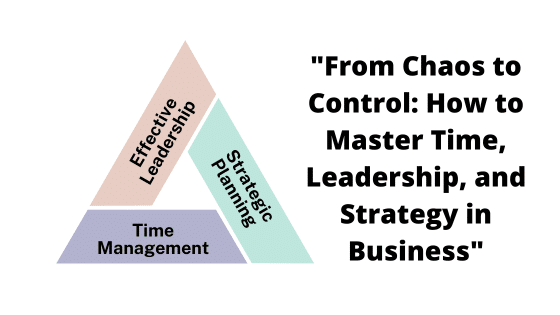
In this blog, we have explored the essential skills every entrepreneur must master for business success: time management, leadership and strategic planning. We’ve discussed practical tips on prioritization, delegation, and time blocking to manage your time effectively. We’ve emphasized the importance of setting a clear vision, communicating effectively, and empowering your team to improve leadership. Finally, we looked at the role of SMART goals, systematization and continuous improvement in strategic planning.
Mastering these skills, based on Michael Gerber’s E‑Myth methodology, is critical to the long-term success of your business. Implementing these practical tips can transform the way you approach entrepreneurship and allow you to work “on” your business, not just “in” it. (Check out my blog on the difference between working “in” and “at” your company.)
As Henry Ford once said, “Coming together is a beginning, staying together is progress, and collaboration is success.” Start implementing these strategies today and take the first step toward mastering these essential skills. The future of your company depends on it!