

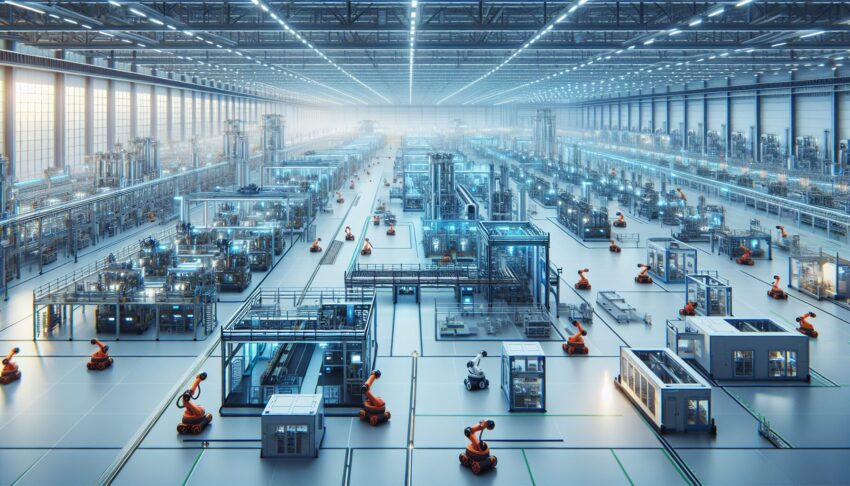
In the rapidly evolving manufacturing landscape, technological advances are transforming internal logistics.
Industrial robot manufacturers are at the forefront of this change, driving efficiency and innovation. Mobile robots, especially ones like MiR, are revolutionizing transportation in factories.
Technological advances in internal logistics have become a cornerstone for modern manufacturers. The integration of mobile robots and sophisticated automation systems has significantly improved the efficiency and productivity of manufacturing processes. This change is not just a trend, but a crucial development to remain competitive in today’s market.
The rise of industrial robots
Industrial robot manufacturers have been instrumental in advancing the capabilities of modern factories. These manufacturers are continually developing robots that can accurately and quickly complete a variety of tasks, from assembly to packaging. It is important to understand how these robots can be seamlessly integrated into existing workflows, increasing productivity while reducing operating costs.
The creation of mobile industrial robots in the middle of a production line shows how adaptable these machines can be. They are designed for autonomous navigation in complex environments, which is particularly advantageous when handling materials and transporting goods across large facilities. This ability to adapt to different tasks makes them an invaluable asset in streamlining internal logistics.
The versatility of industrial robots goes beyond traditional manufacturing tasks. Many industrial robot manufacturers are currently developing “cobots,” or collaborative robots, designed to work with human employees. These cobots are equipped with advanced safety features and intuitive programming interfaces, making them accessible to a wider range of industries. This means that small and medium-sized companies can now use the advantages of robotics in their production processes and create a level playing field in highly competitive markets.
Advantages of mobile robots
Mobile robots are changing the landscape of internal logistics by providing unprecedented levels of flexibility and efficiency. Unlike traditional fixed automation systems, mobile robots can be reprogrammed and repurposed for different tasks, providing a dynamic solution to ever-changing manufacturing needs. Their implementation has been shown to improve not only operational efficiency but also overall safety in production facilities.
These robots are equipped with advanced sensors and navigation systems that allow them to work safely alongside human workers. This collaborative aspect ensures that human employees can focus on more strategic roles while the robots handle repetitive or dangerous tasks. This allows companies to achieve higher levels of productivity without compromising on worker safety or job satisfaction.
Another key advantage of mobile robots is their ability to collect and analyze data in real time. As they move through the facility, these robots can collect information about production flow, inventory levels and equipment performance. This data can be used to identify inefficiencies, predict maintenance needs, and optimize overall operations. By providing valuable insights, mobile robots not only improve current processes, but also contribute to long-term strategic planning and continuous improvement initiatives.
Impact on transport within factories
The use of transport robots such as MiR (Mobile Industrial Robots) has significantly improved the transport of materials within factories. These robots are able to efficiently transport goods across large production halls without human intervention. By automating these transportation tasks, companies can reduce labor costs and minimize the risk of human error.
In addition, transport robots contribute to a more organized and optimized production environment. They ensure that materials arrive at the right place at the right time, thereby preventing bottlenecks and delays in the production process. This level of precision is crucial for a smooth workflow and consistent adherence to production deadlines.
The integration of mobile robots such as MiR into factory transport systems also contributes to this improved sustainability efforts. These electrically powered robots reduce the need for traditional gas-powered forklifts and other vehicles, significantly reducing the carbon footprint of production operations. Additionally, their precise navigation and optimized routing features minimize unnecessary movements, resulting in further energy savings and reduced wear and tear on factory floors. This environmentally friendly approach is not only in line with the company’s sustainability goals, but can also result in cost savings in energy consumption and equipment maintenance.
The future of internal logistics
The future of internal logistics lies in the further integration of advanced technologies such as artificial intelligence (AI) and machine learning with existing automation systems. Industrial robot manufacturers are already exploring ways to integrate AI-driven analytics to predict maintenance needs and optimize robot operations. This proactive approach not only extends the life of the equipment but also ensures uninterrupted production cycles.
As mobile robots continue to develop, their capabilities will expand beyond simple transportation tasks. Future developments could include more complex functions such as quality control inspections or real-time inventory management. Such advances will enable manufacturers to create smarter, more responsive production environments that can quickly adapt to market demands.
In summary, ongoing advances in industrial robotics and automation will revolutionize internal logistics for manufacturers. By using these technologies, companies can achieve greater efficiency, reduce costs and increase overall productivity. The continued innovation of industrial robot manufacturers will undoubtedly influence the future manufacturing landscape, making it more agile and resilient than ever before.

