

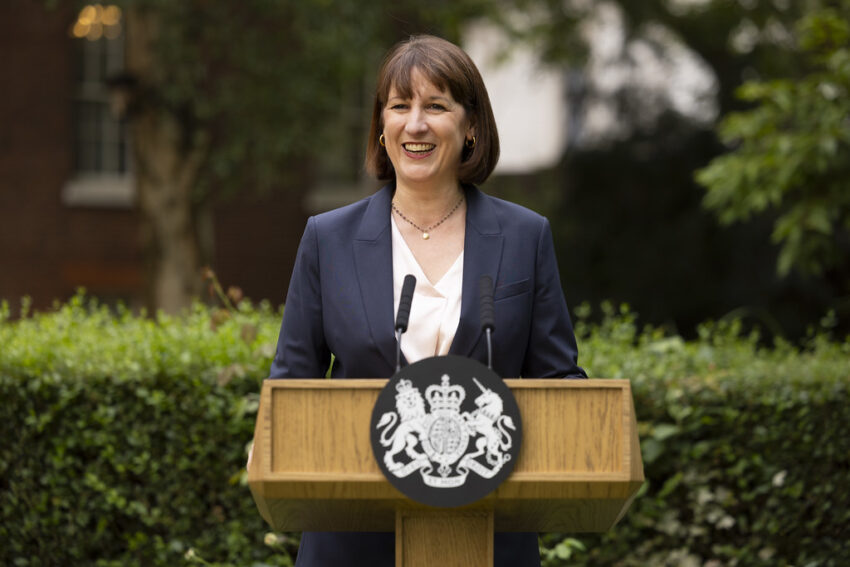
As the leaves turn fresh and golden this October, the country’s entrepreneurs are preparing for a political event that could redefine their future: the unveiling of Rachel Reeves’ first budget as finance minister.
Reeves, a figure who has risen through the ranks in the Labor Party and is known for his sharpness and intelligence, has now risen to one of the most critical positions in government. But should British business owners tremble in their boardrooms wondering what she has up her sleeve?
Rachel Reeves, the first female chancellor since the office’s founding in 1316 (yes, even she’s older than Mick Jagger), has a serious air that suggests she’s not here for a ceremonial tea party. No, Reeves is serious — in every sense of the word. Her background as an economist at the Bank of England and her tenure as chair of the Business, Energy and Industrial Strategy Committee suggest she knows her way around spreadsheets. But here’s the catch: it’s not their competence that’s in question; It’s their ideology.
For years, business owners have been accustomed to the Tory playbook of tax cuts and deregulation — a steady drip-feed of measures designed to keep the wheels of capitalism turning. However, Reeves has signaled a move away from this laissez-faire approach, advocating for what she calls “responsible capitalism.” The phrase itself sounds almost quaint, as if it promises to transform the wild, reckless teenager that is British capitalism into a sensible, well-behaved adult. But is that really what companies need?
Let’s be clear: companies thrive on certainty. And while Reeves has promised to maintain a competitive tax system, she has also made clear that she wants to fight tax avoidance, increase public investment and push for a fairer distribution of wealth. On paper, these goals are laudable – who wouldn’t want a fairer society? But in practice they can spell trouble for those accustomed to the status quo.
Take, for example, Reeves’ plan to close the loopholes that allow multinational companies to shift profits offshore and avoid paying their fair share of taxes. It’s a noble endeavor, but one that could have unintended consequences. Companies that have relied on these mechanisms to maximize profits may find themselves in a tighter financial bind, forced to cut costs or, worse, consider relocating to more tax-friendly jurisdictions. There are fears that Reeves’ brand of responsible capitalism could lead to capital flight, with companies seeking refuge in countries where the tax office’s reach is not as extensive.
Then there is the question of public investment. Reeves has committed to increasing spending on infrastructure, green energy and technology — areas that undoubtedly need a cash injection. The big question, however, is: who will pay the bill? If Reeves chooses to finance these projects by borrowing, she risks increasing the national debt, which could lead to higher interest rates and inflation. On the other hand, if it decides to raise taxes – particularly on higher earners and corporations – it could stifle the very entrepreneurship and innovation it seeks to support.
And let’s not forget her commitment to workers’ rights. Reeves has promised to strengthen labor laws, increase job security and ensure the minimum wage keeps pace with the cost of living. These are also laudable goals, but they come with a price tag for employers. Greater regulation and higher labor costs could force some companies, particularly SMEs, to make difficult decisions — either bear the costs and accept a decline in their profit margins, or pass them on to consumers in the form of higher prices. Neither option is particularly attractive in an economy already grappling with the cost of living crisis.
But perhaps the biggest concern for business owners is the broader economic environment in which this budget will be implemented. The British economy is still suffering from the effects of Brexit, the pandemic and the war in Ukraine. Inflation remains stubbornly high and growth has been sluggish at best. Reeves’ budget must walk a tightrope: boosting growth without overheating the economy and supporting the most vulnerable without discouraging investment.
But despite all the uncertainty, there is a case to be made that Rachel Reeves’ approach could be exactly what the UK economy needs. Over the last decade, the gap between the haves and the have-nots has widened. Wealth was concentrated in the hands of a few while many struggled to make ends meet. By addressing these inequalities and investing in the future, Reeves could lay the foundation for a more sustainable and resilient economy — one in which companies can thrive over the long term, rather than just surviving quarter to quarter.
So should UK business owners be worried about what Rachel Reeves has up her sleeve? The answer is: it depends. If they are willing to adapt, innovate and embrace a more responsible form of capitalism, they may find that Reeves’ household presents new opportunities rather than threats. But for those familiar with the old ways of doing things, this new chapter in British economic policy may just be a wake-up call. Because as the saying goes, change is the only constant – and in the business world, those who fail to adapt often fall by the wayside.
In the end, whether Reeves’ budget is a blessing or a curse will depend not only on the numbers she presents in October, but also on the reaction of the business community. Will they see her as a harbinger of doom or a catalyst for positive change? Only time will tell. But one thing is certain: this fall, all eyes will be on the Chancellor – and on what she literally conjures up out of her hat.
Richard Alvin
Richard Alvin is a serial entrepreneur, former UK Government Small Business Adviser and Honorary Teaching Fellow in Economics at Lancaster University. A winner of the London Chamber of Commerce Businessman of the Year award and a Freeman of the City of London for his services to business and charity. Richard is also Group MD of Capital Business Media and SME business research firm Trends Research, recognized as one of the UK’s leading experts in the SME sector and an active angel investor and advisor to start-up businesses. Richard is also the host of the US business advice show Save Our Business.

