Technology has revolutionized our ability to learn and acquire skills over time and has significantly changed education for individuals worldwide.
From online platforms and mobile learning apps to new digital tools that offer flexibility and interactivity for individual learning methods, technology continues to transform the way people learn and improve their skills. This is especially true for employees who need to remain relevant and have specific skills relevant to the job market. It is extremely important for employers to have employees with strong and up-to-date skills. according to research, 77% of business leaders indicate that their organizations need to provide their employees with appropriate skills.
In general, technology makes learning accessible and personalized for individuals everywhere. Traditional methods may now need to be complemented by digital methods that offer more interactivity for effective knowledge acquisition. Understanding these changes in today’s digital age is very important if individuals want to remain competitive in their workplace. Read on to find out more.
An explosive rise in learning management systems
One area where technology has had an exceptional impact on education is learning management systems (LMS). These platforms act as central hubs for delivering educational content and tracking activities more efficiently for educators. Such platforms have revolutionized how students engage with course materials and communicate directly with lecturers. On a global scale, these learning management systems are essential tools for educational institutions, businesses and independent learners looking to improve their skills.
For example, in the United Kingdom, learning management systems have quickly gained wide acceptance in institutions and businesses as learning professionals rely on them for training and development opportunities. The Learning Management System UK-based companies prefer tailored solutions specifically for specific industries, ranging from education to professional development. Essentially, LMS tools ensure that learning remains accessible, efficient, and in line with the latest industry standards. Possessing such essential tools facilitates the ongoing training needs of organizations trying to keep up with rapid technological changes.
Personalized learning and adaptive technologies
Personalized learning, enabled by adaptive technologies, represents another transformative development in education. While traditional approaches are often unable to meet the individual needs of learners, adaptive technologies now enable educational content to be tailored to each learner the basis of his strengths, weaknesses and his pace of learning. This level of personalization ensures that learners interact with material tailored specifically to them, resulting in better outcomes for each individual.
These adaptive learning systems use algorithms to continually assess a learner’s progress, tailor content to focus on the areas in which they need the most help, and provide individuals with personalized and effective methods for developing their skills. Such technologies are becoming increasingly popular across a variety of platforms, including corporate training programs and educational apps, providing individuals with the opportunity to improve their skills more quickly.
Mobile learning and accessibility solutions
Mobile technology has also revolutionized learning methods. Mobile learning or m‑learning allows individuals to access educational material anytime and anywhere via mobile phones. This option makes m‑Learning ideal for commuters or traveling professionals who are looking for quick learning content during their free time or other leisure times.
Mobile learning apps have experienced exponential growth in recent years, offering courses on everything from languages to programming. Their accessibility makes learning much easier for people with busy lifestyles or remote workers who want to improve their knowledge or develop their skills. Thanks to the widespread adoption of smartphones and tablets, mobile learning platforms now play an important role in modern education, and technology is likely to play an even larger role in shaping how we access and interact with educational content in the coming years.
Virtual reality and simulated learning environments
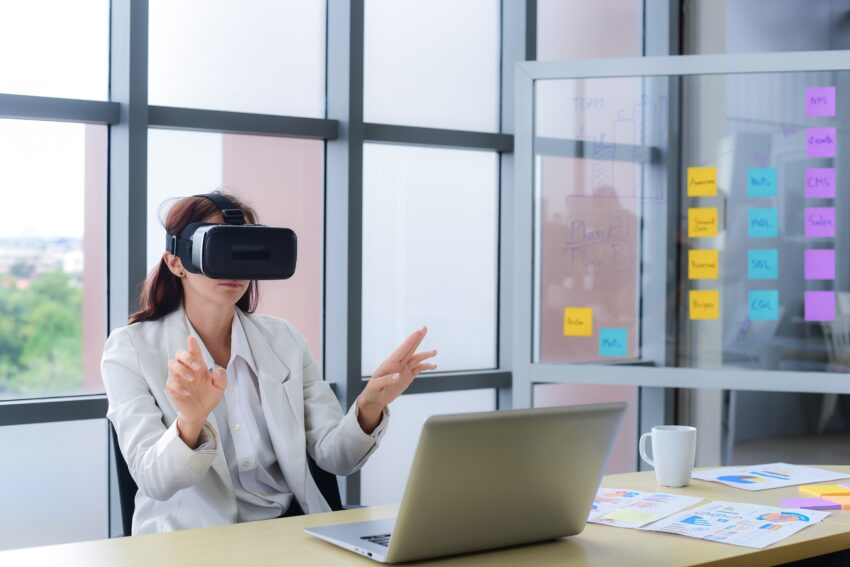
Virtual reality (VR) and augmented reality (AR) technologies have evolved rapidly integral tools for education and skills developmentand provides immersive learning experiences that are otherwise difficult to achieve in traditional environments. Industries such as healthcare, aviation and engineering require complex procedures that benefit from virtual simulations, including aviation and engineering training. These virtual simulations provide learners with hands-on training without the risks associated with real-world training experiences.
VR can increase engagement by creating lifelike environments where learners can interact with virtual objects in realistic environments, making learning more experiential and impactful than ever before. VR technology serves as an effective means of accelerating the acquisition of practical skills in industries that require practical skills. With increasing affordability and accessibility, increasing use is expected, both in education and vocational training sectors.
The conclusion
There is no doubt that technology is revolutionizing the way we learn and build skills. From learning management systems (LMS) and personalized learning platforms to immersive VR experiences and personalized AR environments, technological advancements are revolutionizing the education landscape.
As technology continues to develop, its impact on education will increase. Therefore, learners, educators and businesses must keep pace with the changes ahead to remain competitive in an ever-evolving landscape.