Artificial intelligence (AI) is no longer the futuristic technology once limited to sci-fi phones or tech giants with limitless budgets.
AI is here and is revolutionizing industries on a global scale. While it’s true that multinational corporations are leading the way in AI, small businesses don’t have to be left behind.
The misconception that AI is prohibitively expensive is increasingly diminishing, and more and more small and medium-sized businesses (SMEs) are now using AI-powered tools without exhausting their often limited resources. This article explores how smaller businesses can use AI to gain a competitive advantage, streamline their operations, and improve the customer experience.
AI is not just for the big guys
AI has traditionally seemed out of reach for SMBs, as applications like machine learning and predictive analytics seemed like luxuries that only large companies could afford or justify in their budgets. However, thanks to cloud computing, open source software and subscription-based AI tools, smaller companies can get out of the The most trusted online sports betting providers B. to your local stores, car dealerships, and even startups, you can reap the benefits of AI without huge upfront costs or hiring an in-house data scientist.
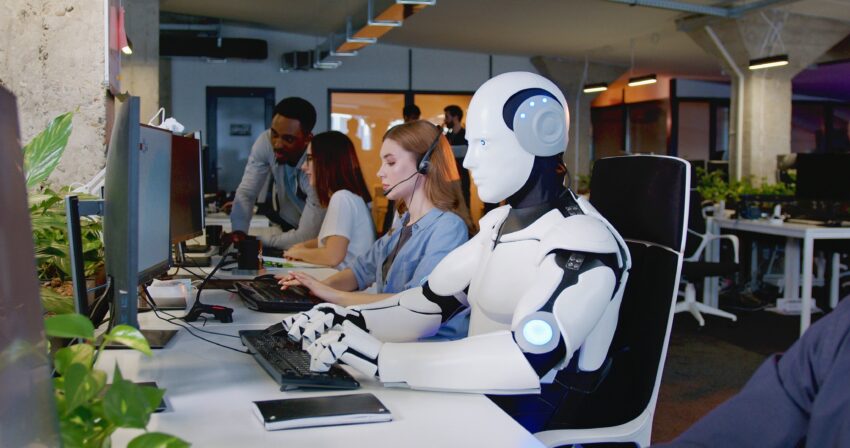
A key benefit of AI is that it can automate mundane tasks, freeing up valuable time for business owners and their teams to focus on more important issues such as strategic initiatives and other day-to-day operations. For smaller companies where employees often take on multiple tasks, this automation is worth its weight in gold. Using AI for data entry, scheduling, and customer service enables SMBs to operate more efficiently without increasing headcount.
Affordable AI solutions for small businesses
As competition for customers increases and technology advances, the cost of AI tools is becoming more affordable, with some even available for free. Tools that provide solutions in customer service, finance, marketing, and sales are becoming increasingly common among smaller businesses looking to streamline their operations.
Take marketing as an example. Email marketing platforms like HubSpot and Mailchimp allow companies to send highly targeted campaigns based on consumer behavior and preferences. This level of personalization was once reserved for large companies with dedicated marketing teams, but today SMBs can do the same at a fraction of the cost.
Using AI for customer service and support is another game-changer. Services like Intercom and Tidio allow small businesses to integrate highly intelligent chatbots into their websites that provide 24/7 support. These chatbots can respond instantly to customers 24 hours a day, reducing wait times and improving customer satisfaction. In addition, the bots reduce the pressure on employees, allowing them to focus on more complex tasks.
Using AI for data-driven decision making
Today, companies have access to massive amounts of data, but sifting through it and finding actionable insights previously required a full-time data analyst. Not anymore, because AI tools like Google Analytics, Tableau and Power BI do all the heavy lifting and do it much faster than a human can. These platforms analyze customer behavior, identify trends, and predict future outcomes based on extensive historical data.
AI-powered analytics can help small eCommerce businesses understand which products are popular among specific customer segments. By analyzing surfing behavior and past purchases, the AI can suggest targeted product recommendations. Amazon does this perfectly; Now smaller businesses can follow in their footsteps and increase the likelihood of repeat sales.
Optimization of processes
Any business that does not operate efficiently will ultimately have problems in the long term. AI can significantly streamline operations by automating routine processes, reducing errors and optimizing workflows. AI comes into its own when it comes to inventory management. Smaller retailers or wholesalers can use AI to track inventory and forecast demand, traditionally a time-consuming, manual task. Tools like TradeGecko and Unleashed can automate these processes by using algorithms to monitor inventory levels, use historical data to predict demand, and even reorder items once inventory falls below a certain threshold.
Many SMBs use accounting platforms like QuickBooks and Xero to automate invoice creation, expense categorization, and financial reporting. Not only does AI help reduce the need for manual data entry, it can also detect anomalies and provide real-time insights into a company’s financial health.
Overcoming the fear of AI
Some small businesses are hesitant to adopt AI, despite the obvious benefits it brings. They fear that AI is too complex or could replace human jobs, but that is not the case. While doom-mongers will always claim that AI is designed to replace humans and save companies huge sums in salaries to be paid out to shareholders, the reality is that AI is designed to work with us.
Instead of eliminating jobs, AI allows employees to focus on higher-level tasks that require creativity, emotional intelligence, and creativity. Machines do not currently have these capabilities. By allowing AI to take over mundane, repetitive tasks, employees can focus on more fulfilling and demanding tasks, resulting in higher job satisfaction.
Diploma
Small businesses have more opportunities than ever to integrate AI into their operations without incurring excessive costs. The rise of cloud computing and affordable subscription-based tools means that the use of AI is no longer just the preserve of tech giants and multinational corporations.
Tools like AI-powered chatbots, inventory management, and predictive analytics increase productivity and free up valuable resources for strategic growth. For many small businesses, working smarter is better than working harder, and AI makes this possible.
Remember that adopting AI does not mean replacing human talent; it means you optimize it. Humans excel in roles that require creativity and complex problem solving — areas in which machines currently lack. Yet they often spend a significant portion of their workday completing mundane tasks before they can get down to the nitty-gritty of their tasks.
The future of AI is here and it is here to stay. SMEs that want to harness the power of AI can grow and innovate without breaking their budget.