

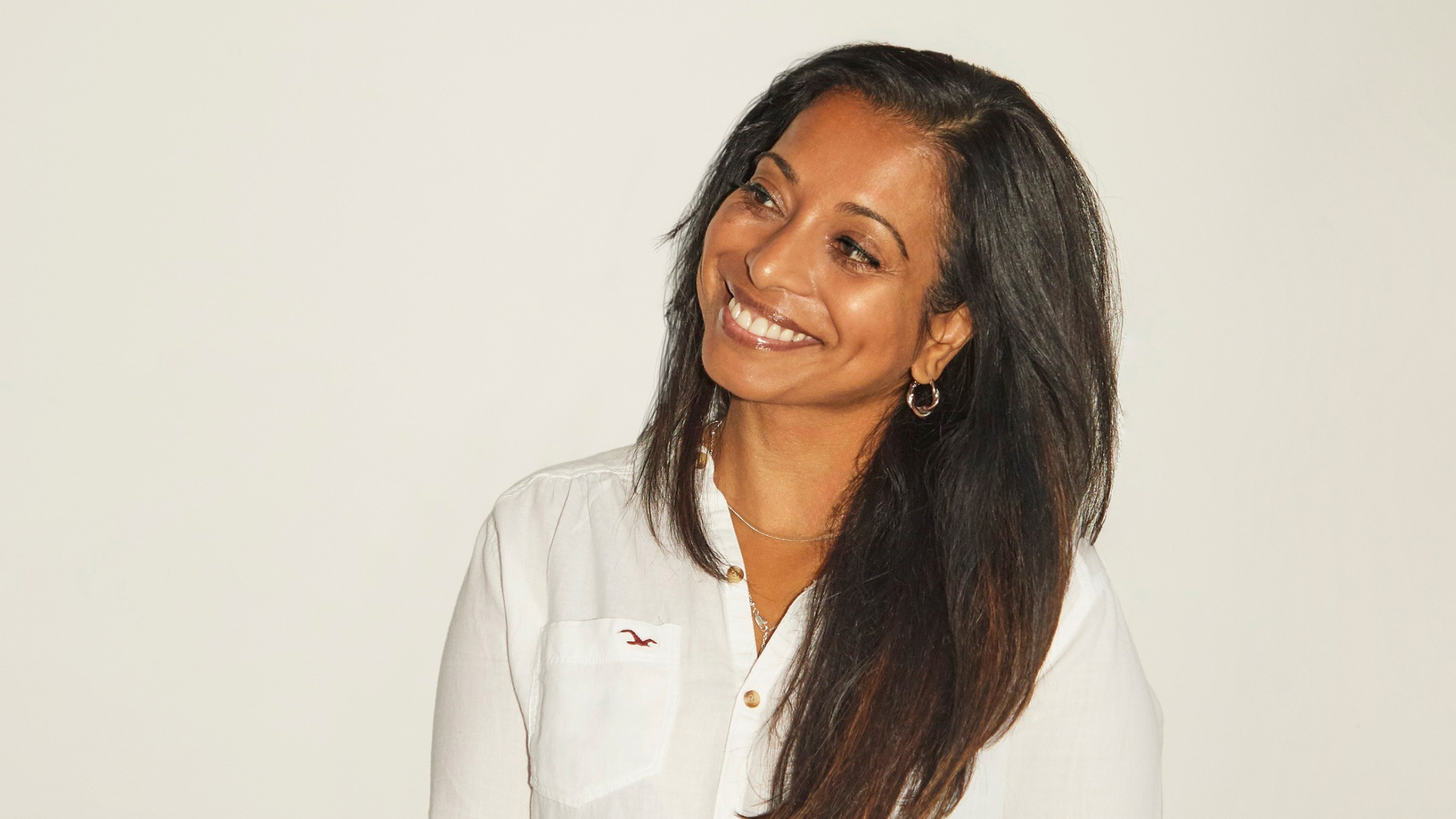
From solving complex equations in the lab to making delicious curry kits in her kitchen, Shelly Nuruzzaman’s career took an unexpected turn in her 40s.
With her doctorate under her belt but looking for a new purpose, Shelly swapped her lab coat for an apron and used her scientific expertise to inspire her culinary innovations.
Determined to grow her business, she personally tested recipes and built her business and website from the ground up. Her efforts paid off: within the first five years she achieved sales in the six-figure range and sold over 750,000 kits.
Discover how BANG! Curry has found its way into kitchens around the world, garnering millions of likes and views on social media, securing a bestseller spot on Amazon and gaining a nationwide listing on Waitrose.
Here is her unfiltered advice:
BANG cooking! curry
Bex Burn Callander:
I’m really excited to talk about this business. Ever since I read about it, my mouth has been watering. So you must tell us how you came up with this wonderful brand.
Shelly Nuruzzaman:
Well, it really came after motherhood, like so many things.
After the kids were born and a lot of time in the kitchen, whereas before I didn’t really spend a lot of time in the kitchen.
Suddenly I was thinking about what was going into their bellies and thinking about nutrition, whereas before I was at restaurants and just made meals myself and didn’t care so much about it.
But I really thought about what and how I could prepare those beautiful dishes that my mother would prepare for us as children and bring back the childhood memories.
And growing up with my mom, who is an absolutely amazing cook, she is such a perfectionist and I would always follow her around the kitchen.
After the kids, all the childhood memories came back and the times I would watch my mother cooking in the kitchen.
And I was always making up my own little tricks because I never understood what she was doing because there were over a dozen different ingredients that she was playing around with.
And to satisfy my curiosity and get me involved in the kitchen, because as a 9, 10 year old you can make quite a mess. But she encouraged it. She didn’t say no.
She got a small bowl and then spread the different flavors, spices and herbs into it, creating a little spectrum for me to play with.
And that was sort of the memory that drove the whole premise of BANG! triggered. Curry and the lessons my mother gave me.
And yeah, I just thought, “You know what? I can do something with this.” And it is a range that has been put together to share and promote the experience of making curry with other people.
Estimate risk and return
Bex Burn Callander:
You paint such an impressive picture. And in fact, as a child, I remember always smelling the smell of chopped onions and garlic on my mother’s fingers because she spent a lot of time cooking.
She worked full time, but on the weekends, and that was the special time when she smelled the tomatoes and cooked in the kitchen. So I know exactly what you mean.
But then it’s a pretty big jump from someone with a salary who was working as a quant at the time, so a financial analyst, to kind of putting it all on the line and getting involved in an untested business.
Maybe you could walk me through your thought process when it came to actually taking the plunge.
Shelly Nuruzzaman:
As a quant and in this business, you assess risk and return very moderately. This was part of my daily routine and runs through everything I did as part of my role in the various jobs I had as a Quant Analyst.
And when it comes to risk and return, I’m not at all averse to it, as long as it’s measured.
If BANG! I already had a lot of ideas, but nothing jumped out of me so instinctively and decisively that I had no doubts.
And I did some rough calculations, I did a quick gross profit calculation.
At that time I had the feeling that it couldn’t go wrong. There was a huge gap in the market. I saw an opportunity, and it was pretty much a question of: Who’s going to get there first? And yes, I got busy very quickly. It was a piece of cake.
Starting with a budget of £0
Bex Burn Callander:
And how much did you have in the startup pot? What was the budget that made you think, “Okay, I’m good to go with this”?
Shelly Nuruzzaman:
Zero. To be honest, it was next to nothing.
I started organically and everything was part of the weekly shop. I would experiment. My poor children and family had to eat curry much more often than usual.
So I incorporated it initially, I would say for about a year to perfect the recipes and understand if there was an appetite for it. So I did a fair amount of market research.
And when I started getting funding for it, it was through cooking classes. And that’s when I got some pot. We call this bootstrapping when you make something and then reinvest it.
And that was the case for a few years until we got our first contract with HelloFresh and were discovered after about six months of going to farmers markets.
So it all started with the cooking classes where I taught people how to make some basic recipes that I knew along the way.
I taught friends and family the basics like a dhal, a tarka dhal, a biryani, madras and bhajis. These are really familiar favorites that I’ve taught over and over again and brought with me to cooking classes to really test whether they’re worth pursuing.
And yes, we turned it into a product, some staples, went to markets, local farmers markets, there was Chiswick, Barnes, some in Clapham.
We actually did a few. It was fun. It was really fun. And then we stopped when it wasn’t fun anymore because it coincided with hitting the shelves at Whole Foods Market and it was right before the pandemic.
And until we got our deal with HelloFresh, which I’m so proud of and really launched the brand, we started looking for a little investment. It wasn’t much.
My mother loaned us about £10,000 to expand the business and I was able to buy a machine.
And lucky for me, Mark is a manufacturing engineer. He is an expert in mechanics, electronics and everything like that. So we were able to rent an industrial system from ActOn on site.
We took this machine and rewired it. It was pretty industrial and it’s a big blender machine. And that was the beginning of BANG! where we did really big productions.
I have to say that since then, which was a long time ago, we no longer produce anything ourselves.
We did it the hard way, but I think there’s a real advantage in understanding the ins and outs of production. So yes, our first injection was 10,000 pounds.
Bex Burn Callander:
That sounds so exciting, buying this huge machine and standing there in some industrial space staring at this huge grinding and mixing thing.
How exciting that moment must have been because it must have felt so real to you back then, walking out of the kitchen and into that business space.
Shelly Nuruzzaman:
It literally came out of my kitchen at home and into this stainless steel machine. It was pretty surreal, I have to admit. It was a real moment.
And then I saw the recipes receiving praise on the HelloFresh website, the chef calling me and asking for the next recipe, and me discussing the ingredients. Yes, it was a good time.
Filling the product gap for HelloFresh
Bex Burn Callander:
Did you think you would go the recipe kit route to find a partner to introduce you this way? Or was that just a happy coincidence? How did this conversation with HelloFresh come about?
Shelly Nuruzzaman:
I was kind of looking for it. I could make a real analogy between what we were doing and the idea behind BANG! recognize. and what Hello HelloFresh was doing in the market.
At the time, HelloFresh was pretty big in the US, but they were just getting started in the UK. And I think they’re kind of like a franchise, right? They are represented all over the world.
But in Britain back then people weren’t so keen on curry. They didn’t have many curry recipes or they didn’t have any. And so I got in.
I think it was actually a bit of luck because obviously I know what I’m talking about when it comes to the curry recipes and it kind of suited her needs at the time.
And so I gave them a really good solution for something that they could add to their repertoire. So I wouldn’t say it was an accident, but it was one of many possibilities that I had pursued and it came about.
Bex Burn Callander:
This is amazing. Sometimes you have to think quite differently about the routes to market. That’s why it’s great to hear your story about how you found someone who is kind of a stepping stone into people’s homes and pallets. It’s so interesting.
The overlap between science and business
Bex Burn Callander:
And then I’m interested because you had a doctorate in physics. What skills do you think you gained from working in the lab at Imperial College?
Is there any overlap when putting together spice sets, because it’s kind of a science, right?
Shelly Nuruzzaman:
Physics is an incredible subject, it’s all about problem solving, it’s very analytical, it’s very creative and that was something I didn’t realize before.
And I really see a parallel between the techniques that I’ve used in the lab, whether it’s optics or lenses, mirrors, light and all of those things.
I guess I traded for spice ingredients and herbs and the tolerances behind each measurement, came up with these trials and reduced the trials from 200 to 50 instead of 200 to 120.
Getting there was easier with the techniques I learned through science. And it was really surprising.
Bex Burn Callander:
So traditionally it comes full circle and you almost break the tradition by reaching the 360° mark.
Shelly Nuruzzaman:
Yes, that’s actually true. When we think about the disruption that BANG! in its category, I’m really proud of that.
I just wanted to turn the ideas of what people call curry on their head today. And it sounds so insignificant, but I actually feel very passionate about it because the cuisine itself and what I grew up with is not what you find in the stores.
I find it a little, almost insulting to the consumer to offer them something that doesn’t taste good, isn’t healthy and doesn’t involve the consumer in the entire cooking process.
What we’re doing is engaging that person in the enjoyment of the kitchen and evoking the pride and healthiness of that style of cooking. Not to mention the sustainability that our range brings with it.
Bex Burn Callander:
Well, we’ll go back to sustainability, but I’m interested in what you say about giving people a part of the cooking experience and being involved in the process.
Because there is a magic, isn’t there? When the spices go into the pan and the flavors are released, it’s almost like an exhilarating moment where you’re swept away by what you’re about to eat. So it’s like theater, right?
Shelly Nuruzzaman:
It is. It’s very similar to theater. And honestly, I never get tired, BANG! At least every two weeks and every time think: “Yes, that’s good. It was really quick and saved me so much effort.”
Studying in a field that is 99% male-dominated
Bex Burn Callander:
I wanted to know more about your experiences studying physics.
You said something really interesting there about being the only woman in college. Being such an outlier must have been quite a challenge at times. Was it?
Did that teach you to be pretty resilient as a person and were you able to incorporate the traits you probably developed in the lab into your entrepreneurial journey?
Shelly Nuruzzaman:
Imperial is known. When I was there it was known to be 99% male and I was the only female, definitely in the Blackett Lab as we called it, which is opposite the Royal Albert Hall. It is a very nice place to learn.
And I didn’t really focus on being the only woman. I understood that I had to perform much better or I would be scrutinized because of my wife, but I dealt with it by just moving on and letting that be its own problem, if you will, and I just went with it continued with and just did what I was there to do.
If I had focused too much on it, it probably would have distracted me from the joy and reason I was there, because you can get a PhD in physics for no other reason than love of the subject.
That’s the only thing that will get you through because it’s hard. There’s not really much financial reward. It’s about success and pursuing what you seek.
Your belief in your business will carry you through tough times
Bex Burn Callander:
And then when you took the step into becoming an entrepreneur and recipe maker, you were in your 40s and mentioned that you already had children at that point.
Did that feel like a lot of pressure to make it work because you probably had financial responsibilities? You’re not a footloose, unimaginative 20-year-old with nothing to lose.
And how do you think that influenced your journey? Was this pressure actually so motivating that you had to be successful?
Shelly Nuruzzaman:
I think you’ve found exactly the right thing. Yes, there was a lot of pressure involved because I came from such a high-performing background in terms of the other areas I was in, I guess.
And I was very aware of some people’s opinions, like, ‘What the hell is she doing?’ What does that have to do with anything scientific, financial or quantitative?”
But I just kept going because I knew I had something, and that belief obviously got me through those tough times.
And it was difficult because I had no wages to rely on, no constant electricity, and I couldn’t call the IT department when I needed help. It’s about solving everything yourself.
You’ve been a one-man band for quite some time and it’s been difficult, but the little successes along the way keep you going.
Use Amazon reviews to boost sales
Bex Burn Callander:
And tell me about some of those little successes.
So we talked about HelloFresh and how it took you to the big time and the little big time. And then what did you do next? How have you used this momentum to further expand the brand and attract new customers? What were the next wins on the list?
Shelly Nuruzzaman:
Well, it was all about getting the name out there and being seen. We used micro-influencers quite a bit. Amazon has been a big brand awareness winner for us.
Now I mentioned that we basically started fully scaling our online business during the pandemic.
So we made a good choice by just getting out of retail and focusing everything online. So we decided to go online, we created our own website, which I developed clumsily in the first few days.
From there we evolved quickly, but it worked, it was good, and we launched on Amazon. We even started with Amazon EU before we could no longer trade in the EU.
And that really helped us, and we grew our sales there primarily through reviews and getting our customers to come back and review our products, because reviews are everything.
And it is social media that ties in with this. If you will, it’s all one big marketing loop. Everything tells this story, and one part doesn’t work without the other.
So you quickly learned how all these different channels work together. It’s quite complicated, but once you understand it, I think we really established ourselves on the Internet in the beginning.
How to get people to leave reviews
Bex Burn Callander:
And how did you get people to leave reviews? Because that’s like the magic bullet, right? If you can get people to say they’re happy, people are happy to tell you when they’re upset or when something wasn’t as expected, but it’s difficult to get them to take the time and saying that was great. How did you do that?
Shelly Nuruzzaman:
Well, we made the effort to establish direct contact.
We would have people actually doing customer service. We’ve automated the process of collecting reviews in a clever way, but not in an illegal way as Amazon has some pretty strict rules.
It was time consuming, but worth it because just one review makes a big difference in the stats. And we made sure to take our customers’ feedback into account.
So all of these things had a big impact on the future NPD of our products. So we listened, and I think we need to listen to make sure we continually improve what we give. So that’s how we did it.
Become resilient to feedback and use it to improve
Bex Burn Callander:
And how did you react to the feedback? Because I can imagine that in the world of curry there is a wide range of people when it comes to spices. Some say a little bit is too much, others say it would blow me away. How on earth can you serve all of these people at the same time?
Shelly Nuruzzaman:
You know what, that’s actually a great question because I think I developed my resilience to all of this when I was at the market stall right at the start.
Because people said to me, “Oh, it’s too spicy,” and I didn’t understand it because spicy isn’t in my vocabulary.
I said, “What does that mean?” Too spicy?” But literally it means heat, and I didn’t realize that.
So I got used to different ways of describing taste. And because we have a fairly large range that caters for every taste, I could always point someone in the direction of a different flavor if you wanted.
And guess what? Not every taste is suitable for everyone. And I soon learned not to be offended.
Of course it’s very personal for me because I developed them all from scratch, but you can’t make everyone happy. But I’m happy to say that most people are really excited when they use what we do.
And if not, then I really try to analyze how they’re using the product, because maybe there’s something not quite right with the way we communicate their use. That’s why I’m pretty strict about these things.
Make your product versatile
Bex Burn Callander:
And how do you get people to buy again and again? Because it seems like when you create a kit like this, you want it to be circulating, like you do with food prep, like you say, maybe every few weeks, BANG! Curry in the rotation.
So how do you stay in people’s minds? Just refresh them: “Remember, we’re here, we’re delicious.” How do you do that? How do you get repeat purchases?
Shelly Nuruzzaman:
That’s why we try to give inspiration. So we want to BANG! It should be a way of life, not just a product that you use and get bored with. It’s the versatility we offer people and the ability to do whatever they want with their meals.
And if you have special dietary needs, if you prefer certain ingredients, you don’t like meat or you just love vegan ingredients, there is always something for that person and we want to inspire you with many different recipes that you can only use with the 1 kit become.
You can vary it, but you know you’re in control of your taste, and I think that’s why people come back. You don’t get bored.
They will buy it once and know that they can change it up a little and it will be well received if they put in the effort to put some time into it and make it.
Bex Burn Callander:
Is this possible via social media? Say something like, “Hey, look, you can use this set for an exciting grilled meal, or have you ever tried paneer, or…”
How do you show them another way to use it and how do you keep updating it? Is it like TikTok videos? How you do that?
Shelly Nuruzzaman:
We do most of this through social media. This is very quick and sharing recipes. We have recipes on our website.
And now we’re at Waitrose, they’re starting to introduce some of our recipes too. While it’s still early days, we have some lovely recipes on the horizon that will appear in their weekend magazines and we’re happy to continue updating those recipes through these platforms.
And because that’s what it’s all about, right? Everyone gets bored of the same old weeknight meals, or even if someone comes over, how do I cook something together quickly and everyone is happy?
We want to solve this problem and make meal times exciting.
Competition proves that there is demand in your market
Bex Burn Callander:
And tell me what the competitive landscape looks like right now.
Because you obviously did something at the beginning of a pretty big wave of recipe kits and different types of kits that focus on different cuisines, and now there are a whole lot of curry kits.
How do you stand out and has this led to more exposure in the category as a whole? Is this a good thing or has it stolen some of your customers?
Shelly Nuruzzaman:
In my opinion, I would prefer not to be the only product in a category and carve that out, because honestly, we’ve carved out that category and it’s difficult.
It’s difficult to convince one buyer after another that there is a group of consumers clamoring for these types of products.
So I’m really happy because it proves our point that there is a demand for it and that the competition is actually good.
We’re pretty confident, confident in a way, about our range and that we can withstand this.
Bex Burn Callander:
And you don’t want to waste too much time looking at the competition. You just want to focus on the next thing.
Keep new product ideas fresh and fluid
Bex Burn Callander:
And tell me about it. How often do you launch new products? Is there a lot of pressure to keep this NPD pipeline running all the time?
Shelly Nuruzzaman:
This is the most exciting part. Honestly, coming up with new ideas and just bringing them to life is exactly what I live for, NPD and next.
In the beginning, it literally took 18 months to get the first recipe perfect. With all the scientific techniques I’ve talked about, I now have a methodology, and the last NPD I put together took me maybe four attempts. I was so happy and it was just amazing.
And now we see it in a new professional area. What we’re concentrating on now is that we’ve launched a new range of products which we launched with some help from a non-executive director who we hired last year.
Now he has a very rich background in the catering industry and has helped a company called Santa Maria. I don’t know if you know them, but they’re really big in the Mexican spice space now.
He helped us as a company reframe what we were doing really well in retail and apply it to the restaurant industry.
And so we have this high volume range called BANG! Curry Professional, and that’s so exciting. I have some really exciting news that I can’t share with you today, but that’s pretty much our next launch.
And that’s so exciting to me because it’s literally feeding the masses. We’re changing some really big things when it comes to curry.
Bex Burn Callander:
And are you still the one formulating the recipes? You mentioned that it’s the methodology and that it takes four tries to get it right, but are you still there with your hat on, your goggles on, mixing all the spices?
Shelly Nuruzzaman:
I wouldn’t tell anyone because that’s where I enjoy the most. No, that’s me.
And maybe in a year I won’t be, but for now that’s entirely up to me.
Bex Burn Callander:
You have to do what you love. It’s really sad when you interview people, start a company and the thing they love at the beginning, five years later they say, ‘Yeah, I can’t do that anymore.’ I have to delegate that to someone else.”
It’s nice to hold on to the things you love.
Use paid courses to boost your business
Bex Burn Callander:
Shelly, you mentioned bootstrapping at the beginning, and we talk about bootstrapping quite a bit on this show, and I’d love to hear some of the really clever bootstrapping strategies that have worked for you and your business.
So the way you’ve grown while also cutting costs, saving money, and being smart about how you spend on marketing or going to market. So tell me about some of these strategies, 1 or 2, that really worked.
Shelly Nuruzzaman:
What I think really benefited us was the cooking classes we did. We tried so hard, but we got so much out of it.
We charged seating, and I literally made it in our own kitchen, so there was no rent, everything went straight to the bottom line, the ingredients didn’t really cost much, and we ranked #1 on Google for Indian cooking lessons.
And that’s about it, I have to admit, I don’t know how I did it, but I built the website and it put us up there, and the cost of that was really quite low for the company.
And I think we got some really nice wins along the way, and of course some reviews on Google about BANG! Curry and the lesson.
And the intellectual property that we took from that is also what people actually wanted from a product, what kind of recipes and how much time they were willing to invest in it.
Since I was showing them step by step, I didn’t use the kits but showed them from A to Z every single piece that goes into the recipe.
But there wasn’t a single customer who didn’t walk away, take the recipe I gave them and cook it from scratch, they all ended up just using the kits.
So at the end I would give them a little gift bag with the kits and the recipes, but I don’t know anyone who has actually cooked the whole thing from scratch, gone out and bought all the different ingredients. A lot could be learned from this.
And it helped launch, it helped fund things like branding, things like printed packaging, all of those things, everything related to the cost of goods that we were just paying for in the beginning.
With every marketing, we tried to be very smart about the guerrilla marketing and digital advertising, which is basically what I tried to focus on, and I did it all myself at first. I basically figured this out.
Bex Burn Callander:
This is a great tip, the bootstrapping tip. And what did it look like when it came to getting your products onto Waitrose shelves? How did you manage that?
Shelly Nuruzzaman:
Oh, hard work and perseverance. Knock, knock, knock on the door. Oh, that was very difficult. I think that was a conversation that probably started 18 months earlier.
These things require a lot of time and maintaining and using things like LinkedIn and social media just to stay top of mind.
It’s really important to talk about things that are relevant to each retailer. Try to get insider knowledge, for example about Waitrose’s agenda and business goals for the year, and try to align your activities with those agendas and tick their boxes, because everyone has the KPIs.
So yeah, we’re just very specific about what we show online.
Find out how to get the best value for your money
Bex Burn Callander:
I wanted to ask about the margin because I think it’s so difficult when you’re creating a recipe package to make sure that you’re charging enough to have a sustainable business but also fit in the sweet spot where the consumer wants that Feels like I’m getting good value for money. How did you find this price and how long did it take you to get there?
Shelly Nuruzzaman:
At BANG! We’ve actually always had the difficulty of moving from perception to value and offering the consumer value for money, especially now. It’s difficult now, everyone wants good value for money, everyone is straining their wallets.
And we try not to make our products premium products. It’s more about targeting the middle class who can spend some money on their purchases, but fundamentally it’s not a premium product.
So we priced it so that it would be cheaper per serving for a meal for 4 people to use what we use rather than buying jarred sauce and without a doubt it worked out that way. So that’s how we did it.
We compared ourselves by looking at how much it would cost to feed a family of four if you use a familiar jarred sauce or BANG!
And we priced ourselves lower because we thought, “Well, actually cooking comes with a price,” so we assigned a certain value to it, then balanced that out, and that’s how we came up with If you want, you can You specify the RRP price.
Bex Burn Callander:
This is actually great advice. Just think about the category you’re bothered by and make sure it’s equivalent or cheaper than the traditional, lower quality option. I think it’s amazing that you did that.
Grew up on Brick Lane surrounded by tasty food
Bex Burn Callander:
And then tell me about Brick Lane, because when I saw that you grew up near Brick Lane and ate in those restaurants, I grew up in London as a teenager and spent my 20s in London. All my friends and I had favorite restaurants on Brick Lane, we would go to 93 Feet East.
It just brought back so many memories. So tell me about your life eating and hanging out on Brick Lane and how that sparked your passion for food.
Shelly Nuruzzaman:
Brick Lane was a center of the Bangladeshi community at that time. And culturally, food was everything. That’s all anyone ever talked about.
And food, what’s for dinner? What do you do to so-and-so when they come over? And we went in and out of restaurants all along Brick Lane.
So my father basically knew every restaurateur there. I don’t know how he does it, but he makes friends with everyone.
And my father had a factory in Brick Lane. It was a tea blend factory and was right on Brick Lane, so I spent most of my time in the area.
And my mother, as already mentioned, also cooked a lot. So it was basically about food and understanding which restaurants to go to, which ones had the best naans, made the best homemade naans and faratas and all that stuff. It was fantastic. It’s really good.
And I didn’t have to pay for most of it. Everyone in Brick Lane was an uncle.
Bex Burn Callander:
Was this something like an early focus group? Because you must have seen the most popular dishes in many of these places or places. Everyone always asks for the chicken tikka masala, always the eternal chicken tikka masala.
Shelly Nuruzzaman:
But it’s good, right?
Bex Burn Callander:
It’s so delicious. Hard to beat.
Shelly Nuruzzaman:
It’s the biryani. I think it’s because of the spice in the tikka. But it’s not even a traditional dish, you know that? It’s purely British, I’m proud to say that. It’s a very good mix of the two cultures.
Development of a sustainable brand
Bex Burn Callander:
And we talked a little bit about sustainability earlier, and I actually wanted to come back to that because you’ve taken great care in formulating your kits to make sure they’re more environmentally friendly than the competition and other options that you can choose for your dinner .
Tell me about that and how difficult it was to build a sustainable brand.
Shelly Nuruzzaman:
It was difficult because of cost since our backpacks are all made of paper. They are all packed by hand and we try to minimize the amount of plastic.
Now we could have easily packaged everything by machine, in plastic bags, and new materials are coming along, so maybe we’ll go that route.
But when we launched the range, this was the best option for us. But most of all, I think sustainability comes from using real ingredients and no additives, and using home cooking or home cooking, however you want to put it.
Obviously you use your ingredients more efficiently. Less is wasted. You eat your leftovers. If you have takeout or jarred sauces, you might not necessarily do that because they won’t necessarily be delicious the next day.
But you just keep going and you eat everything. And that’s where I think we teach a little more about this sustainability aspect.
Being authentic will attract retailers
Bex Burn Callander:
And was it really useful when it came to attracting retailers? They all have their ESG agenda now, everyone wants to ask their suppliers: What are you doing in terms of CO2 reduction? And you’re at the top saying, “Hey, look, no plastic.”
Shelly Nuruzzaman:
Yes, I would say the most important thing for retailers for us was authenticity. And they’re really fascinated by the authenticity of our flavors and the way they’re put together, the authenticity of the processes.
We didn’t cut corners, we just used some really clever tricks in what we do. And one of the components of our kits is, as unsexy as it sounds, it’s a mix of onions, garlic and ginger, and we currently have a patent pending for it, and that was my latest MPD.
And what it does: It saves you the hard work involved in chopping the onions, ginger and garlic. Every curry begins with this famous trio.
So what it does is simply make something that home cooking takes time and effort to make, but is more authentic. And I think that’s what retailers really liked about what we did.
We combine convenience and authenticity, and to top it off is the fact that we minimize our plastic consumption, in that order in my opinion.
Expand your business into multiple features and products
Bex Burn Callander:
It sounds like you have more than one company here. It sounds like you have BANG! Curry, and then you have this amazing ginger, garlic and onion product that you could sell in that mix to a lot of other companies and a lot of people in the food service industry.
And then it also seems like you have this R&D process where you can create a new product in very few steps by following a certain process that you also designed, which seems like a completely different business that you could sell.
Shelly Nuruzzaman:
Thank you very much. You really made the sound shine. Thank you very much. I wish I could have shown you something with onions, garlic and ginger, but there isn’t any here. But I can show you the bags.
Bex Burn Callander:
Yes, show me the bags.
Shelly Nuruzzaman:
All right, this is new. This is new to the market and contains 140 servings. This is the exciting new news we will be getting very soon. We have a really good entry, but I’m not allowed to publish it yet.
So this is for the chefs, right? It makes her life so easy. You don’t have to store all the different bags and most of them come in really heavy plastic containers.
And the sustainability aspect is really big on that side of the business, I would say even bigger than retail.
Inspired by this business story?
Subscribe wherever you’re listening or watching Good advice about Apple iTunes Here.
We are also on Spotify and wherever you get your podcasts.
Join our community to share your insights and stories X @SageUK with the hashtag #SoundAdvicePodcast on Instagram @SageOfficial or in the comments below!
Would you like to know more about Shelly and BANG? Curry?
You can find out more about Shelly from her LinkedIn.
Find out more about BANG! Curry on hers website And Instagram.

