

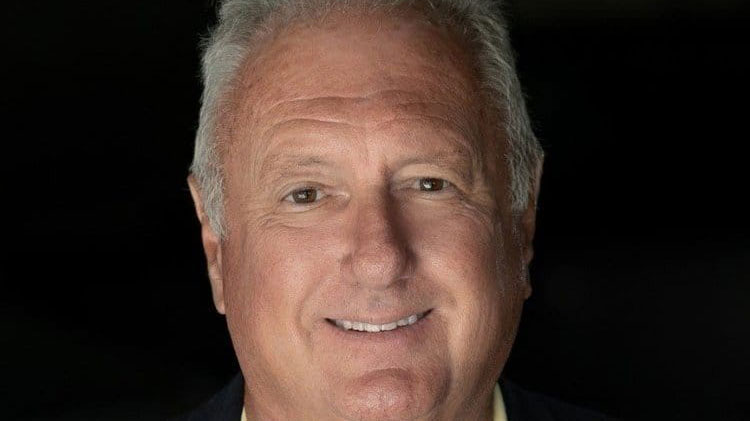
Peter J. Burns III is an experienced entrepreneur whose prolific career has spanned four decades, during which he has founded or helped found over 200 companies.
A native of New Canaan, Connecticut, Burns comes from an established New England family and brings a wealth of experience and a forward-thinking approach to entrepreneurship. He began his entrepreneurial journey while studying at the University of Virginia’s McIntire School of Commerce, where a class project led him to successfully start a moped rental company, fueling his never-ending pursuit of innovative business ventures.
Based in Del Mar, California, Peter J. Burns III has a remarkable track record of creating and supporting businesses, ranging from financing solutions such as Burns Funding to initiatives such as Millennial Queenmaker, which empower young women to become successful entrepreneurs. His commitment to education and mentoring is evident in his work establishing the nation’s first College of Entrepreneurship at Grand Canyon University. Burns has been recognized for his contributions to the business world and was named Entrepreneur of the Year in 2007 by the Arizona chapter of the Future Business Leaders of America. His ventures reflect not only his business acumen, but also his commitment to making a positive impact on society.
What inspired the creation of Millennial Queenmaker?
Millennial Queenmaker was inspired by my desire to empower the next generation of female entrepreneurs. Having two daughters and four granddaughters, I have witnessed firsthand the unique challenges and opportunities women face in business. The goal is to give these ambitious young women the tools and mentorship they need to succeed on their own terms.
How do you assess the feasibility of a new business idea?
I look for three key elements: a clear value proposition, a definable target market and a scalable business model. If an idea can convincingly meet these criteria, it has a solid foundation. The next step is to assess the competitive landscape and the team’s ability to implement the concept.
In your experience, what is the biggest challenge facing entrepreneurs today?
I think the biggest challenge is information overload. There’s so much noise out there — endless data, advice and strategies — that it can be overwhelming for entrepreneurs to filter out what’s relevant to their specific situation. Learning to prioritize information and action is critical.
Can you give an example of a particularly innovative project you recently worked on?
One of the most exciting projects I have been involved in is developing a new approach to sustainable tourism through eco-friendly accommodation and practices. This not only helps protect the environment, but also taps into the growing market of environmentally conscious travelers.
What strategies do you use to stay ahead in rapidly changing industries?
Constant learning is my strategy. I delve into the latest research, trends and technologies. To stay at the forefront, networking with other thought leaders and attending industry conferences are also crucial. This proactive approach helps me anticipate change rather than react to it.
What role has mentoring played in your career, both as a mentor and as a mentee?
Mentoring was a two-way street for me. Early in my career, the guidance of experienced entrepreneurs helped me navigate the complexities of starting and growing businesses. Now, as a mentor, I strive to provide the same insights and support to the next generation. The exchange of ideas and experiences enriches everyone involved.
How do you approach risk management in your business ventures?
My approach to risk management includes thorough due diligence and scenario planning. I evaluate the potential risks and opportunities of each venture and prepare strategies for different outcomes. Effective risk management is about making informed decisions, not just avoiding risks.
What is the most rewarding aspect of your work?
What’s most rewarding is seeing the tangible results of my efforts — whether it’s a startup thriving thanks to our funding or a young female entrepreneur making a name for herself in the business world. Knowing that I contributed to their success is incredibly fulfilling.
How do you balance innovation and feasibility in new projects?
The key is to balance innovation and feasibility. I encourage creative thinking and pushing boundaries, but every innovative idea must be based on practicality. We carry out market tests and feasibility studies to ensure that our innovations can be implemented effectively and are ready for the market.
Looking ahead, what trends do you think will dominate the entrepreneurial landscape in the next decade?
I believe we will see a rise in companies that are heavily integrated with technology, particularly artificial intelligence and machine learning. Sustainability will also be an important focus as more consumers and businesses prioritize environmental impact. Entrepreneurs who can innovate while contributing to a sustainable future are particularly well positioned for success.

