

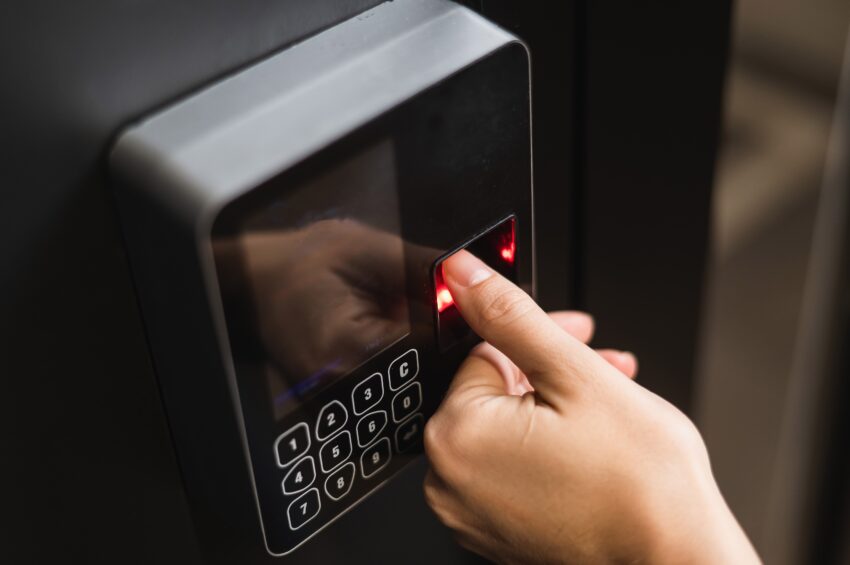
biometric verification is examined here through practical benefits, risks and decisions that readers can apply with reliable information and appropriate professional guidance.
Biometric Verification: Practical Overview
In today’s digital age, securing access to personal data and sensitive information is becoming increasingly important.
For complementary reporting and analysis, readers can also visit Michael Schmitt, Trider and the Malta Business Report.
Independent reference material is available from UK government, OECD, European Commission.
Business owners comparing structures can also review our guides to holding companies, UK company formation and Ireland company formation.
Biometric verification has proven to be a reliable and practical method for identifying and authenticating individuals by leveraging unique biological characteristics. This technology is now integrated into various aspects of daily life, from unlocking smartphones to airport security checks.
Let’s explore what biometric verification is, how it works, what different types of biometric systems exist, and where this technology is commonly used.
What is biometric verification?
Biometric verification is a method for identifying and validating individuals based on their unique biological characteristics. These features include fingerprints, facial patterns, voiceprints, iris patterns and more. Biometric verification answers the question “Who are you?” in a digital environment that allows individuals to access systems, services or devices.
Unlike traditional authentication methods such as passwords or PINs, biometric data is inherently personal and difficult to forge or reproduce. This makes biometric verification one of the most secure methods of identity verification.
How does a biometric verification system work?
The biometric verification process includes several important steps.
First, a biometric sample, such as a fingerprint or facial scan, is collected from the person. This pattern is then converted into a digital template that is securely stored in a database. When the person needs to be authenticated, a new biometric sample is taken and compared to the saved template. If both match, the person’s identity is checked.
Biometric systems can work both online and offline depending on the application. For example, online systems could use cloud technology to store and process biometric data, enabling remote verification. Offline systems, on the other hand, typically use local storage and processing, which may be more suitable for high-security environments.
What types of biometric verification are there?
Facial recognition
Facial recognition technology uses the unique features of a person’s face, such as the shape of the chin or the distance between the eyes, to identify and authenticate them. This method is commonly used on smartphones where users can unlock their devices by simply looking at the camera. The system captures a digital image of the face and compares it to a stored template. Although facial recognition is very effective, it may be less reliable for children and the elderly, whose facial features may change over time.
Iris and retinal pattern recognition
Iris and retinal pattern recognition is one of the most secure forms of biometric verification. The iris and retina have complex, unique patterns that remain stable throughout life. These patterns are captured using special scanners and compared to stored templates for authentication. This technology is often used in high-security environments, such as military facilities and banking systems.
Fingerprint scanning
Fingerprint scanning is one of the oldest and most widely used forms of biometric verification. Each person’s fingerprint has unique grooves and patterns that can be used to identify them. Fingerprint scanners are now widely available in smartphones, allowing users to unlock their devices or authorize payments with a simple touch. This method is also used with government-issued IDs such as passports, where fingerprints are stored in a database for verification.
Speech recognition
Speech recognition technology analyzes the unique characteristics of a person’s voice, such as pitch, tone and frequency, to verify their identity. This method is often used in customer service applications where people can be authenticated over the phone. Speech recognition can be implemented using either text-dependent or text-independent systems, the former requiring the user to say a specific sentence and the latter allowing free speech. However, compared to other biometric methods, voice recognition is more susceptible to fraud, such as deepfake attacks.
Signature recognition
Signature recognition analyzes the way a person signs their name, taking into account factors such as speed, pressure and the shape of the signature. Although less common than other forms of biometrics, signature recognition is still used in some financial institutions and legal applications where handwritten signatures are required. However, this method is more susceptible to forgery and less reliable than other biometric verification techniques.
Where is biometric verification used?
Mobile access and authentication
Biometric verification is increasingly being used in mobile devices for access control and authentication. Smartphones now often feature fingerprint scanners and facial recognition technology, allowing users to securely and conveniently unlock their devices and authorize transactions. This seamless integration of biometric data with mobile technology has made it easier for users to access their data while ensuring a high level of security.
Airport security
Airports around the world are adopting biometric verification to increase security and streamline passenger processing. Biometric systems such as Facial recognition and iris scanning are used at security checkpoints, boarding gates and customs to quickly and accurately verify travelers’ identities. This technology not only improves safety but also reduces waiting times for passengers and makes the travel experience more efficient.
Online banking
In the financial sector, biometric verification offers customers a secure way to access their online banking accounts. Banks are increasingly using fingerprint and facial recognition as authentication methods, replacing traditional passwords and PINs. This approach not only increases security but also simplifies the user experience, allowing customers to conduct transactions quickly and securely from their mobile devices.
Remote identity verification
With the rise of digital services, remote identity verification has become essential for businesses to comply with Know Your Customer (KYC) regulations and prevent fraud. Biometric verification combined with document verification allows companies to remotely verify the identity of their customers. For example, a user may be asked to submit photo ID and a selfie during the onboarding process. The system then uses facial recognition to match the selfie to the photo on the ID, ensuring that the person is who they say they are.
Diploma
Biometric verification has become a cornerstone of modern security systems, providing a reliable and convenient way to authenticate people based on their unique biological characteristics. From mobile devices to airport security to online banking, biometric data is being integrated into various aspects of daily life, providing enhanced security and a seamless user experience. As technology advances, the use of biometric data is expected to increase and become an even more integral part of our digital lives.
Biometric Verification: Seven Key Considerations
1. Biometric Verification Consideration
biometric verification starts with a clear objective and evidence relevant to the decision.
2. Biometric Verification Consideration
biometric verification should be assessed against measurable practical or commercial outcomes.
3. Biometric Verification Consideration
biometric verification requires accurate information and responsible ownership of each action.
4. Biometric Verification Consideration
biometric verification works best when risks and alternatives are reviewed before implementation.
5. Biometric Verification Consideration
biometric verification benefits from regular monitoring as circumstances and regulations change.
6. Biometric Verification Consideration
biometric verification should remain proportionate to the needs of the people or business involved.
7. Biometric Verification Consideration
biometric verification may require specialist advice where legal, financial or technical duties apply.

