

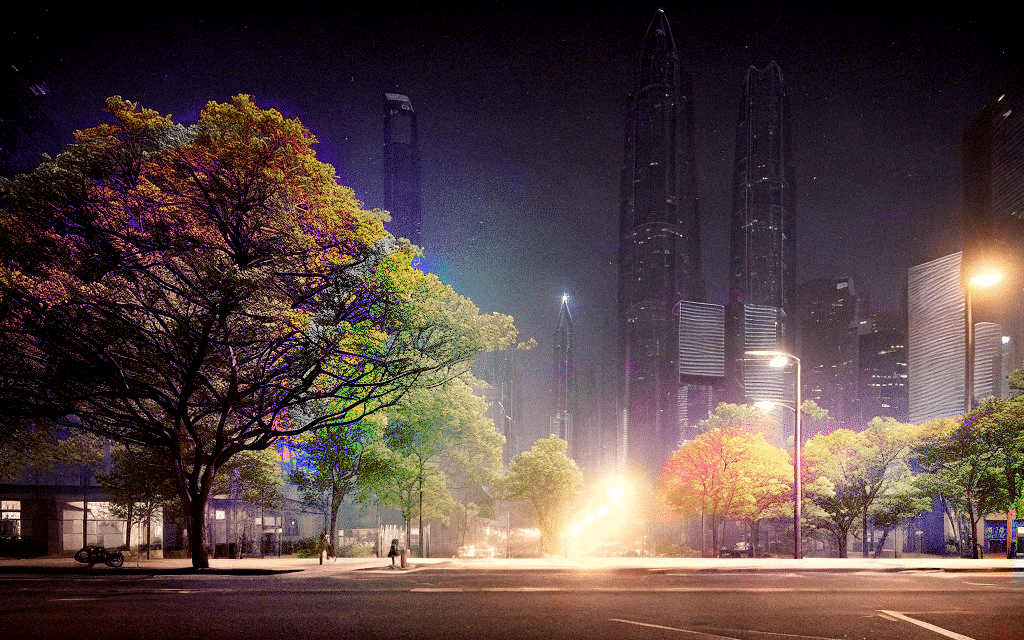
Plants that glow in the dark have been used as organic flashlights over the past centuries, with one of the earliest records coming from this year Indonesia in the 17th century.
The idea of using plants as a source of light never caught on and gradually disappeared with the invention of electricity. Nevertheless, recent discussions surrounding climate change and advances in biogenetics are popular CRISPR have opened up a new world of possibilities.
Specialists have found a way to change trees with it Luciferasean enzyme found in fireflies and other glowing creatures that produces light when combined with other substances. When inserted into the DNA of plants, they can form an organic light source.
Alternative materials, such as Photobacteriumalso exist; It is a type of bacteria that naturally emits light. Unknown connections can also be used to make glowing trees. Scientists could create bioluminescent trees by combining multiple genes associated with luminescent species and incorporating them into plants.
Glowing trees are no longer a dream; with research programs funded by numerous organizations, Government agencies, Universitiesand initiatives like that Luminous plant projectthey are becoming more and more a reality.
This article looks at the exciting potential of bioluminescent trees and how they could improve Earth’s biosphere.
The science fiction of the past is quickly becoming reality
The first known patents for bioluminescent plants were filed in 2002; one was with him Scripps Research Institutewho later abandoned the idea, and the other comes from an American biologist, Bruce Eric Hudkins. A Chinese government official named Liu Limin later filed a patent for a “Simulating luminescent plant and process for its production’ in 2003.
In 2009, the Avatar film was released to critical and commercial success, becoming the highest-grossing film of all time. It is notable for its use of CGI to create stunning visuals for its fictional storyline bright flora as the Tree of Souls.
After the film’s release, many viewers imagined a science fiction future with glowing trees. Subsequently, the demand for bioluminescent trees increased to become a reality.
Since the beginning of the 21st century, many advances have been made in the field of biogenetics, including glowing trees.
The potential benefits of bioluminescent trees
Bioluminescent trees have huge potential benefits for our planet:
1) Save energy:
Luminous trees with living organisms that require minimal maintenance and no energy input Replace street lightswhich leads to significant energy savings. Many trees have a lifespan of more than 100 years and can therefore provide light for centuries.
2) Adding public safety:
The light from bioluminescent trees can help improve safety in urban areas and make them safer for pedestrians at night. Crime rates tend to decrease in lighted areas, making bioluminescent trees a great way to improve safety.
3) Improving biodiversity:
The introduction of bioluminescent species into the environment could contribute to the biodiversity of various ecosystems in urban areas Providing a safe haven for speciesincluding pollinators such as bees, butterflies and birds. This could help create urban green spaces that would otherwise be too dangerous for other wildlife, creating a more sustainable ecosystem.
4) Improving Night Scenery and Reducing Light Pollution:
Using luminous plants to illuminate public spaces at night would make cities more attractive by replacing bright artificial light with calm, natural lighting. It could also reduce and bring light pollution more peace in urban areas.
5) Fighting climate change:
Planting bioluminescent trees would increase the amount Carbon dioxide absorption from the atmosphere while reducing reliance on fossil fuels to power public lights. Additionally, bioluminescent lights would not only be limited to public areas but could be planted in pots and containers in homes, offices and apartments to reduce electricity requirements. Additionally, using an organic light source can mitigate the heat generated by artificial light.
6) Increase national security:
During a modern war One of the first targets is usually energy networks. In addition, EMP attacks can also disable electronic devices, leaving citizens without a source of light. In such cases, bioluminescent trees and plants could provide an alternative source of light for the general public and soldiers on the battlefield. This option would also be a better alternative to candles or lamps, which produce smoke or heat and can easily give away their location.
The potential disadvantages of bioluminescent trees
Despite all the potential advantages, bioluminescent trees also have some disadvantages:
1) Acquisition costs:
Creating and maintaining bioluminescent trees is expensive. The research, materials, production and maintenance costs would be significant and may be too high to bear. At the same time, the first country or company to produce them could have a first-mover advantage in development and establish themselves in history.
2) Contamination risk:
The introduction of genetically modified organisms into an ecosystem can have unforeseen consequences and potentially contaminating other species. It is important to consider the potential risks of releasing such modified organisms when considering the possibility of introducing bioluminescent trees.
3) Environmental Impact:
Genetically modified species within the scope of this article could disrupt the balance of nature and lead to potential ecological damage. Furthermore, the long-term effects of genetically modified organisms on the environment are still unknown and require further study.
4) Danger of overexposure:
The light emitted by bioluminescent trees is dimmer and less uniform than that of artificial light. Additionally, the lack of control could disrupt sleep patterns or cause long-term health problems. Additionally, since there is no way to disable them, developers would have to find ways to manage them Exposure to light of these trees.
5) Public resistance:
If the general The population is afraid of genetically modified organismsThey may not accept bioluminescent trees even if they offer all of the potential benefits listed above. Educating people about their scientific and practical applications will be crucial to gaining approval for such projects.
6) Possible error:
Since bioluminescent trees have not yet been developed, this is the case There is no guarantee that they will be successful. Before such a project can be implemented across the board, many technical and safety uncertainties must be clarified. The most sensible option is to conduct all experiments in privately secured environments to prevent the entry of invasive species and avoid contamination.
The end result
Despite the potential drawbacks, bioluminescent trees remain a viable option for reducing energy consumption, improving safety and combating climate change. With careful planning and consideration, they can revolutionize the way people interact with light while having a positive environmental, social and governance (ESG) impact on the planet.
As research advances, it may soon be possible to see glowing trees illuminating public and private spaces, literally leading humanity toward a better future.

