

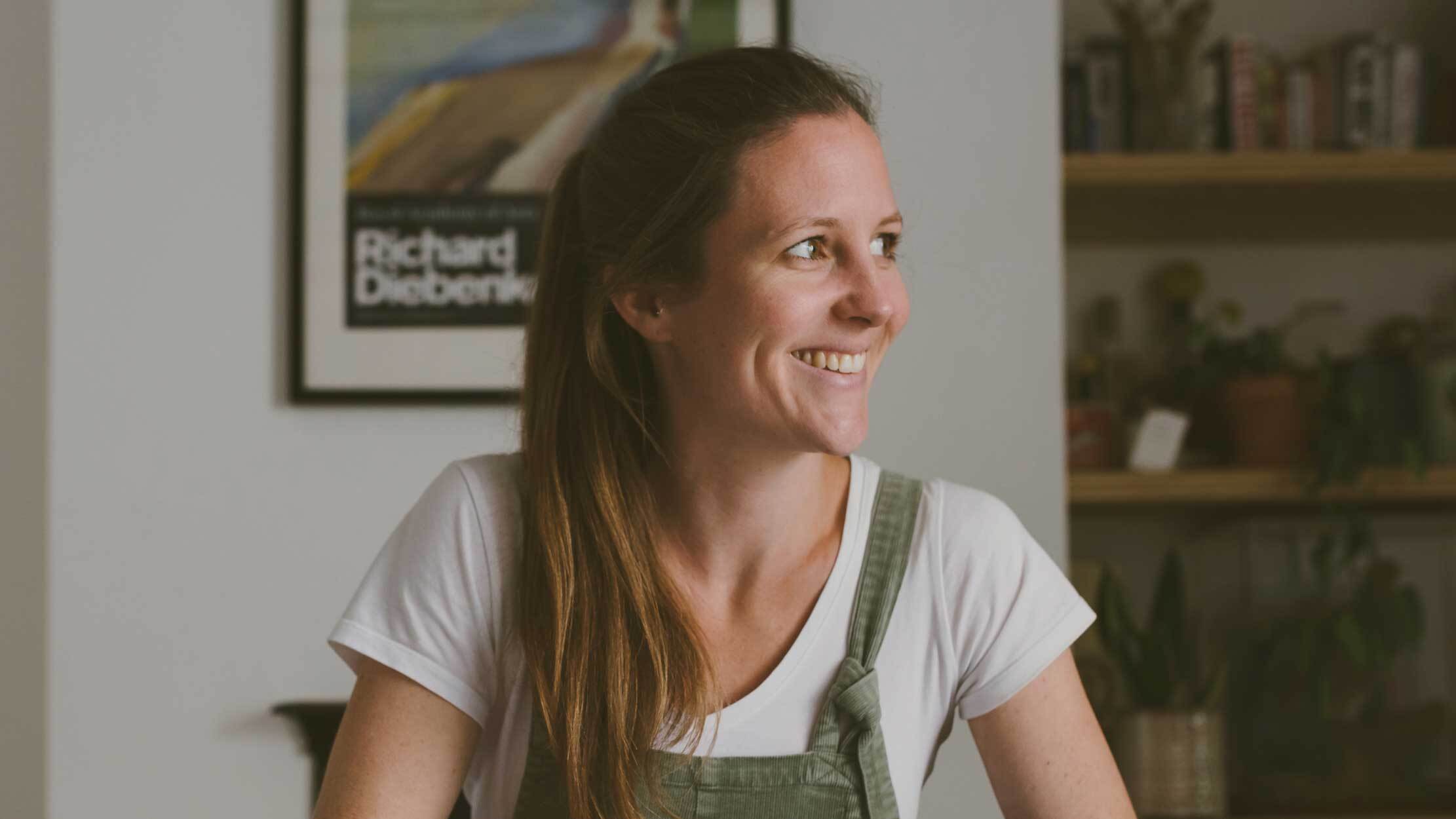
Imogen Partridge takes us on a journey from her roots in interior design to her true calling in illustration, where her passion for place and storytelling breathes life into her art.
Beyond her artistic development, Imogen reveals the transformative power of kindness in business. She shows how simple acts of kindness can enrich your personal life, delight your customers and even increase your profits.
Discover how thoughtful details in orders can engage customers, how spreading kindness can create a positive impact, and why communicating your struggles and victories to your audience can benefit everyone involved.
Join us as we discover how incorporating small acts of kindness can fundamentally improve both your business and your life.
Here is her unfiltered advice:
Quitting a steady job to build a business doing what you love
Bex Burn Callander:
So you recently quit your job to focus on this business, becoming a full-time watercolor illustrator. Tell us something about it. What motivated you to take the plunge and how is it going?
Imogen Partridge:
Yes, I have that. That was in January, so it’s been about six months since I left my job of about twelve and a half years. And it’s one of those things where I slowly built up on the side, but then I got to a point where I was just like, “Actually, I think I might give it a try.”
And that was maybe about 2 or 3 years ago now.
And when I went back to work after my second child, I have two small children, I had to go back for a year, and I decided that this would be my year to get the systems in place and prepare to leave.
So it was that I decided in my head and convinced myself to do it like anything else. But that’s exactly what I did and it was great.
It’s really scary and it was really scary and still is, but it was really brilliant. I’m so glad I did it.
Bex Burn Callander:
But what were the drivers? Was it that the amount of business you had overwhelmed you, or was it more about having a little more flexibility with two small children? What really sealed the deal?
Imogen Partridge:
It was because I loved it. That’s because I got to a point where I really enjoyed what I was doing and I could see how I could make it work as a business and I wanted to give it a try.
My job as an interior designer was good and of course it’s a creative role, but it didn’t give me what my illustration gives me and the passion I have for it is completely different.
And the flexibility is a bonus, all the things that come with it are helpful, but that was because I wanted to do it. There just came a point where I just loved it and wanted to take the plunge.
Make a plan so your heart can convince your head that it is possible
Bex Burn Callander:
And I suppose there’s a stereotype about creative types that they’re great at creating works of art, really unique and interesting work, but maybe they’re not so good when it comes to administration, planning and finances.
So what was your approach? Did you have a financial plan, a marketing plan, a business plan or are you more of a classic creative type who embraces chaos?
Imogen Partridge:
Probably a little of both. I definitely had a plan, and I had it planned out, not least to convince my brain that it would work, and I looked at the numbers and everything behind it.
I’ve diversified my income sources a bit. I set up my watercolor workshops and began working more with companies the year before I left work, consciously intending to find other ways to generate income.
But I think it’s always been a plan that I knew had to be flexible because it’s unpredictable where everything comes from and because I have different sources of income, it’s obviously just a matter of balancing them out.
So it was kind of a plan, but I knew I had to build in flexibility. But it’s been really interesting because I think I find this aspect of the business really interesting, I really enjoy it and I enjoy the variety that it brings and I also enjoy the amount of life learning that it brings me can.
It is very helpful to learn some of these skills. So yeah, and I have a lot of creative friends who don’t like that side of things, so I’m grateful for that.
But I think it’s a combination because with the realities of everyday life and trying to get everything done, it’s hard to keep up with everything and stay on top of everything.
Bex Burn Callander:
I love the image that you knew in your heart that you wanted to do this, but your heart had to convince your head. I love that analogy, that was really amazing.
Diversify your sales portfolio
Bex Burn Callander:
And then you mentioned that you have this diversified revenue portfolio, and I found that really interesting because you kind of make sure that you have enough of a handle on things so that it doesn’t matter if another area is a little slow if one Area is thriving.
So can you tell me how you figured out what services you wanted to offer?
And then are there other ups and downs in demand for different things? Does your holiday season boom and is really slow in the summer?
Tell us about the different strands and I’ll guess the pros and cons of those strands.
Imogen Partridge:
Yes, I think it all developed relatively naturally, but as I said, I started to be more conscious about it about a year ago.
And I worked with a lot of private clients at first, then I had the odd business project and could obviously see how it could integrate really, really well into businesses. And then I set up my workshops, offer live illustrations and make some cards, prints and things like that.
I think I wanted to gather enough to keep me interested. I like the variety. If I did one thing all the time it wouldn’t be as sustainable, but it was about making it a sustainable business and I’m still working on that and obviously a lot of those things are geared towards me.
That’s why I’m working on being a little less involved in some areas so that I can build on that when I have to go on vacation, get sick or something similar. Very early this year, after leaving work, I was sick for a few weeks and that really impressed me on how to cope.
So yeah, I think it’s about balancing them all, and there are a lot of ups and downs. I mean, there’s always a lot going on at Christmas, but I feel like life is always busy anyway.
So the combination of being busy with work and busy with life always feels extra busy.
But I feel like there are just ups and downs throughout the year and it’s pretty regular. My work isn’t too seasonal, which helps.
And I think incorporating collaboration with brands and different types of collaborations with private clients has really helped with that.
As a freelancer, it is crucial to have contingency plans in case of illness or absence
Bex Burn Callander:
That’s really interesting. And what you said there about being sick and having to come up with some kind of backup plan, can you tell me what your backup plan is?
Have you had other experienced illustrators who you think have enough skill to kind of replicate your style that you could easily say, “Okay, can you do this for me?”? What to do when you’re sick?
Imogen Partridge:
Really try to get better as quickly as possible. But I mean, I have a collection of illustrators I could go to if I get really stuck.
This actually happened when I had a job pretty late when I had my daughter and I wasn’t sure if I could get it done in time, and so I had kind of spoken to the client and talked to her and said, “Look, I “I can do it, but if I can’t because she’s early or something, then I’ll have to pass it on to a friend.”
So I have a really good community of people that I could pass things on to if I really needed to. However, I try not to do that on projects and I have pretty long lead times to give myself the opportunity to work around things.
So if something like that comes up, or if one of my kids is sick or something like that and I have to take care of them, then I can build in that flexibility.
But one of the things I’m trying to do is to develop some areas like wholesale. So I’m starting with some cards and things like that that I’m selling directly and in a few small shops at the moment. But somehow you build up this area a little bit.
And I run my workshops and I’m working on an online version of them and some tutorials and things like that so I don’t have to be there every time.
And it won’t happen overnight, but I’m slowly building up the areas that will help me a little and give me the freedom to relieve the pressure a little.
Bex Burn Callander:
Yes, passive income is always useful. This is all really clever.
I thought when I started freelancing I didn’t realize how much discipline you build in a relatively short period of time, because as soon as you get a new job you start working on it straight away, you don’t wait until just before the deadline , in case something happens, you have a sick child, you get sick, you start studying, you get your muscle going, but immediately, with whatever free time you have, you start worrying about the parts to take care of your to-do list.
But it’s discipline, isn’t it?
Imogen Partridge:
Yes. And I think there’s been so much learning so far this year, so much learning about how to work and how to work best.
And it builds that flexibility because sometimes I actually don’t feel as creative, which is why I feel a little guilty sometimes, but it’s just a thing, right?
And actually then I have the flexibility to be able to say, “Okay, maybe I’ll work on this tomorrow or later this afternoon after I’ve done some administrative tasks,” or there are ways around that, and that’s yourself too to really understand and work for you in the best possible way.
What to do when your creativity is blocked?
Bex Burn Callander:
So is there such a thing as writer’s block? Can you get illustrator’s block and how do you get rid of it?
Imogen Partridge:
This was so funny because I was about to write a post about it because yesterday I was a little stuck and I just felt like, I don’t know, it just feels like it’s not flowing.
And I went jogging. And I think it’s just about taking yourself out of the environment when you can and just changing things up. Probably very similar to writer’s block.
And sometimes I do something creative, like I set a timer and try to draw something in 1 or 2 minutes, or do fun creative challenges or something like that to just mix things up a bit.
Sometimes I might just decide that I won’t do it today but will work on it tomorrow. But other than that it would be a walk or something to make sure I had a good lunch or something like that.
So a lot of times it’s just a matter of taking into account your environmental factors and you can persevere, but it’s not going to be as efficient and you’re probably not going to be as happy with the work and it’s not going to come as easily to you.
So I’ve definitely learned that I’ll move things around and work around them wherever possible.
Integrate your personal values into your company
Bex Burn Callander:
Tell me about this idea of practicing kindness. So you’ve been in business for a while. Has this turned out to be something really important to you, something that’s really critical to the success of your brand?
Tell me what inspired you to think about kindness as a concrete business concept.
Imogen Partridge:
Yeah, I think it’s something that happened naturally, and I’m not a terrible person, so that’s a good start.
But I think it made me realize that when I left my old job, I felt that some of their company’s values, or the way things were done, or whatever, didn’t necessarily align with my own values agreed.
And I enjoy the freedom I can have when I work for myself and can work according to my values. And I regularly try to find out what they are as a company.
And I think that honesty and things like that were always there, but at some point it became clear that I actually think that kindness is something that is important to me and that you don’t see that very often in companies.
I think there are people who talk about it more, I mean, Mary Portas is a great example, she has the kindness economy that she talks about.
I think I just noticed it when I heard people mentioning it here and there. I realized how I have been practicing it for a long time and how it has helped me and how it seems really obvious.
And I think it also seems like a relatively superficial concept, but actually I’ve found that it really impacts all areas of my business and really helps me.
And because I had the autonomy to be able to make those decisions myself and see the impact, I think that’s when I started to talk about it a little bit with other people and maybe tell a little bit about it, just because it really was Seems obvious, but I don’t think people talk about it that much either.
Examples of how to be kind in business
Bex Burn Callander:
Okay, we need to listen to some examples.
Imogen Partridge:
So good examples are things like connecting with people.
So when I listen to a podcast, I love podcasts, when I listen to a podcast that I like, I usually message someone and say, “Oh, that was great.” I really enjoyed your interview on this topic, it was really inspiring.” Or I’ll share it on Instagram or something like that and just talk about it and hope other people benefit from it.
And it’s just one of those things that’s basically a beautiful thing because I get something out of it and I share it with other people in the hope that they’ll do it too.
But then don’t expect anything in return.
They don’t say, “Oh, can you do that for me?” or anything like that. It’s just about being completely open and wanting to do something good for others.
And a lot of it is communication, the way you speak, the way you talk to people, the way you are, the way you approach somewhat difficult situations, anything like that.
It can also happen in small ways, like the way you carry out a project.
For example, I think a lot of my illustration work for private clients is really personal stories, capturing places or things that are really important to them. And I feel a great responsibility and an honor that people trust me with these stories.
And I think that’s one way I can be very empathetic and kind to my customers. It’s funny because that’s exactly what I would do, but it’s just about taking that approach and it’s a business and I approach it as a business.
But I understand very well that you are all human too and that it is a very human thing and it is easy to remember if you are a single person, but I think that it can be something that is easy to check , if you are a larger company.
And I think I was listening to Mary Portas talk about it, and what she meant to say was that it came to a point where she took a step back and went right back to the beginning of her business and kind of thought, “Okay, how can we.” bring this everywhere? How can we be kind to our employees? How can we be kind to our customers? How can we be kind to the planet?”
There are areas of charity, but there are also so many ways to bring this in as value.
This is how you can easily integrate kindness into your hectic everyday business life
Bex Burn Callander:
I’m just speaking for some of the business owners who might be listening and saying, “That sounds wonderful, but I’m so busy,” and kindness is great, but it sounds very time consuming and takes a lot of planning to remember.
Let’s say you illustrated a wedding invitation and maybe a year later sent them a nice message like “Happy first anniversary.” Having the intelligence to do that can be difficult.
So how did you manage to combine that with all the specific things you need to do to make money?
Imogen Partridge:
I mean, some of this can potentially be automated, and the example you just gave is a perfect example of that.
If you worked on someone or a client’s wedding and had an anniversary that you want to commemorate, you can easily mark on your calendar the following year you need to do it.
And when the time comes, I’m sure you’ll have forgotten about it, but when the time comes, you’ll be able to talk about it and get in touch with them.
And I think it’s one of those things: the more you do it, the more natural it becomes. And I think probably a lot of people do it to some degree because they’re good people.
But I think it might just be the way you word your email templates. If you have some sort of template that you use to respond to people, can you just tweak it a little bit so that it just comes from a slightly different voice, maybe even a more authentic voice?
And one of the things I’ve also been thinking about is being friendly with your customers, in terms of sharing information.
It could be something that makes everyone’s life easier because you’re very clear about how you work, what you expect from them, what you need from them, and that’s a practical thing and really useful.
But actually it helps everyone because it helps you understand each other’s boundaries and each other’s situation, and it will make working together more pleasant and efficient.
And I’m always very grateful to people who do that, even if it’s like being away from the office or something just to say, “Thank you so much.” I received your email. I’m probably very busy running after my kids, but I’ll get back to you on Wednesday when I’m at my desk.”
Or there are simply ways you can try to optimize what you’re already doing to support this. And I think a lot of it is the language and a lot of it is the way you talk to people and the way you behave.
Again, I think that sometimes people can separate themselves a little bit by saying, “This is my business life, and at home I’m a little different,” and I think because I don’t do that at all, I’m pretty much the same, maybe that helps.
Bex Burn Callander:
Yes, no, and I think it’s important to highlight the reinforcing effect of kindness. It helps that I’ve spent 20 years building a career, almost 30… Well, 25 years, I’m not that old yet.
25 years of building a career and over time you realize that if you’re nice to people, you might not see any benefit for six months or a year and then suddenly five years later you get a call out of the blue about someone doing something said, “Oh, it was really fun working with her,” or, “You know what? I was in a difficult situation and she really helped me or gave me advice that was really crucial to something.”
So I think it’s really important for people who maybe think more about, I don’t know, not instant gratification, but they kind of think, “God, I’m trying hard,” and you want instant feedback, that it’s like that It’s a long game and a long cycle to bring kindness and kindness into the world, and it’s a compounding, cumulative thing.
Imogen Partridge:
Yes, exactly that. And I think the kind of networking is a really good example, because when you approach people here and there and talk to them, you never know what’s going to happen, you never know who will remember you will and whoever will remember it think of you.
But when you’re out and about celebrating other people, when you’re kind to people and don’t expect anything back, as you say, then it really has a positive effect and people really notice that.
And it then has a positive effect on you. So it’s not just an external thing, it’s more that being nice to people is better for you.
Bex Burn Callander:
It makes you healthy.
Imogen Partridge:
Yes, exactly. It’s like there are so many people talking about it.
I think it’s Dr. Rangan Chatterjee’s podcast, and he has an episode that talked a lot about this and how, if you think about it, when you’re walking down the street and you see someone who looks really pretty, and you’re like, “Oh,” that really looks “Looks beautiful,” whatever, “Your dress looks really beautiful” or something like that, you feel pretty good that you somehow made their day, they’ll probably at least smile at you, if not say thank you And then that’s a really beautiful thing.
But actually, if you do these little things here and there all the time, you will feel much better and your world will become more positive.
And I’ve found that with social media and things like that, I enjoy my social media now because everyone is so nice, but I think a lot of that is because you walk around nice and then people are nice too .
And I think that sounds a bit naive, but it’s much more than that, because as you say, it’s about building connections and relationships.
And as we know, that’s really important in business and you really don’t know who knows who or where it’s going to take you. So I think, as you say, it’s just a matter of going in without an agenda.
Sometimes kindness means having difficult conversations
Bex Burn Callander:
And has your philosophy of kindness ever been put to the test? Have you had someone, a troll or a really difficult customer, who had a really hard time living up to these principles? And what did you do in this case?
Imogen Partridge:
That’s a really good question. I’ve never had anyone troll me, which I’m very grateful for, except probably my brothers.
But I think one of the things I would actually say in this situation is that I’ve had the odd, slightly more difficult client, but it was never really a problem.
But I would say one of the things to remember when we talk about kindness is also being kind to yourself. So the important thing is to look at these situations and not let others get the best of you running or something like that.
It is important that this does not mean being kind to others at all costs and putting pressure on yourself. It is important that you take care of yourself and approach these things from the right perspective.
And I think if that act of kindness towards yourself is having a difficult conversation to resolve a situation that you’re not happy with or don’t believe in.
Or if you’ve gone into a project and you actually feel like it’s not quite what you were hoping for, or that the values really don’t align, or something like that, then it’s an honest conversation and the statement : “You see, this is actually the situation. Is there a way we can solve this problem together?”
And here, too, it is not about an accusatory or similar approach.
I mean, sometimes when I say that it all sounds kind of obvious, but I don’t think it is. I think when you’re in the heat of the moment it’s always easy to get carried away or carelessly do things differently.
And I think the more you remember how you’re trying to approach things and make a positive impact on the world, but also on yourself, the better you’ll be able to deal with these situations.
How to be friendly while remaining competitive
Bex Burn Callander:
And is there ever a tension between the need to be friendly in business and the need to keep track of finances and be competitive in some way?
I mean, you can’t always work together, sometimes you’re literally in a neck-and-neck race with someone else for work.
How do you think you deal with the fact that these two things are going in opposite directions and pulling you in the opposite direction?
Imogen Partridge:
I’m at a point with the work where I think, and when you’re confronted head-on with someone else, I firmly believe that I’m going to put my work out there, and if I’m not the right person, then I’m me am not the right person.
And I think even if it’s something that you really want, then that’s a real shame, but you just have to get to the point where you trust the process and believe that things will come and that it will will be correct.
It’s really important that kindness doesn’t necessarily come with a price that everyone can afford. If someone can’t afford your services, it’s not nice to lower your prices so they can because, okay, you’re serving that one person, but it’s not serving your ultimate goal.
And in fact, if there are people you want to reach, there are so many options you can incorporate.
Do you actually increase your prices slightly so you can work with a person for pay or for free? There are other ways to do this.
Or increase your prices so you can donate a certain amount to various charities?
There are so many ways you can help, but it’s not your responsibility to be the person who offers the right price for everyone. I think that’s really important to remember.
And yes, I think finance is a really important area and one of the things to be good to yourself is to support yourself so that you can work in your business with the time and energy that you need .
And if that means, in turn, raising your prices so that you can do a little less work, so that you have more time, whether it’s to rest, whether you want to do something creative, whether you want to go outside, or do all of those things, All these things are really important too.
So I think it’s a holistic approach because you look at it from a practical point of view but also think about that side of things.
Bex Burn Callander:
I think it’s a reminder that you need to think about who you want to be kind to in this scenario, because sometimes it’s yourself, sometimes it’s your family, sometimes being kind is cruel. They say, “That’s not going to work,” because down the line you know that if you just do what they tell you, it’s a waste of money, and that can be a really difficult conversation.
But I guess sometimes it’s just a matter of taking a step back and figuring out who is this really helping?
Imogen Partridge:
Yes, exactly that. And I think it helps if you look at your values and the overall impression, your company, the question of where you want to be and where you want to go, and also the question of how this affects your personal life knocks down, looks at.
Since many of my company values are also my personal values, I think it is a holistic approach.
Overcoming a crisis of trust
Bex Burn Callander:
And I’ve asked many of our guests in this series about self-confidence. It’s kind of a soft theme that we’ve been exploring this season.
So I would like to know if there have been moments in your journey in this company where you lost your confidence or where your confidence was shattered.
Can you tell us something about it? And then I guess what did you do to recover?
Imogen Partridge:
Yeah, I mean, probably all the time. I’ve noticed that there are definitely ups and downs, and some weeks or days I’ll be like, “Yeah, that’s totally great, I’m doing this,” and other times I’ll really question everything and think too much and have done it have a real crisis of confidence.
And noting that it was very helpful in itself is that it’s not a one-size-fits-all thing for me. And things that I do to help myself, I mean, in general, I listen to a lot of podcasts and have heard and read a lot about, I guess, working on your mindset.
And I think that was one of the most important things that I did in the year before I left work, was working within it and moving from “If it works when I leave” to “I will leave and when it works.” .”
And I think that change has been really helpful. And I just think that with all of these things, I don’t necessarily want to learn how to improve them, but I think because I listen and read a lot, it kind of comes by osmosis.
So it’s not like I took a course on it.
Bex Burn Callander:
A course on self-confidence.
Imogen Partridge:
Yes, exactly. But I think it all helps to understand yourself and your origins. I think what’s really important is to understand the why, what is your goal and why are you doing this?
And I think if you’re really clear about that, even though it’s something that’s changing and evolving, I think that’s helpful.
And then I did something else: I started feeling a little intimidated by people who were really successful or who I really admired, and I actually started walking up to them and just saying, “Look, I find yours “Really wonderful work, you.” “are really inspiring.”
And I’ve really tried to reframe it to think that they’re actually showing me what’s possible, what I can do, instead of thinking, “Oh God, I could never do what they could,” actually it’s more like I could do that because you did it.
And usually their story has its own way of working. And one of the reasons I listen to a lot of podcasts is because I find it so helpful to hear everyone’s stories and different journeys to understand that you can make up your own.
And even though yours won’t look the same as it used to, if you move in the right direction, you will achieve your goal. So I find listening to other people’s stories very helpful and I feel like it gives me the confidence to show you what is fundamentally possible.
Bex Burn Callander:
When you talked about a mindset shift, that was really interesting when you said not if, but when, and not if it’s possible, but if it makes money, those mindset shifts, that’s really fascinating.
You said you didn’t take a confidence course, which no one does. I imagine not many people have taken self-confidence courses, but with this mindset in mind, have you made it a goal to actively try to change the way you process certain thoughts and feelings?
Have you been journaling, looking for podcasts on mindset, I don’t know? What was it? Because that sounds really intentional, the way you went from A to B, so I’m just curious how you did that.
Imogen Partridge:
Yes, a lot of it was actually podcasts and some audio books and things like that. I tried journaling, and I’ll probably get good at it eventually, and it helped me.
Sometimes I sit down and just write a bunch of stuff because I have too much on my mind and it helps to know it’s an option.
But yeah, I think it’s about picking out that information and kind of incorporating it and taking what I can and what I want from those conversations, I think.
Share your struggles and your successes with your audience
Bex Burn Callander:
What then can someone do to boost their confidence?
Imogen Partridge:
One of the things I really value is sharing it with your audience. And in general, I talk about things a lot, but since I left work, I communicated that I was leaving work, and the day I handed in my notice, I said that I was really scared .
It was really exciting, but I was also very scared. And there have been a few times since then where I’ve done something similar and just had a crisis of confidence, not necessarily expecting anything in return, but to put it bluntly and say, “Look, it’s just a normal thing.” that people feel.”
And then everyone says, ‘Oh, this happens to me all the time.’ These are the things I do.”
And from that post after I left work, I have a really long list of wonderful comments from people that I could possibly read again, which I can’t remember, but they also had some great advice, so I have somehow put it together which was really helpful.
So I think that sometimes if you just talk to other people and share it, you kind of get moral support and it’s really wonderful to have a community that lifts each other up like that and also kind of supports you when you’re feeling goes badly. how you win.
Bex Burn Callander:
You could illustrate all of these comments and put them together in a confidence booster book, that might be something that would work well. Confidence booster for freelancers.
Imogen Partridge:
That’s a great idea. I would like to do that.
How do you deal with the question of comparison?
Bex Burn Callander:
And tell me what you think about that because I think comparison can be one of the biggest confidence destroyers when you’re trying to compare yourself to other people.
And in the age of social media, that’s just too easy.
And I think, how do you stay present on social media and interact with people without sometimes feeling like, “I’m comparing myself to this person and I realize I want something.”
Imogen Partridge:
I mean, one of the most important things that I did a while ago, as I mentioned, was actually reaching out to people that I felt the same way with at times, which really redefined things for me.
And I think in general, working on the mindset through listening and reading is to reframe it and show you what you can do and what’s possible, rather than trying to directly compare and say, “So good I could never be.” Actually, you could.
If you practice long enough, or if you try, or if you learn the right things, if you want to go somewhere, you can get there.
And it is actually the knowledge that it is possible that is very empowering.
But sometimes I totally get it when I just look at things and think, “Oh God.” And actually it notices that, steps back and thinks, “Okay, I’ll write my post, maybe say a few things, but “I’m not going to spend a lot of time in that mindset in those areas.” give me that feeling.”
So it’s just a matter of being aware of it. But I think it’s helped since I’ve been working on it. And it has made it happen less, but it definitely still happens.
Life challenges can be used to increase your motivation
Bex Burn Callander:
So tell me, since you’ve been running your illustration business, what business decision do you think you’ve made that you were most proud of or that had the biggest impact?
Imogen Partridge:
I think I’ll probably leave work. That’s definitely what I’m most proud of because that was really scary and it felt like a big leap.
And especially with two small children in kindergarten and our mortgage having doubled from September before, there’s probably never a right time to do these things, so you just have to do it.
And I think for me it felt like I was really supporting myself, and I really believe in myself, and I really feel like I’m totally capable of this. And I think that was some evidence of that.
Bex Burn Callander:
This is interesting because I was talking to a business owner on the phone and he’s been doubling his business every three or four years for the last 10 or 15 years, I think it was 2007 or something.
And I thought, “Oh, what happened in 2007?” Because before that, every year was kind of the same, sales and profits.
And he was like, ‘Yeah, that was the year I got divorced and I had to make a big payment to my ex-wife.’ That’s what made me really want to grow my business.”
It made me laugh at the time, but it’s true that sometimes things in life, and you mentioned your mortgage going up, doubling, sets a fire under you.
And that’s the thing, you kind of need the pressure to take the next step.
Imogen Partridge:
And I also feel that in a salaried position with PAYE you have relatively limited opportunities to increase your income, whereas this is completely in my hands.
So there’s all this doubt, “Oh, maybe you don’t make enough,” but maybe you will, and it’s up to you to do it.
And I think it’s also very empowering to be able to have some control over it.
Use downtime to rest and complete administrative tasks
Bex Burn Callander:
Did you have months where things were slow and you had to say, “Okay, that’s it, I’m taking the gloves off, I’m going to go out and win some business,” did you ever hit the wall again? Since you’ve been traveling alone, so to speak?
Imogen Partridge:
I think I did that early on. I can’t remember what month it was, but I was definitely a little bit like, “Oh my God, this is what’s happening.”
But I think I’ve been worrying too much about the coming months because sometimes I might know what I’m doing in the next few months but it might not be much beyond that.
And I think I’m at a point where I just have to trust him. And actually I’m very, very busy most of the time and it would be helpful to have some time to just do some of the backend stuff.
So it’s about making sure you know what you would do if you had that time and how you would use it.
But as you say, it’s definitely the case that I think there’s the impetus to say, “Okay, I don’t know what’s next, I’ll do some marketing.”
Bex Burn Callander:
I guess it goes back to that mindset where, as you say, you have to look at quieter periods as a gift, where you can strategize a little bit more or do more personal projects and less like, “Ah, me.” can say. I will go bankrupt. Nobody loves me.”
Imogen Partridge:
And it’s really hard because it’s really scary. But I think the good thing is, when you have fear, you can channel that into something and say, “Okay, how can I be productive with this now?” I feel that way. So what would help me not feel this way?”
And one of the things that stood out to me was expanding some other revenue streams and having an overall more sustainable business model that would help me because I wouldn’t have to worry as much because I had other areas.
So this is just a review from a practical point of view.
When you change your mindset, you become more resilient
Bex Burn Callander:
And it’s always said that resilience is one of the most important qualities of a business owner, an entrepreneur.
Can you tell me how you learned to be a resilient person, either in your formative years or in your life in general? What taught you about resilience and the ability to shake yourself off, get up and keep going?
Imogen Partridge:
Well, we talked about it a lot and worked on the mindset. In everything related to business, the main thing I learned was about mindset, which has also helped me in my personal life.
But I think that you don’t always have control over what happens, but you do have control over how you react to it, and it’s entirely up to you to make those choices intentionally to help yourself.
And I think that part of being resilient just teaches you more resilience, right?
But I also think that listening to people’s stories makes you understand that everyone goes through something like this and you never know what’s going on behind the scenes.
And it’s natural to have all these fluctuations, it’s natural to feel everything and be confronted with all these things.
And it’s not easy, and it’s okay to just stop and say, “Wow, this is really difficult.” And also be able to recognize that you can get through this and have the infrastructure to do it to get through this, whatever that looks like, whether it’s a support network, whether it’s helping you through it financially, whatever it is, it’s just about learning the things and what helps you along the way helps to get through.
Build a reliable support network
Bex Burn Callander:
So who is in your support network? Who can you rely on when there are too many deadlines, the kids are sick, or the mortgage runs out tomorrow? What do you do? Who do you contact?
Imogen Partridge:
I feel like I have really good support. My parents are there to help me with child care, which is very helpful. My husband is brilliant and he is not self employed and brilliant at what he does but if needed he could take a day off.
So I’m lucky to have him who is incredibly supportive. And then I have great friends and family.
But I also feel like my online community is so supportive. And often they’re the people I would go to and say, “Oh my God.”
And because I’ve built it organically over time, I’ve known some of these people for 5, 6 years and it’s so nice to see their business grow and mine grow.
But there are also different people that if I had different questions or different situations, I would probably reach out to certain people knowing that they’ve either been through something similar or have something supportive to say.
And it’s really helpful to have these people. And I have a really good friend, Chris Millard, who’s also an illustrator, and we’re constantly making voice notes to each other on WhatsApp.
And just having someone to pull you through when you’re having a day where you’re really struggling or you’re going through an attitude change, or if you say it out loud sometimes and have someone to just have your back.
Inspired by this business story?
Subscribe wherever you’re listening or watching Good advice about Apple iTunes Here.
We are also on Spotify and wherever you get your podcasts.
Join our community to share your insights and stories X @SageUK with the hashtag #SoundAdvicePodcast on Instagram @SageOfficial or in the comments below!
Would you like to know more about Imogen and her watercolor illustration business?
You can find out more about Imogen and her watercolor business here website or Instagram.

