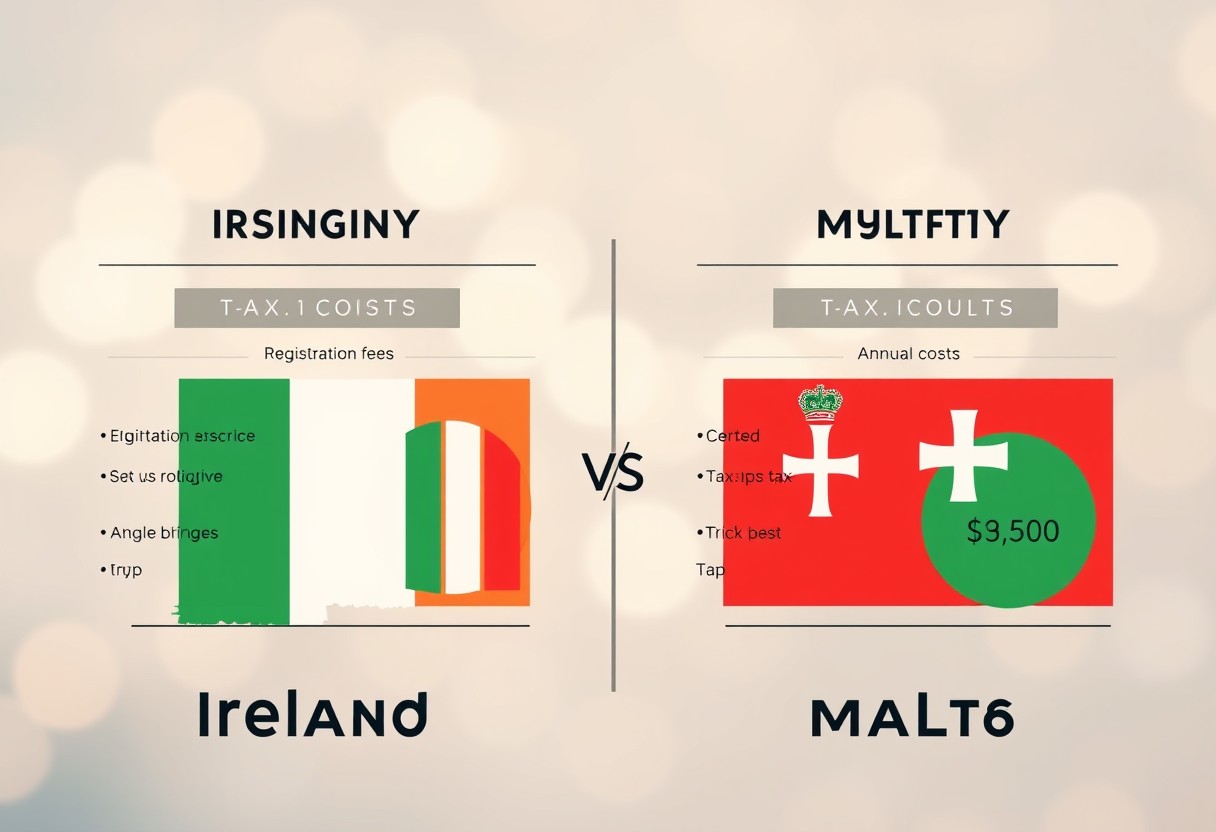
Incorporating a Company is examined here through practical benefits, risks and decisions that readers can apply with reliable information and appropriate professional guidance.
Incorporating A Company: Practical Overview
It’s vital to consider the financial implications when deciding where to incorporate your company. As you weigh your options between Ireland and Malta, you’ll find that each jurisdiction offers unique advantages and challenges, particularly regarding incorporation costs. Understanding these differences can play a crucial role in your business strategy and financial planning. In this post, we’ll break down the clear cost differences involved in incorporating a company in these two countries, helping you make an informed decision that aligns with your business goals.
Related guidance: UK company formation, holding company structures, and Ireland company formation.
For related international business context, see our UK company formation guide and holding company structure guide. Additional business coverage is available from Malta Business Report; consult GOV.UK company guidance for current reference.
Overview of Company Incorporation
To navigate the complex world of corporate structures, it’s necessary to have a clear understanding of what company incorporation entails. Incorporation is the legal process through which a new or existing business entity is formed, allowing it to operate as a distinct legal entity separate from its owners. This process grants certain rights and obligations, including limited liability, the ability to enter into contracts, and a recognized legal framework for business operations.
Definition of Company Incorporation
Company incorporation is a necessary step for entrepreneurs seeking to establish a formal business entity. By incorporating, you create a structure that not only protects your personal assets from business liabilities but also enables you to leverage various legal tax benefits and opportunities for growth. This process often involves registering your business with the appropriate governmental authorities, which in turn leads to the issuance of a certificate of incorporation.
Importance of Location in Incorporation
Incorporation is significantly influenced by the location you choose for your business. Each jurisdiction has its own laws, regulations, and tax incentives surrounding company formations. This means that where you decide to incorporate can have vast implications on your operational costs, tax obligations, and even the overall success of your business. As you evaluate different locations, you’ll need to consider how these factors align with your business goals.
Understanding the implications of location can ultimately shape your business strategy. If you incorporate in a jurisdiction that offers favorable tax rates or business incentives, you may find significant cost savings compared to other regions. Additionally, the ease of doing business in a particular location can affect your operational logistics, workforce access, and even your market reach.
Common Types of Business Structures
Common business structures provide various levels of liability protection, taxation, and regulatory obligations. Below are some of the most common types of company formations you might encounter:
| Business Structure | Description |
| Sole Proprietorship | Owned and run by one individual, with no distinction between the business and owner. |
| Partnership | Owned by two or more individuals, sharing profits, losses, and responsibilities. |
| Private Limited Company (Ltd) | A separate legal entity requiring at least one director and one shareholder, limiting personal liability. |
| Public Limited Company (PLC) | A company whose shares are publicly traded, requiring more stringent regulatory compliance. |
| Limited Liability Company (LLC) | A hybrid structure offering limited liability to its owners while allowing profits to be taxed once as personal income. |
To choose the right business structure, you should assess your business goals, the intended scale, and your willingness to share profits and responsibilities. Each structure has its own advantages and disadvantages. For example, a sole proprietorship is very simple to create and manage, while a private limited company offers better liability protection and funding opportunities. Assume that you conduct thorough research to find the structure that best fits your strategy.
Understanding the common types of business structures will guide you in making informed decisions as you incorporate your company. A key factor in this decision-making process is how different structures can affect both your tax position and your exposure to risk. Some structures may require greater compliance and reporting but offer better protections or funding options. Assume that you speak to a legal professional to gain clarity on which structure will best support your business objectives.
| Type | Key Features |
| Sole Proprietorship | Simplest structure, owner has full control and responsibility. |
| Partnership | Shared ownership, easy to set up, profit-sharing arrangements. |
| Private Limited Company | Limited liability, can be owned by multiple shareholders, shares not publicly available. |
| Public Limited Company | Shares traded on stock markets, subject to strict regulations. |
| Limited Liability Company | Combines benefits of corporations and partnerships, protects personal assets. |
Regulatory Frameworks
Any entrepreneur or business owner considering the incorporation of a company needs to understand the regulatory frameworks in place in different jurisdictions. When choosing between Ireland and Malta, it is vital to evaluate the implications of each country’s company law and how these may affect your business operations, compliance requirements, and overall cost of adherence to regulations.
Company Law in Ireland
One of the key elements of the regulatory framework in Ireland is its well-established company law structure, primarily governed by the Companies Act 2014. This comprehensive framework provides clear guidelines on the formation, governance, and dissolution of companies. If you plan to incorporate in Ireland, you’ll benefit from a straightforward online registration process and the ability to set up various types of entities, including private limited companies, public limited companies, and branch operations for foreign entities. The Irish legal system is based on common law, which may feel familiar if you have experience with other Western jurisdictions.
Moreover, as an EU member state, Ireland offers significant advantages, including access to the single market and a favorable tax regime. Understanding and adhering to Irish company law can help you navigate the obligations related to corporate governance, shareholder rights, and compliance, which are crucial for your business’s sustainability and growth.
Company Law in Malta
With Malta’s regulatory framework, you will find a robust system of company law similar to that of Ireland but tailored to its specific economic environment. The primary legislative framework is the Companies Act 1995, which outlines the procedures for company incorporation, governance, and operations. Malta offers various company types, including limited liability companies and partnerships, giving you the flexibility to choose the structure that aligns best with your business strategy. Additionally, Malta’s membership in the EU enables you to benefit from numerous trade agreements while enjoying a strategic location in the Mediterranean.
Regulatory compliance in Malta is streamlined, and the jurisdiction is often characterized by its business-friendly approach, including incentives for international companies seeking to establish a presence. You may find that Malta’s legal system, primarily based on civil law, is straightforward, allowing for ease of access and understanding of the regulations governing your operations.
Compliance Requirements in Each Jurisdiction
For those considering the compliance requirements in Ireland and Malta, it’s vital to recognize that both jurisdictions impose specific obligations post-incorporation. In Ireland, companies are required to submit annual returns, maintain accurate accounting records, and ensure adherence to tax obligations. You must appoint a company secretary and comply with additional governance standards depending on your company structure. Compliance with these regulations is critical for maintaining your business’s legal standing and avoiding potential penalties.
In Malta, compliance requirements mirror many of those found in Ireland, but there are distinctions that you should be aware of. Companies must also file annual returns and maintain proper accounting records, but the timelines and specifics can differ. Moreover, you may need to conduct an audit or prepare a certain level of financial reporting depending on your company type. Understanding these compliance facets will ensure that your incorporation process proceeds smoothly and that you are well prepared for ongoing regulatory obligations.
This overview highlights the importance of familiarizing yourself with the compliance requirements in each jurisdiction, as they can significantly impact your operational efficiency and legal accountability. Engaging with local legal and financial experts may be beneficial to ensure full compliance and help you navigate any complexities specific to your chosen jurisdiction.
Costs of Incorporation
For complementary reporting and analysis, readers can also visit Michael Schmitt, Trider and the Malta Business Report.
All businesses face a myriad of expenses when deciding to incorporate, and understanding the costs of incorporation in Ireland versus Malta is crucial for making an informed choice. Each location offers different benefits and challenges, with initial expenses playing a significant role in the decision-making process. When evaluating these costs, you will encounter registration fees, legal and professional fees, as well as ongoing maintenance costs that vary between the two jurisdictions.
Initial Registration Fees
On examining the initial registration fees, you will find that Ireland requires a standard fee of approximately €100 for the online incorporation process. This is a relatively low cost compared to Malta, where the initial registration fee starts at €245 for companies with a share capital of up to €1,500. If you aim for a higher share capital, the fees will increase incrementally, making the financial commitment more pronounced in Malta. Thus, if keeping initial registration costs down is important to you, Ireland presents a more favorable option.
Legal and Professional Fees
The legal and professional fees of incorporation can significantly impact your budget. In Ireland, you may expect to pay anywhere from €1,000 to €3,000 for legal assistance, depending on the complexity of your business structure and the services required. Conversely, Malta’s legal fees can be slightly higher, ranging from €1,500 to €4,000, as local legislation can sometimes necessitate more comprehensive documentation and support.
This variation in professional fees is crucial to understand as it can influence your overall incorporation costs. Whether you choose to engage a local lawyer or leverage international legal services will ultimately determine how much you spend in this area.
Ongoing Maintenance Costs
Costs associated with ongoing maintenance should also be a major consideration in your incorporation strategy. In Ireland, annual compliance fees, including audit and accounting services, can run between €1,000 and €2,500, depending on the size and nature of your business. In contrast, Malta generally incurs higher ongoing costs, typically ranging from €1,500 to €3,500 for similar services. The increased financial burden in Malta may affect your decision-making process when comparing these two locations.
It is crucial to factor in these ongoing maintenance costs as part of your long-term business plan. Regular compliance and reporting requirements are critical to maintaining your company’s good standing and can accumulate over time, significantly affecting your bottom line. Thus, having a clear understanding of these costs upfront will help you budget effectively and avoid any unexpected financial strains in the future.
Taxation Implications
Once again, when considering where to incorporate your company, understanding the taxation implications is vital to making an informed decision. Taxes will significantly impact your overall financial strategy and can differ greatly depending on whether you choose Ireland or Malta as your base of operations.
Corporate Tax Rates in Ireland
Rates in Ireland are renowned for being one of the most favorable in Europe, with a standard corporate tax rate of just 12.5% applicable to trading income. This attractive rate has helped Ireland to become a favored destination for multinational corporations looking to optimize their tax liabilities. Additionally, specific tax incentives, such as the Knowledge Development Box, provide further reductions for companies involved in research and development.
Another beneficial aspect of Ireland’s tax regime is its extensive network of double taxation treaties, which help to mitigate tax liabilities for foreign entities engaging in trade. By incorporating in Ireland, you may find numerous opportunities to maximize your company’s tax efficiency through strategic planning and compliance with local regulations.
Corporate Tax Rates in Malta
On the other hand, Malta presents a corporate tax rate of 35%, which appears significantly higher than Ireland at first glance. However, there are ways to minimize your effective tax rate through a well-structured refund system where shareholders can benefit from tax refunds of up to 6/7 of the corporate tax paid under certain conditions. Consequently, many businesses find that incorporating in Malta provides them with favorable tax treatment, especially when leveraging this refund mechanism.
Rates may effectively be reduced to as low as 5% after refunds are claimed by shareholders, making Malta an appealing option for those seeking lower operational costs. Furthermore, if you’re looking to establish an intellectual property holding company, Malta’s favorable framework could potentially yield even more advantageous financial outcomes.
Other Tax Considerations
Taxation in either jurisdiction also encompasses various other factors beyond just corporate tax rates. For example, you will need to consider value-added tax (VAT), payroll taxes, and potential capital gains taxes. In Ireland, the standard VAT rate is currently 23%, while Malta’s VAT stands at 18%. The administrative burden and compliance requirements for each jurisdiction can vary, which also impacts your ongoing operational costs.
The implications of these additional tax considerations cannot be understated. Taxes on dividends, royalties, and capital gains may influence your decision depending on your business model. It’s crucial to analyze the broader tax landscape, including anti-avoidance measures and tax residency regulations, to ensure that your business remains compliant and takes full advantage of available tax benefits in your selected jurisdiction.
Advantages of Incorporating in Ireland
Unlike Malta, which offers its own set of benefits, incorporating your company in Ireland provides distinct advantages that can significantly impact your business strategy and growth. The Irish business environment is not only attractive for its competitive corporate tax rate but also its legal framework and economic stability. This makes Ireland a preferred destination for many international businesses. By choosing to incorporate in Ireland, you position your company favorably within the European market, allowing for broader opportunities and access to resources.
Access to EU Markets
An important advantage of incorporating in Ireland is your direct access to the European Union (EU) markets. Being part of the EU allows your business to trade freely with other member states, eliminating tariffs and customs checks on goods and services. This open market facilitates seamless expansion and can enhance your company’s growth prospects, making it easier for you to establish and strengthen partnerships across Europe.
Additionally, this access is compounded by Ireland’s strong relationships with neighboring countries and its membership in numerous trade agreements. As a result, incorporating your business in Ireland enables you to tap into vast consumer bases, fostering opportunities that may be more challenging to obtain in other jurisdictions. By leveraging these benefits, you can position your company as a competitive player in the bustling European marketplace.
Availability of Incentives
For many entrepreneurs, the availability of incentives in Ireland can be a compelling reason to incorporate there. The Irish government offers a range of support schemes, grants, and tax reliefs aimed at encouraging business growth and innovation. These incentives can help lower your startup costs and improve your bottom line, enabling you to allocate more resources towards scaling your operations.
Incentives such as the Research and Development (R&D) tax credit and the Knowledge Development Box can significantly enhance your company’s financial position. The R&D tax credit allows you to claim back up to 25% of eligible expenditures, making it an attractive option if you are focused on innovation. Similarly, the Knowledge Development Box offers a preferential tax rate for profits stemming from intellectual property, adding further incentive to operate in Ireland.
Reputation and Credibility
Credibility is a crucial factor when establishing your business, and incorporating in Ireland can enhance your company’s reputation on a global scale. Ireland is recognized for its robust regulatory environment, transparent business practices, and adherence to international standards. By registering your company in this jurisdiction, you signal to your clients and partners that you are committed to operating within a respected framework, which can lead to increased trust and stronger business relationships.
Access to highly skilled talent is another element that boosts your company’s credibility. Ireland boasts a well-educated workforce, with many employees fluent in multiple languages and possessing advanced technical skills. This access to talent not only enhances your company’s capability but also adds to its appeal in international markets, reinforcing your brand’s commitment to quality and excellence.
Advantages of Incorporating in Malta
Not all jurisdictions are created equal when it comes to incorporating a business, and Malta stands out for several compelling reasons. If you are considering where to establish your company, it’s crucial to understand the unique benefits Malta offers that can significantly impact your operations and financial health. Below, we probe into specific advantages, including its favorable tax regime, business-friendly environment, and strategic location.
Favorable Tax Regime
Malta boasts a highly attractive tax framework, which is one of the main reasons many entrepreneurs choose to incorporate there. With a corporate tax rate of just 35%, it might seem steep at first glance; however, the unique tax refund system in place allows for effective rates that can drop as low as 5% in many cases. This means that once you distribute dividends, you can benefit from substantial refunds on taxes paid, enhancing your overall profitability.
Additionally, Malta has entered into numerous double taxation treaties with various countries, making it easier for you to conduct international business without worrying about being taxed multiple times. This element not only enhances your tax efficiency but also establishes a stable backdrop for your operations, giving you the confidence to expand globally.
Business-Friendly Environment
With its pro-business policies and regulatory framework, Malta fosters an entrepreneurial spirit that can benefit your company immensely. The Maltese government promotes foreign investment and has streamlined incorporation processes, making it easier for you to set up and operate your business. The efficient bureaucracy and professional support networks ensure that you encounter minimal hurdles during your incorporation journey.
Business-friendly Malta also offers a robust framework for various sectors, including technology, finance, and gaming. If you’re in these industries, you’ll find a highly skilled workforce ready to meet your needs. Moreover, the willingness of local authorities to engage with you and provide assistance further enhances the overall business environment.
BusinessFriendly policies encourage innovation and growth, which can be crucial for startups and established businesses alike. The local ecosystem is rich with resources, from accelerators and incubators to networking events and investment opportunities. As you look to incorporate in Malta, you’ll find a supportive community eager to help you thrive.
Strategic Location
On the Mediterranean Sea, Malta’s strategic location serves as a bridge between Europe, North Africa, and the Middle East, positioning your company in a prime spot for facilitating trade across regions. The island’s advantageous geography allows easy access to major European markets, making it an ideal hub for logistics and distribution. This geographical advantage can accelerate your business growth and market entry strategies.
Plus, Malta also benefits from a well-developed infrastructure that supports a variety of transport modes, including air, sea, and road. With reliable connectivity and modern facilities, your company can easily tap into various international markets. Whether you are looking to establish a European base or expand into neighboring regions, Malta’s strategic location offers tremendous benefits that can give you a competitive edge.
Summing Up
Considering all points, it’s evident that the cost differences between incorporating a company in Ireland and Malta can significantly impact your decision-making process. While both countries offer favorable corporate environments, Ireland tends to have higher initial costs and ongoing compliance fees compared to Malta. If you’re looking for a more budget-friendly option without sacrificing favorable business conditions, Malta may align better with your financial strategy. However, you should also weigh other factors like taxation and regulatory environment in each jurisdiction, as these can further influence your operational costs and long-term business success.
Ultimately, your choice should reflect not only the immediate financial implications but also your broader business objectives. Whether you prioritize lower costs or are willing to invest more upfront for potential greater benefits in Ireland, being well-informed on the nuances of each option will empower you to make the best decision. As you consider your path to incorporating a company, ensure you factor in both direct costs and strategic advantages to find the best fit for your entrepreneurial vision.
FAQ
Q: What are the primary costs associated with incorporating a company in Ireland compared to Malta?
A: Incorporating a company in Ireland generally involves several costs including registration fees, legal fees, and ongoing compliance costs. The initial registration fee for setting up a limited company in Ireland is €100, while in Malta, it is approximately €245. However, Malta also requires a minimum share capital of €1,165 for private companies, which is higher than the €100 required in Ireland. Additionally, both countries have annual compliance costs, but these can vary significantly; Ireland tends to have more expensive annual return fees and additional accounting costs due to stricter regulatory requirements. Overall, while Ireland has higher ongoing costs, Malta can be more expensive initially due to the share capital requirement.
Q: Are there any significant tax differences that impact the overall cost of incorporation in Ireland versus Malta?
A: Yes, there are notable tax differences that affect the overall cost of doing business. Ireland has a corporate tax rate of 12.5% on trading income, which is among the lowest in Europe, while Malta also offers a low corporate tax rate of 35%, but through tax refund mechanisms, effective rates can be as low as 5% for foreign-owned companies. Depending on the type of business, these tax structures can influence long-term costs significantly. Additionally, companies in Malta enjoy various incentives and tax credits, particularly in the tech and gaming sectors, which can further reduce tax obligations. Thus, businesses must carefully assess not only the incorporation costs but also the effective tax rates to better understand the total cost of operation.
Q: What are the implications of the regulatory environment in both countries for newly incorporated companies?
A: The regulatory environments in Ireland and Malta differ notably, which can affect the overall costs and ease of doing business. Ireland has a well-established regulatory framework with strict compliance requirements, which can lead to higher administrative and legal costs. Companies must adhere to regulations from bodies like the Companies Registration Office (CRO) and the Revenue Commissioners. Conversely, Malta’s regulatory environment is often considered more flexible, with quicker turnaround times for the incorporation process and simpler compliance requirements. This can result in lower initial costs and less ongoing bureaucracy. However, it’s important for businesses to assess their specific industry requirements and consider potential impacts on operations and costs in either jurisdiction.
Further business coverage is available from Malta Business Report and Malta News Online. For authoritative context, consult GOV.UK, OECD tax resources, and FCA guidance where applicable.
Incorporating A Company: Seven Key Considerations
1. Incorporating A Company Consideration
Incorporating a Company starts with a clear objective and evidence relevant to the decision.
2. Incorporating A Company Consideration
Incorporating a Company should be assessed against measurable practical or commercial outcomes.
3. Incorporating A Company Consideration
Incorporating a Company requires accurate information and responsible ownership of each action.
4. Incorporating A Company Consideration
Incorporating a Company works best when risks and alternatives are reviewed before implementation.
5. Incorporating A Company Consideration
Incorporating a Company benefits from regular monitoring as circumstances and regulations change.
6. Incorporating A Company Consideration
Incorporating a Company should remain proportionate to the needs of the people or business involved.
7. Incorporating A Company Consideration
Incorporating a Company may require specialist advice where legal, financial or technical duties apply.