

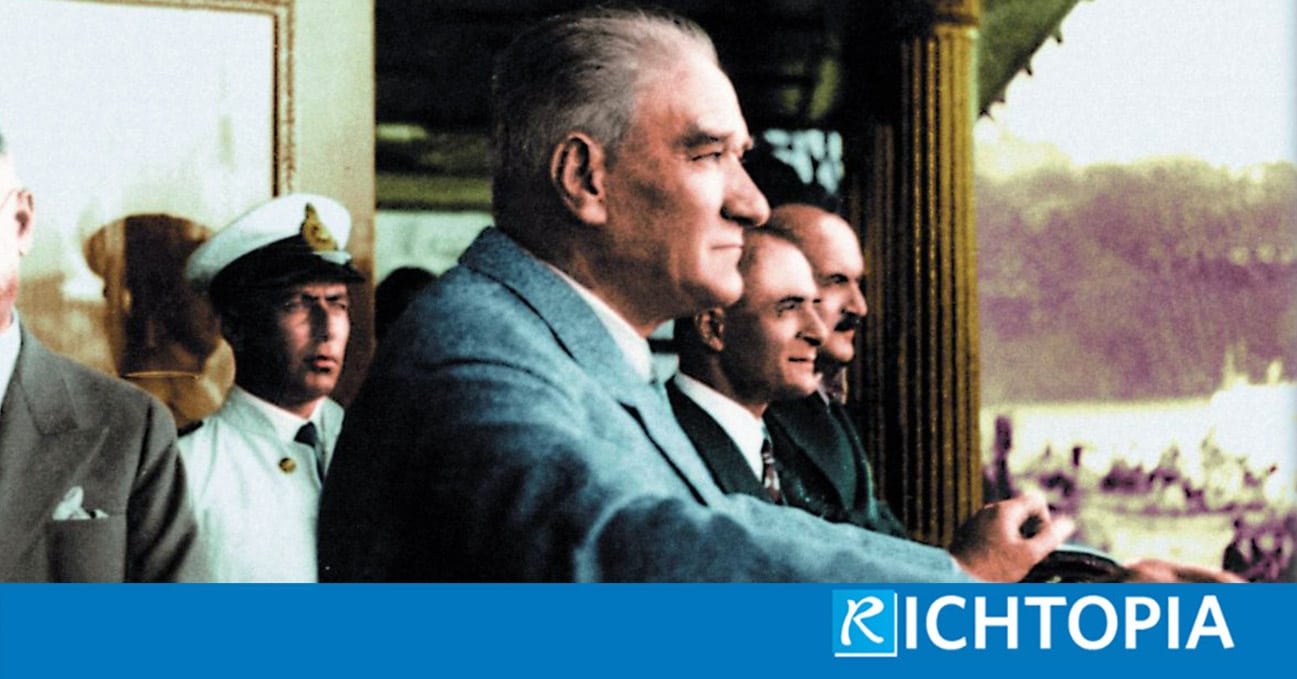
Mustafa Kemal Ataturk was the founder and first President of the Republic of Turkey from 1923 until he died in 1938.
His surname, ‘Ataturk ‘, meaning the father of the Turks, was granted to him unanimously by the Turkish government.
Early life and education of Atatürk
Mustafa was born in 1881 in a former Ottoman town called Selânik, now called Thessaloniki, in modern-day Greece.
During childhood, his parents disagreed on which school to send him; his father, Ali Rıza Efendi, wanted him to attend a modern school, while his mother, Zübeyde Hanım, wanted him to go to a faith-based one.
In 1887, his mother got her way, and he attended a traditional school; but after a short while, they sent him to the contemporary Şemsi Efendi School instead.
The young Mustafa loved this school, and his teachers were happy to have him there. At this point, he got introduced to maths, where he excelled as an academic discipline.
In 1888, when little Mustafa was studying in this new school, his father passed away.
This tragic event led his mother and all three children to relocate to the Rapla farm in a village called Langaza, 20 km away from Selânik, where her brother Hüseyin lived.
Mustafa spent a few months at the farm, missing out on his education, but not after long, he returned to live with his aunt in Selânik and complete his primary school.
Once he finished at the Şemsi Efendi School, he briefly attended the Selanik Mülkiye School.
According to a 2008 documentary called ‘Mustafa’, also validated in an interview Ataturk conducted with a journalist on Vakit Newspaper (January 10, 1922):
Mustafa got beaten up by his Quran teacher, Kaymak Hafız Hoca, at the Selanik Mülkiye School. The Arabic teacher, went as far as leaving the eleven-year-old Ataturk’s entire body covered in blood.
The young Mustafa was left distraught, declaring to his mother that he wouldn’t go to that school anymore, adding, “Send me to a military academy.”
His mother tried to prevent him, but eventually, he went against her wishes and enrolled anyway.
The history of Ataturk’s military career in chronological order

In 1893, at age 12, the young Mustafa undertook his first form of rebellion by joining the Selanik Askeri Rüştiyesi, an imperial military school of the Ottoman Empire.
Mustafa impressed the captains there with his abilities that they almost felt the need to treat him as a friend. He was even made to teach some lessons instead of studying them, which helped build his confidence.
Commander Mustafa Efendi, a mathematics teacher at this school, added the name “Kemal” to the end of his student’s name as a distinction. Thus, the name Mustafa Kemal emerged.
In 1895, Mustafa Kemal advanced to a military boarding college called Manastır Askeri İdadisi.
In 1899, he completed his education at the high school and joined the Military and War Academy in Istanbul, which still survives.
In 1905, he graduated as a senior-grade lieutenant. According to Baron Kinross, there are physical files inside the National Presidential Archives in Ankara; Mustafa spent around three months in a military prison with his friend Ali Fuad and two others before graduating.
Their so-called “crime” was to be a newspaper’s founding directors, writers, and distributors with nationalistic views about an Independent Turkey from as early as 1904.
They also got interrogated (roughly) and investigated for accusations of conspiring a coup d’état against Sultan Abdul Hamid II.
As further punishment, their first deployment was to the Fifth Army in Damascus, Syria. This placement was intentionally far from everything they ever knew, where they spent around two years.
In 1907, Ataturk got assigned to the Third Army in Macedonia.
In 1908, the Young Turk Revolution, which originated from the same military division in Macedonia, established a constitutional government against Abdülhamid II, the authoritarian sultan.
Following the revolution, Ataturk spent 1909 to 1911 close to home in Eastern Thrace, serving the newly established government as the Chief of Staff, thwarting revolts and managing incidents.
In 1911, Ataturk served at the Battle of Tripoli against the Italian army, which was there to conquer Libya.
In 1912, he contributed to the Balkan Wars on the side of the Ottoman Empire, which ended in 1913, and was one of the many significant events leading to World War I.
In 1914, Ataturk got promoted to Lieutenant Colonel, while Britain, France, and Russia declared war on the Ottoman Empire.
Until 1916, he served at Edirne.
In 1917, he was promoted to an overall commanding officer of the Ninth Army after he declined to establish a new command.
In the same year, he replaced Fevzi Pasha and became the general of the Ottoman alliance with Germany.
The last service that Ataturk offered to the Ottoman troop was ensuring that the army returned home when they got left out in the south.
In 1919, Mustafa resigned from the Ottoman army and went to Anatolia to lead a nationalist revolution.
The revolutionaries were organised to resist settlement by the Entente Powers, which intended to seize Smyrna (Izmir) and other Turkish lands.
Ataturk secured an amendment to the peace agreement when he later gained victory over the invading Greek army.
In 1921, Mustafa came up with a provisional government in Ankara.
The Ottoman Empire was abolished in 1922.
In 1923, Marshall Mustafa Kemal’s rebellion made way for the founding of the Republic of Turkey.
Atatürk’s Connection to Freemasonry
The history of Mustafa Kemal Atatürk’s association with Freemasonry has been a topic of international public interest.
Proper research and documentation are crucial to understanding the real version of history. This section sheds light on Atatürk’s connections with various Masonic lodges based on information found in physical archives at the Grand Orient of France (GODF) headquarters in Paris.
Atatürk was known to be a member of the Veritas Lodge of the Grand Orient of France and the Macedonia Resorta Lodge of the Grand Orient of Italy. This information is not based on conspiracy theories but is sourced from GODF archives translated from French.
Furthermore, Atatürk was associated with La Renaissance Lodge, affiliated with the Young Turks movement. This information is a historically proven fact across various publications, including those found in the United Grand Lodge of England (UGLE) archives.
Atatürk was also involved with Vatan ve Hürriyet, a clandestine society that, although illegal by Masonic standards, adopted Masonic methods and had other Masonic members.
Symbolic evidence supports this claim. It is important to note there was no mutual amity between the UGLE and GODF. This lack of recognition is evident in the relationship between Winston Churchill (UGLE) and Atatürk (GODF), who did not consider each other as brethren.
When Atatürk banned Freemasonry in Turkey, it was the UGLE, not the GODF, that was affected. The two organisations later reconciled their differences.
It is crucial to clarify that Freemasonry itself, as a fraternity, was never involved in any wars. Individual members have always been free to make decisions in their own lives, like any other public member.
A lesser-known historical fact is that the Turkish National Movement (Türk Ulusal Hareketi), the political and military management arm of Kuva-yı Milliye, originally featured a Masonic symbol on its flag.
In 1923, after establishing the Republic of Turkey, the movement merged into the Cumhuriyet Halk Partisi (CHP).
In summary, a deeper understanding of Atatürk’s association with Freemasonry provides valuable insights into the historical context of his life and political career.
How did Ataturk rise to power?
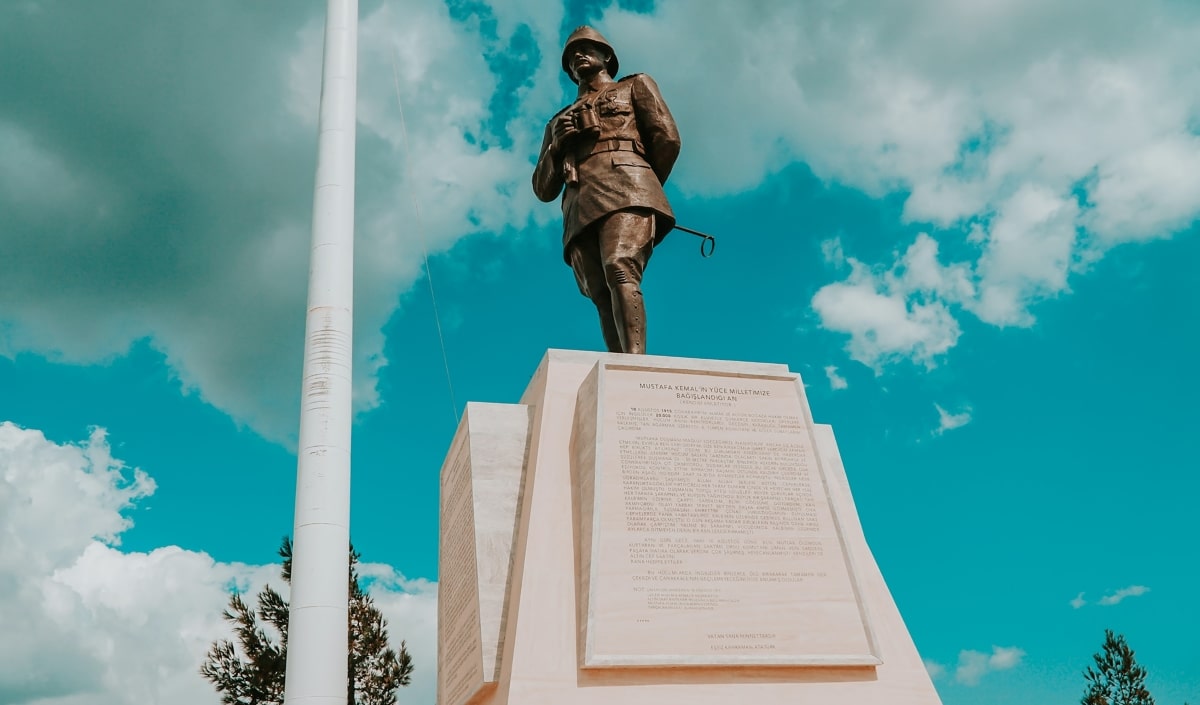

Mustafa Kemal Ataturk’s rise to power began in 1914 when he was entrusted with commanding the 57th infantry division at the front line of the Battle of Gallipoli.
In 1915, he solidified his reputation as a national hero by anticipating the position in which the Allies of World War I would attack.
He then risked it all by rebelling and going against military commands to successfully defend his country against the Dardanelles attack, causing the Ottoman side to triumph in that battle.
During the onslaught, Ataturk issued the following command to his soldiers:
I am not ordering you to attack, I order you to die! In the time which passes until we die, other forces and commanders may take our place!
One of the most detailed accounts of Ataturk’s biography is entitled ‘Atatürk: The Rebirth of a Nation ‘by Baron Kinross;
Patrick Kinross was educated at Balliol College, Oxford, after which he became a journalist. During World War II, he was posted as an intelligence officer to the Middle East and later served as a press counsellor at the British Embassy in Cairo. His travels through the Levant resulted in many books, including Within the Taurus and Europa Minor. Repeated visits to Turkey led to the publications of Ataturk in 1964 and to The Ottoman Centuries, which he finished just before he died in 1976.
According to statistics on the Government of New Zealand’s website, there was an estimated total of 392,856 casualties from both sides of the Battle of Gallipoli.
Looking back at the Gallipoli campaign, Winston Churchill said:
I am feeling the defeat in my whole veins right now. I am very upset. I was quite happy and hopeful. Up until yesterday, I was saying ‘Dardanelles is ours’. Because to win this war; military, finance, ammunition, I took everything into account. We were much superior in all of them. We were certainly going to prevail. Only we did not take one thing into account, Mustafa Kemal Pasha. If I did not have British pride in my bosom, I would want to applaud the Turks and give them a standing ovation.
Why is Atatürk so important?
When Gazi Mustafa Kemal Pasha uncovered that the Three Pashas of the newly re-established Ottoman Empire was colluding with other empires, he told them he would travel to Anatolia.
As soon as Mustafa arrived at his first destination, the port of Samsun (May 19, 1919), he did the opposite by telling the concerned Turkish people about the situation and preparing for a war of independence.
He was given the death penalty in absentia by the recently re-established Ottoman Empire after officially declaring the war of independence through the Amasya Circular (June 20, 1919), but they couldn’t capture him.
Ataturk was a patriot who bet against the odds of simultaneously going to war with multiple empires and nations. Yet the Turkish people won, and he became the first President of Turkey.
He founded a party regime which was free from any conflict until the year 1945.
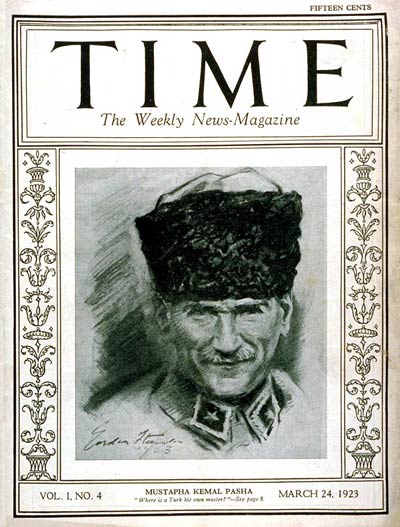
On March 24, 1923, ‘Mustapha’ Kemal Ataturk was featured on the front page of TIME Magazine.

In 1925, Ataturk gave a speech where he said that the people of Turkey are democratic and that the people of the United States of America are their allies.
In this video, Ataturk stated:
Turkish people have a deep and powerful fondness for American people” and should “keep the world at peace through a mutual alliance.”
He noted that he was confident the USA felt the same way.
There is some probability Ataturk drew inspiration from George Washington, from his days as a teen at military school studying the American Revolutionary War, to when he became the Turkish equivalent as an adult.
Both America and Turkey shared a mutual antagonist during their wars of independence, namely the British Empire.
In later years, Ataturk himself inspired ensuing leaders who heard about his story to aspire towards anti-colonialism and liberty; especially Mahatma Gandhi, who famously said:
Until Mustafa Kemal defeated the British, we thought even God was an Englishman.
As the President of Turkey, Ataturk established a political and social re-organisation of his nation.
These reforms included the elimination of Islamic institutes, the introduction of Latin scripts, and the liberation of women. He also established strong relations with neighbouring states.
On November 10, 1938, Ataturk died from Liver Cirrhosis.
The twenty leadership characteristics of Ataturk
1. Broad thinking
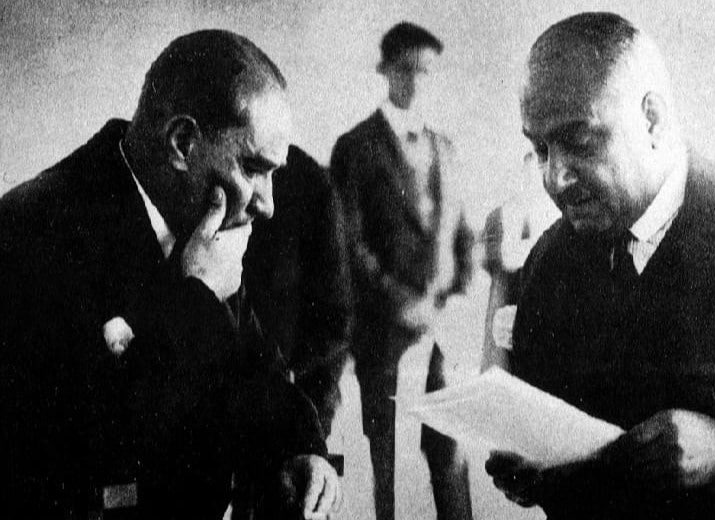

Ataturk was a skilful military and political leader.
His broad thinking is evident from some of his accomplishments in the military, like anticipating the position where his enemies would attack.
He also got entrusted with challenging assignments where he performed well, getting many promotions.
Being Turkey’s first President during a significant transformation required him to be a critical leader.
In 1919, he launched a revolutionary defensive war against antagonistic empires, even though the Ottoman pasha’s opposed it.
2. Outstanding communications
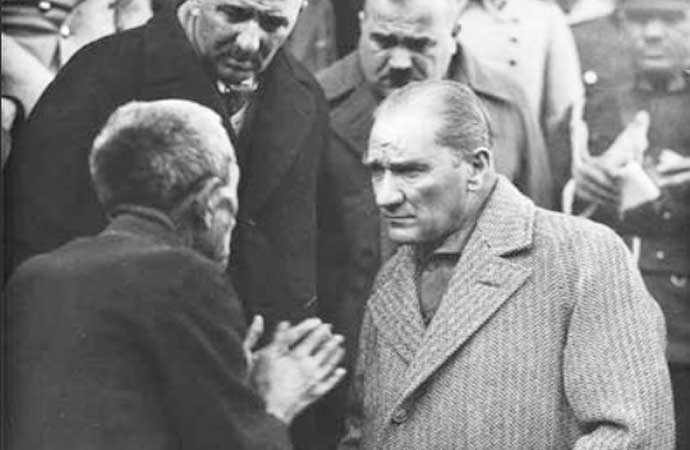

When making important decisions, he consulted other leaders.
Ataturk successfully shared his religious beliefs, goals, and amendments with his followers.
For instance, when making decisions about religious reforms, he met with some of the most influential spiritual leaders of the time at the Râşid Efendi Manuscript Library.
He even got them all to agree on national unity over everything else, regardless of any future disagreements or policies.
In case Hoca Rasit needed more persuasion, General Fevzi, who had strong Islamic stands, was referred to him.
More so, Ataturk reached other soldiers, villagers, artisans and ordinary people.
3. Effective persuasion
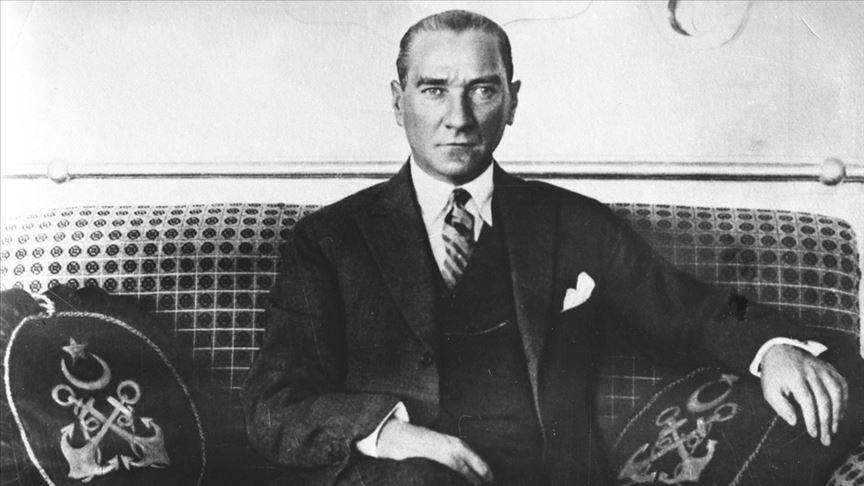

Ataturk convinced his followers and his close friends to support him in achieving his objectives.
He established a new and revolutionised Turkey by convincing her people.
He strategically shared how implementing reforms would make the nation better than before.
He could create hope, confidence, and courage so his followers could fight alongside him, even if some opposed his ideas.
He achieved what most people thought was impossible through his power to convince people.
4. Self-assertion
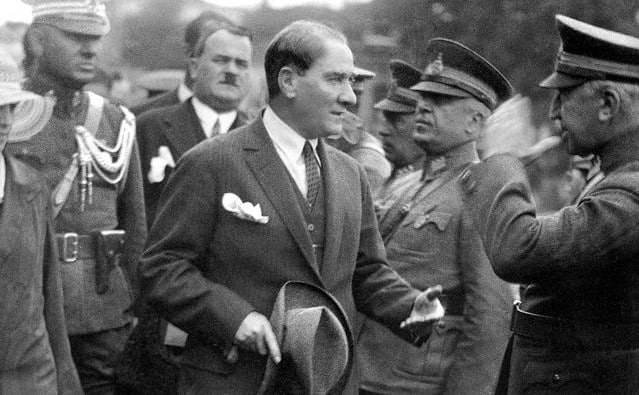

Ataturk convinced people that culture and civilisation were synonymous.
He was able to counter Ziya Gokalp, who was a Turkish ideologist on nationalism.
Gokalp believed there was a distinction between culture, which he thought was born out of religion, and civilisation, which he felt was a product of global universal science.
Mustafa insisted that his friends modernise their lavatories and that the servers be trained modernly. He derived his assertive nature from his mother and military school.
5. Open-mindedness
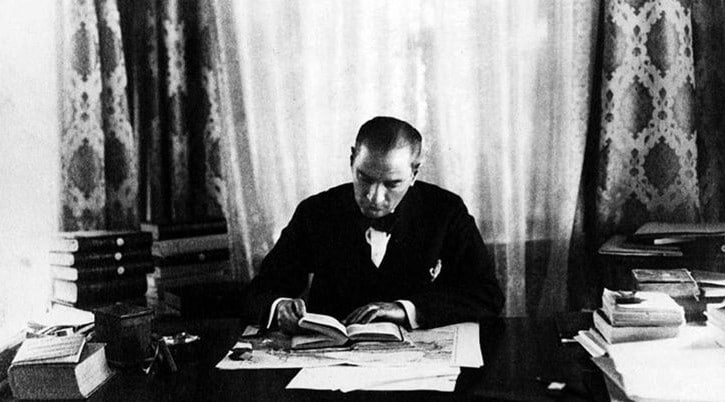

Ataturk believed that acquiring knowledge was the main recipe for survival.
His past influenced his thinking. He invested a lot in knowledge to remedy the shortage of skills and information in his country at the time.
He valued civilisation greatly, and the only way Turkey could survive its process was through acquiring knowledge.
He could acquire merchants and professionals who could run the Republic as it reached modernisation.
He also believed that civilisation would drive away what he called a “dark cloud of general ignorance.”
6. Transformational leadership
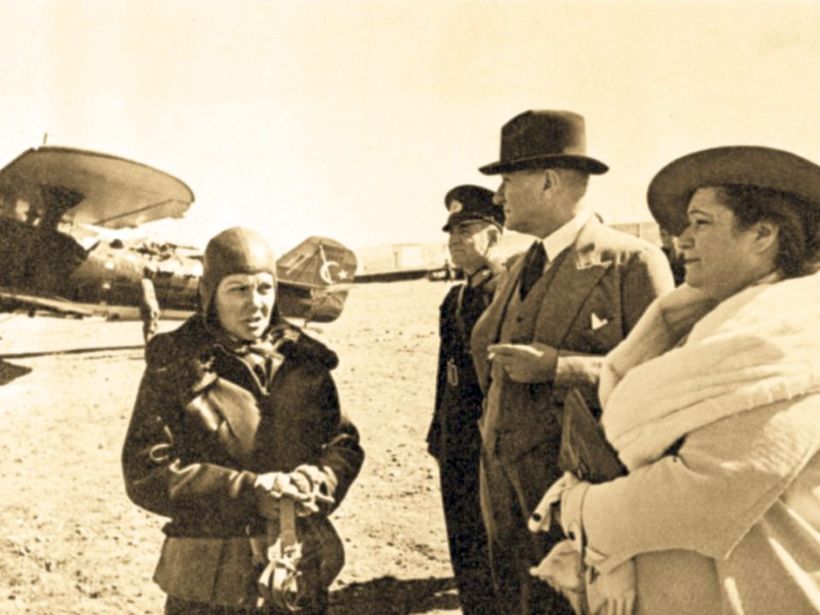

Ataturk believed in change.
He changed the Arabic alphabet to Latin in Turkey, which forced the people of Turkey to learn a new language.
He also declared that Turkey was a state separate from the Muslim religion. He closed Islamic institutes, allowed alcohol and granted prayer in Turkish instead of Arabic.
Also, he allowed women to wear dresses or jeans and access education, which was not allowed before his leadership.
He also acted as a transformational leader by changing a remnant of the Ottoman Empire to a secular republic.
7. Continual performance
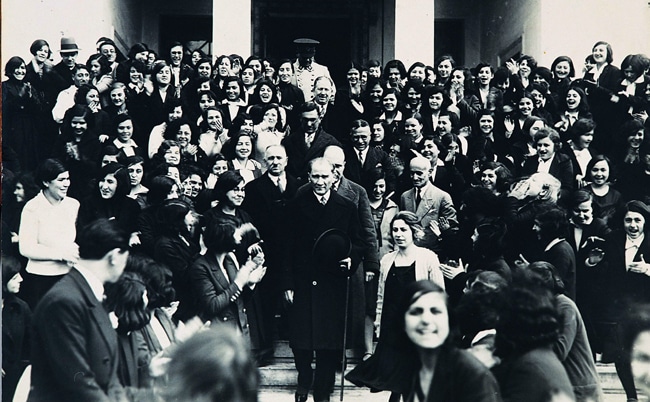

One could observe Ataturk’s steady nature through the endless energy he committed to his career.
He consistently fought against political forces that led to the Ottoman Empire’s crumbling.
He also worked tirelessly in all assignments entrusted to him.
As a result, he served successfully in every chain of command, operation and defensive battle assigned to him.
Winston Churchill also referred to him as “a Man of Destiny.”
8. Game-changing
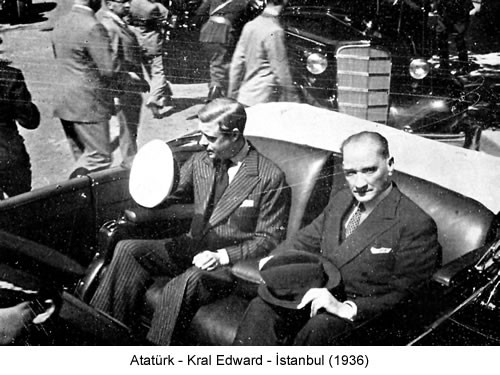
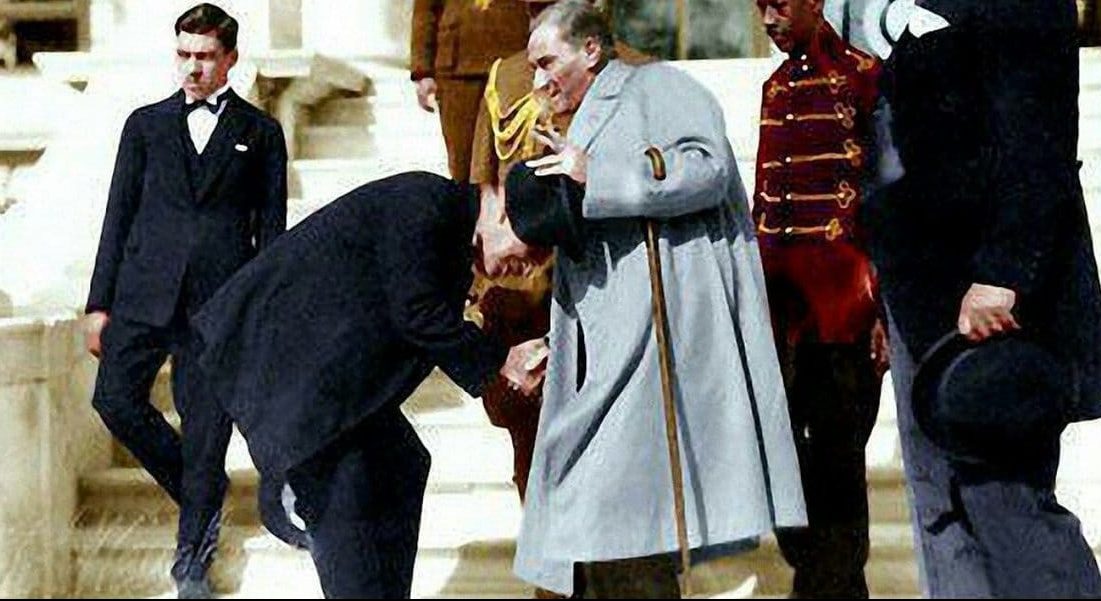 King Edward VIII of England kissing Mustafa Kemal Ataturk’s hand.
One of Mustafa Kemal Ataturk’s main accomplishments that enabled Turkey to exist was forming a non-expansionist force.
He aimed to defend Turkish lands from the aggression of simultaneous attacks on multiple fronts from Entente Powers. These attacks came from Great Britain, Australia, New Zealand, Italy, Greece, France, and Russia, to name a few, and yet he still succeeded.
In 1919, the Ottoman government issued a death penalty in absentia to Ataturk because he released the Amasya Circular, which put the Turkish War of Independence into effect.
Even King Edward VIII of England once kissed Mustafa Kemal Ataturk’s hand.
Ataturk succeeded against the odds, replacing the strongest partition of the crumbling Ottoman Empire, divided by colonial forces before his eyes, with a Turkish republic.
This breakthrough required him to face many oppositions plus change many rules & regulations that were stringent in legal, economic, political, social and cultural fields.
9. Decision-making
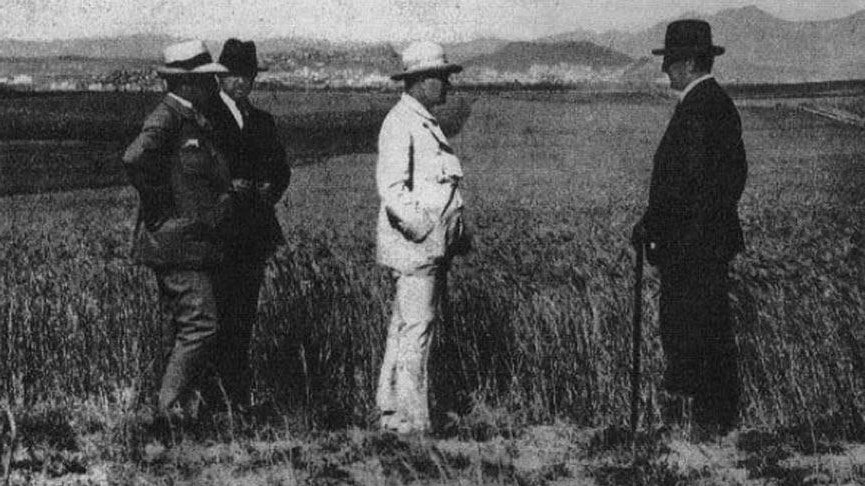

Ataturk faced many critics in his time, and because of this, he adopted an executive form of military leadership.
The chances are that he could not be successful if he were slow at decision-making.
This leadership style allowed him to make fast decisions and implement measures immediately and determinedly.
Many adverse conditions existed in Turkey; therefore, he was a quick thinker who knew there was little or no time for compromise building.
10. Loyal patriot
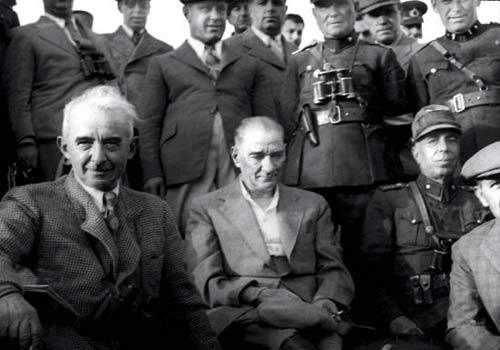

Ataturk trusted and cherished his associates.
His close friends respected and were loyal to him in every significant step of his life.
Some of them included Fevzi Cakmak, the Chief of Staff; Ismet Inonu, the Prime Minister; and Kâzım Fikri Özalp, the Minister of Defence.
These friends supported his leadership ideologies, while Ataturk supported them and carried out common ideals so that they could realise their potential.
For every leader in a business or a political forum to succeed, they must have close associates who support them in their endeavours.
11. Confident innovativeness
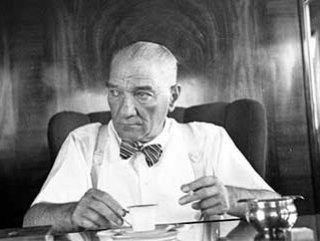

Ataturk had extraordinary objectives for his people and his country.
He believed in something greater than himself.
Throughout his life, he was a results-oriented person with ambitions of enabling his country to reach the highest level of modernisation.
Not only was he intelligent, but he was also determined, reformist, fearless, and curious.
In the late Ottoman period, when his empire was deteriorating, he aimed to revolutionise his renewed country and make it great.
His vision was to ensure a modern and secular Turkish republic, which became a reality due to his visionary insight.
12. Unconditional altruism
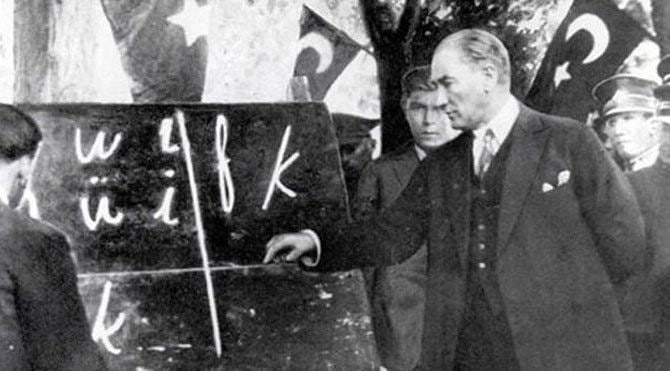

Throughout his reign, Ataturk worked for the good of the country and its people.
He worked unselfishly for his dreams and was able to accomplish most of them at a tender age.
Most people and his followers gained from his achievements.
By changing the Arabic alphabet to Latin letters, he enabled people to become literate more quickly.
As a result, more people became well-educated during his reign.
He also made a profound impact by implementing Westernised legal systems like commerce codes, civil codes and new legislation.
13. Unshakeable libertarianism
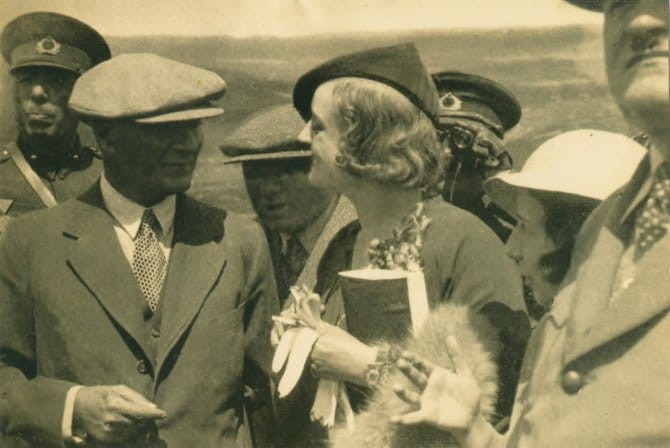

Ataturk fought tirelessly against the Entente Powers and affiliated armies, who were on a mission to colonise his motherland and split the spoils between each other.
More so, he enacted laws that were free from gender discrimination, opening the way for women to hold positions of power in all sectors of society, including the government, business, and military.
This gender-equality initiative led thousands of courageous women, including Fatma Seher Erden, Şerife Bacı, Hafız Selman İzbeli, and Tayyar Rahmiye, amongst others, to contribute as military leaders during the Turkish War of Independence.
The equality laws brought forth by Ataturk allowed women to get an education and dress freely.
More so, he ensured that women had equal rights with those of men across every facet of society.
Women were also allowed to end divorce at their discretion.
He believed in modernisation, which made Turkey free from stringent rules.
14. Real peacemaking

Ataturk adopted the policy of having peace at home and in the world.
Additionally, he inspired other leaders who were in other Muslim countries.
He established relations with the neighbouring nations during his reign to ensure their harmony.
More so, he had an enemy, Eleftherios Venizelos, who later became his ally and nominated him for the Nobel Peace Award.
Furthermore, King Edward VIII of the United Kingdom eventually became his friend.
He was rational in his decisions and did not take sides at any moment.
Atatürk clearly stated that he believed in a supreme being but did not have a religion.
15. Inspirational guidance
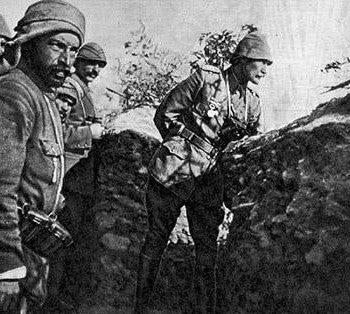

One could observe Ataturk’s courage from his fights in battle.
He led the Gallipoli campaign. He was always at the frontline wheeling guns, sending his troops to battles where they had little chance of surviving.
To achieve independence, he fought with his army to achieve victory.
He also declined to change his army when he was the commander.
He relocated his division to Conkbayiri despite having no approval from the headquarters, which led to military success and his promotion.
16. Wise managing
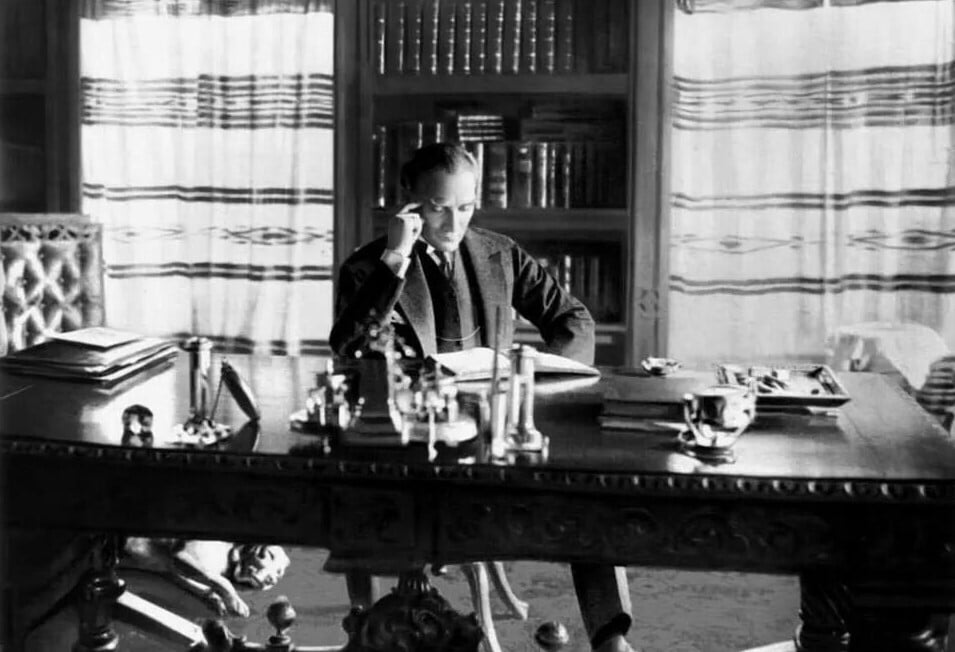

Not every decision made by Mustafa Kemal Ataturk was for his gain but for the sake of Turkey.
He was also strict and loyal to his virtues.
Some ideas that motivated him included developing Turkey as a national power and transforming it into a liberal country.
New ideas included achieving a good standard of living for her people and moving towards a liberal political and economic status.
More so, he was not distracted by the lost provinces of The Ottoman Empire in Europe and Asia.
17. Determined visionary
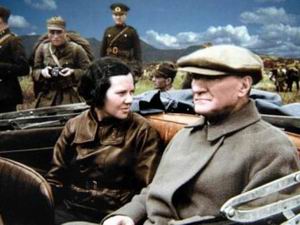

Ataturk described himself as a successful person in his speeches.
He was also determined to ensure that Turkey got her independence when he devised a war strategy that balanced military and political aspects in alignment with changing situations.
He created a national assembly and gained nationwide support for fighting for independence.
Despite unfavourable circumstances, he fought for freedom against five established nations simultaneously without being distracted by political or resource limitations and came out victorious.
18. Rational polymathy
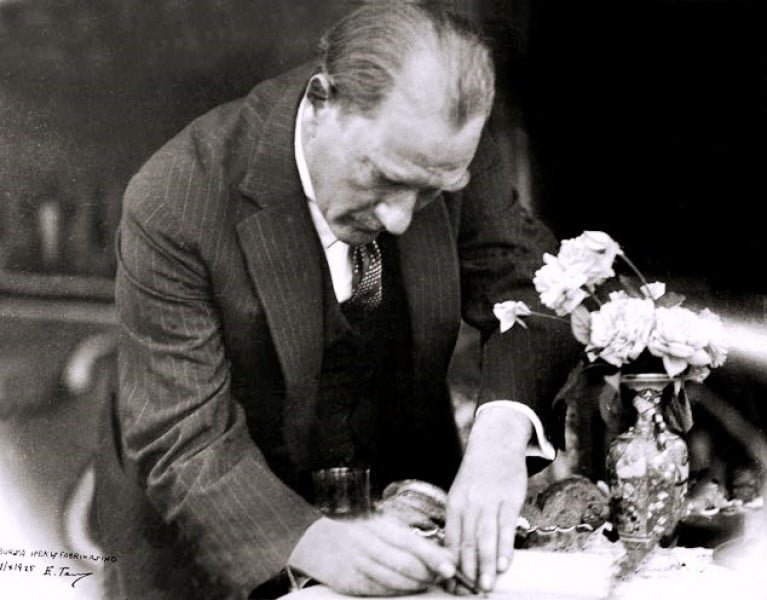

Well-grounded logic and generous patronage were rare traits at the time.
Ataturk’s wise and philanthropic attitude was rare. He could decide from a rational point of view instead of a religious point of view. However, he appreciated the differences that other people had.
Some of his close companions, like Ahmet Izzet and Ismet Inonu, were confirmed religious people.
More so, his friends carried a Quran everywhere they went. However, Mustafa ensured that religion did not get in the way of Turkey’s development.
19. Smart planning
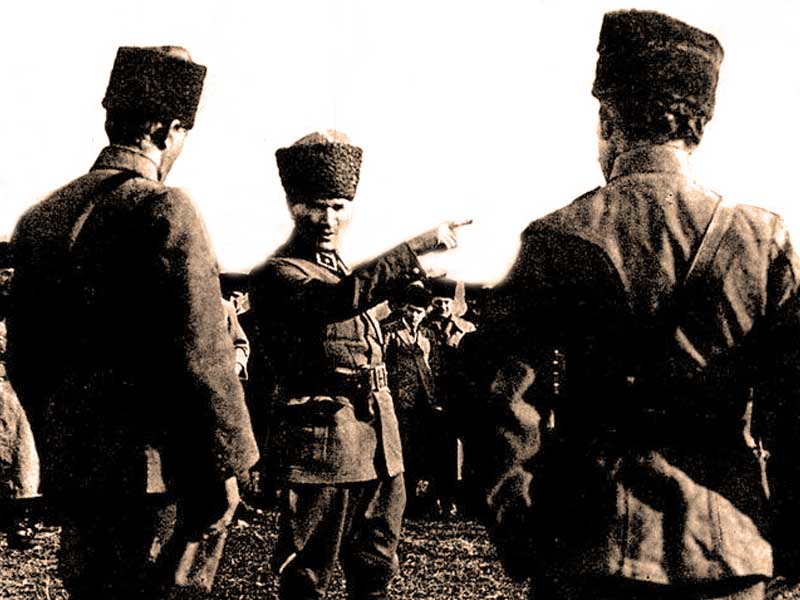

Ataturk outlined clear rules that would govern his nation.
Some of the just, upright and free principles that guided his leadership included a declaration of the public, abolishing the caliphate, wearing hats, and eliminating the ministry in charge of religious activities.
In terms of organisation, he set out both theoretical and practical rules and regulations.
More so, he stated that no opposition could ever affect the fate of the Turkish Republic.
Other principles included building infrastructures such as railways, unifying production, modifying the tax on agricultural products, and much more.
20. Enlightened flexibility


Ataturk’s flexibility could be observed when he tried to consult his fellow leaders on some reforms.
He did not assume a despot kind of leadership but a friendly attitude with an open mind towards the notions provided by resistance.
As the Turkish War of Independence went on, he supported his troops and encouraged them to win.
He also promoted a way of modernisation in his country that allowed everyone to leave their old ways and be more flexible.
If you enjoyed this story on Ataturk, please share, retweet, and comment on social media about this biography.

