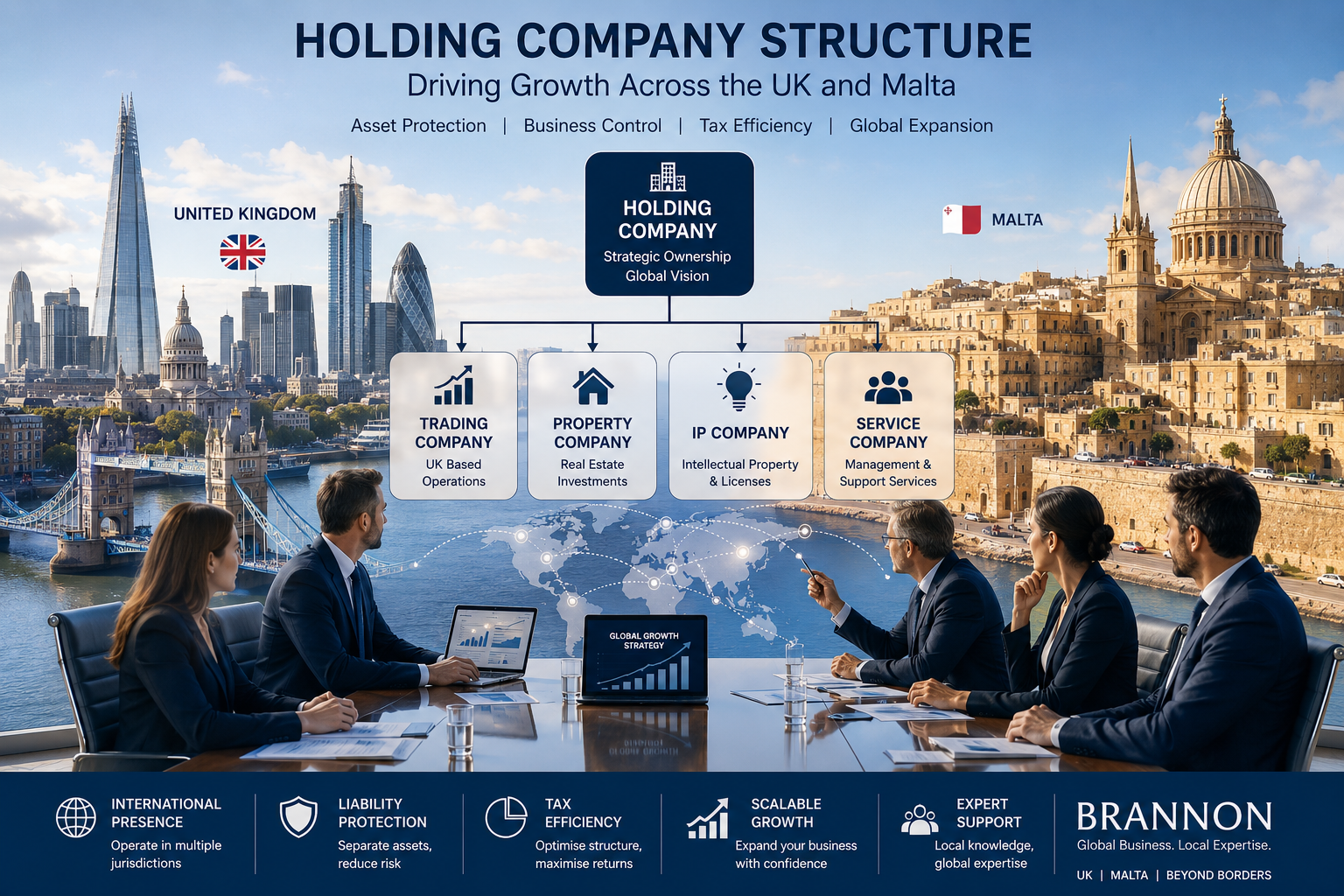
So you’ve started a business, you’re making money and everything is good. But have you ever thought about setting up your own limited company? There are several benefits of a limited company and in this article we will talk about some of the basics.
The beginnings of your small business
Before we talk about the benefits of a limited company, it’s probably best if we briefly explain the difference between being self-employed and owning a business. Detailed article here, but to the point…
If you are starting your own business for the first time, you will probably be a self-employed sole proprietor. This means you work, get paid and file an annual tax return (known as a self-assessment) telling HMRC how much money you have earned. You keep records, pay your tax bill and that’s it. It is by far the easiest way to run a business in the UK. You can manage your accounts yourself and don’t even need a business account.
It is important to remember that YOU are the business and the money is yours. If something goes horribly wrong, your house could be at stake (worst case scenario).
So what is a limited company?
A limited liability company is a separate legal entity. Think of it like another person. This provides you with a layer of protection between your business life and your personal life. Instead of being self-employed, you become an employee of your own company. You can search for information about any UK company on the website Company building Website.
In short, a limited company is run by its directors and owned by its shareholders. It is a completely separate legal entity. Think of it like another person.
The biggest disadvantage of a limited company is that the accounting is more complicated and you will almost certainly need an accountant. Your accountant will help you:
So if your business is very young and earns less than £20,000 a year, you’re almost certainly better off remaining self-employed. However, from day one I have been involved in several companies that were limited liability companies.
What are the advantages of a limited company?
There are many advantages of a limited company, not least the tax side (we’ll talk about this later). However, for me there are three trigger points:
- Start a business with someone else
- employ staff
- Do any job that is reasonably risky
There are many other scenarios where setting up a limited company can make sense, but personally if I do any of the above three things, I will almost certainly set up a limited company.
Start a business with someone else
Even if it is just a husband and wife partnership, I would still consider doing things through a limited company. It’s just a nicer way of doing things. Doing business with non-family members means you can distribute company shares as you see fit.
employ staff
Employing employees is a minefield these days. The law is so heavily weighted in favor of the employee that fewer and fewer small companies employ employees directly. Personally, I wouldn’t hire anyone unless through a limited company.
Do risky work
Most jobs involve some degree of risk. How likely is it that something could go wrong? How much would your financial liability be? Running a business as a limited company provides additional protection so that you are not personally liable if something goes terribly wrong. This will give you extra confidence to move your business forward.
The tax advantages of a limited liability company
A limited company will almost certainly end up being more tax efficient than being self-employed. In short, You pay less taxes. This is not some dubious tax fraud. We do not invest assets in tax havens or operate through offshore companies, as the mega-rich do every day. You pay your fair share, and it will likely be less than if you were self-employed.
The reasons for this are a little too complex to cover in this article, but very briefly: As an employee of your own limited company, you can take FULL advantage of all the statutory tax breaks. This basically means taking full advantage of:
- Dividend allowance
- Personal tax allowance
- Social security threshold
- Employment allowance
Your accountant is well versed in all of this and will structure your tax affairs to make the most of all of the above as a bare minimum.
You will pay a whole range of taxes including:
- Corporate tax on company profits
- PAY taxes on your wages
- Social security on your wages
- Control your dividends
But hopefully all of the above will be less than your self-assessment tax bill for a similar wage.
If you find any errors in this article, please contact us. Do not forget Subscribe on YouTube And remember that becoming a member of the site gives you access to particularly useful content. Please also join our mailing list so that we can stay in touch with you outside of the YouTube world. We care 100% about privacy and you can unsubscribe at any time.
Thank you for supporting this independent website and good luck on your small business journey!
Last updated on June 27, 2024 by Andy Mac