

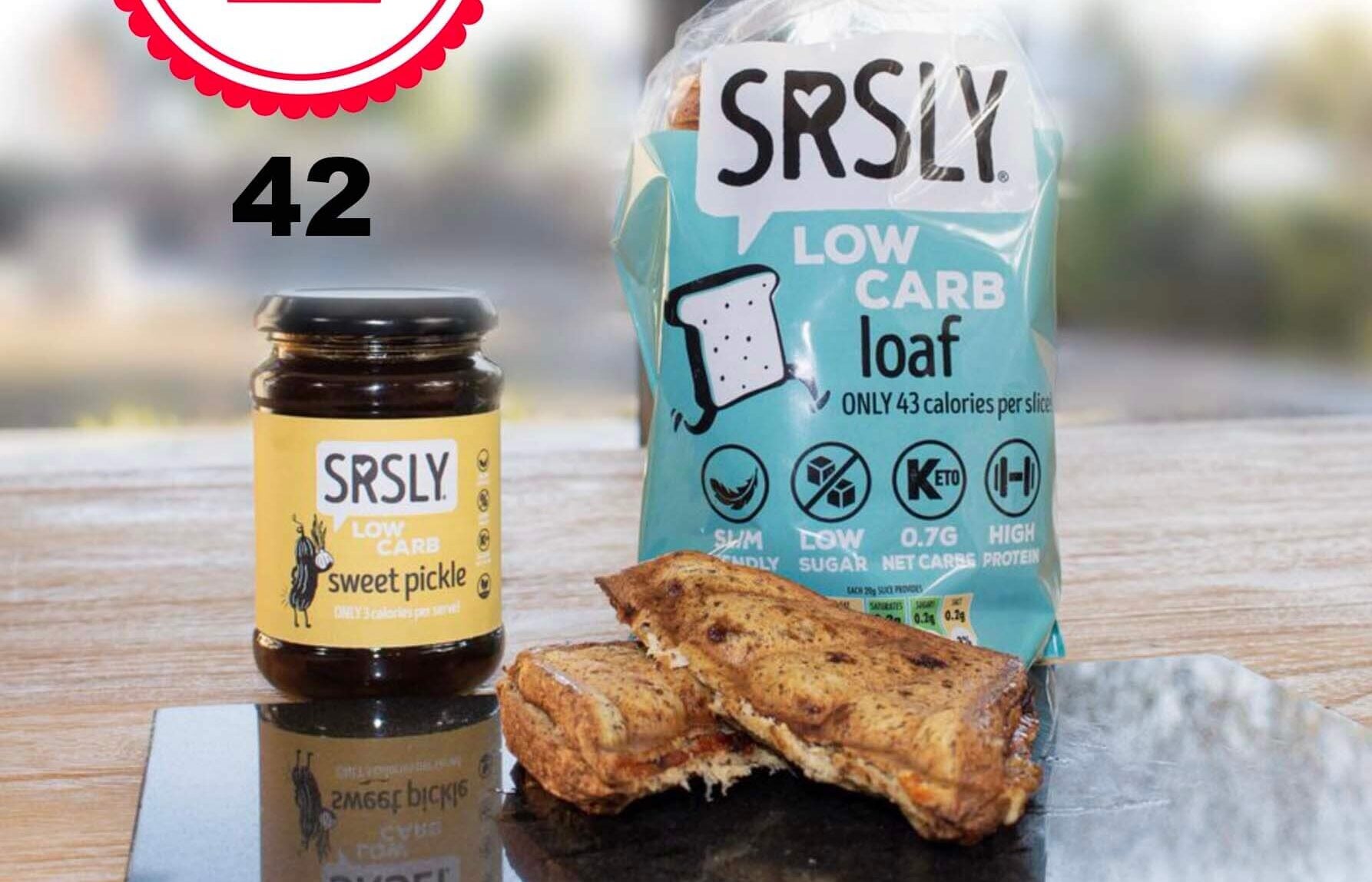
SRSLY Low Carb came about around the time I collapsed on the way home from another manic work trip.
When I came to, I finally accepted what I had long suspected: that my existing work-life balance was unsustainable. I needed some time off to recover and as someone who was already an avid runner and triathlete, I decided I needed a new challenge to focus.
Against my family’s better judgment, I took steps to complete my first Iron Man, which was my first introduction to a ketogenic lifestyle. That’s what motivated me to start SRSLY Low Carb.
A glaring gap in the market
For me, following a low-carb diet made perfect sense, but despite my best intentions, I just couldn’t suppress my deep-rooted craving for bread. Keto and low carb are by far the two most Googled nutrition terms — yet low carb has largely failed to catch on in the UK.
To be fair, there are a million protein shakes and healthy snack bars vying for attention. But no one offered credible alternatives to the necessities of life. The mainstream low-carb market offerings tasted like corrugated cardboard — so I decided to create my own.
Family and friends were surprisingly impressed with my “amateur hour” efforts, which led me to reach out to a few artisan bakers to refine my recipes and commercialize my best efforts.
Brutal Reality Checks: In the Face of COVID-19 and Brexit
Although I have no experience in the food and drink sector, in SRSLY’s first year of trading (2019) we increased our turnover from £30,000 to £1.6m. We quickly established ourselves as Google’s premier provider of low-carb bread and rolls… but brutal, deafening reality checks soon arose.
On the one hand, with the end of COVID-19 there was a 32% decline in online sales that had to be absorbed. But that was fine because our exports to Europe saw steady growth as consumers in mainland Europe are much further along the acceptance curve for low-carb foods.
We were in 15 countries and had 5% weekly growth leading up to Brexit. Without warning, the wheels fell off on our foreign adventure.
Finding our audience
However, there was demand in the UK. In 2023 the NHS declared that obesity was a ticking time bomb. Recent estimates suggest that 16.8 million people in the UK are now living with obesity.
By 2022, SRSLY Low Carb was generating over 110,000 orders per year and had a growing following of over 250,000. 80% of our followers want to make significant progress in losing weight, while 50% are working hard to cure type 2 diabetes.
Demand was so great that we set out to broaden our appeal by venturing into other mass market categories as diverse as pizza, jam, condiments, wraps and ready meals. Categories that have all been burdened by overused reputations in the past (excessive salt, sugar, synthetic nasties and foul fillers).
The impact of rising ingredient costs
We felt like business was going well. We had just secured a key NHS contract that reflected the health service’s growing appreciation for low-carb thinking.
This was the moment when we decided to win over the established brick-and-mortar supermarkets. After all, plant-based and food-free products had successfully found their way into large supermarkets, and the latter only affect 2–3% of the population. In our opinion, brands that aim to serve 30% of the population would certainly be welcomed with open arms.
We were wrong. We spent a lot of money servicing the big multinationals and then realized that — despite a lot of very optimistic, positive conversations — the timing just wasn’t right. Rising ingredient prices meant grocery shoppers were on the safe side. Multinational corporations gave valuable space to beige product line extensions rather than taking the risk on young challenger brands.
Reduce costs while reducing carbohydrates
This was, without a doubt, a moment of sharp inhalation. We could still see a glaring gap in the market, but felt like our feet were stuck in low-carb treacle.
Towards the end of 2023, we completed a small Seedrs raise (£349,000) which exceeded our original target by 37%. We also streamlined the business and saved £250,000 in costs, meaning we remained a profitable business even in our darkest days.
The importance of innovation
This all sounds a little depressing, but in reality the first signs of recovery were underway. We have an exclusive agreement with Gourmet International in the US, which has relationships with most major US supermarkets. North America has started ordering our low carb pizzas, while a new alliance with a leading multi-region logistics specialist means we’re ready to tackle Europe again.
When it comes to innovation, we knew we needed to expand our reach even further. We tested our own low-carb noodles in early 2024 and launched some deliciously flavorful dried noodles in May. Dried noodles are a dynamic £51m category, capitalizing on the popularity of health-conscious Asian cuisine.
Awards are a huge boost to team morale and in 2023 we were lucky enough to win the Food & Drink Federation’s Emerging SME Award and make it to number 42 on the prestigious Startups 100 list.
The moral of the story? Never give up
Conclusion: Never give up, because there is often good news lurking around the next corner. We feel like we’ve learned a lot at a rapid pace that will benefit us significantly over the next 12 to 18 months.
2024 will certainly not be easy, and yet we believe our carefully streamlined business is well positioned to thrive in the months and years ahead.
Andy Welch is the founder of SRSLY Low Carb, a company that offers low-carb alternatives to staples like bread, pasta and pizza.

