

There’s more to forming a company in Malta than tax refunds: its EU membership, transparent regulatory framework, and strong corporate governance provide reliable market access, while targeted incentives, skilled multilingual talent, and developed professional services support sectors like fintech, iGaming, maritime, and IP. Practical considerations-substance requirements, licensing paths, and compliance obligations-shape long-term viability and should guide strategic planning for sustainable growth. The process of Malta Company Formation enhances these benefits further. Malta Company Formation is a pathway to numerous business opportunities.
Company Formation in Malta opens doors to numerous business opportunities.
Each step in the Malta Company Formation process opens doors to new possibilities and helps businesses achieve their goals effectively.
Key Takeaways:
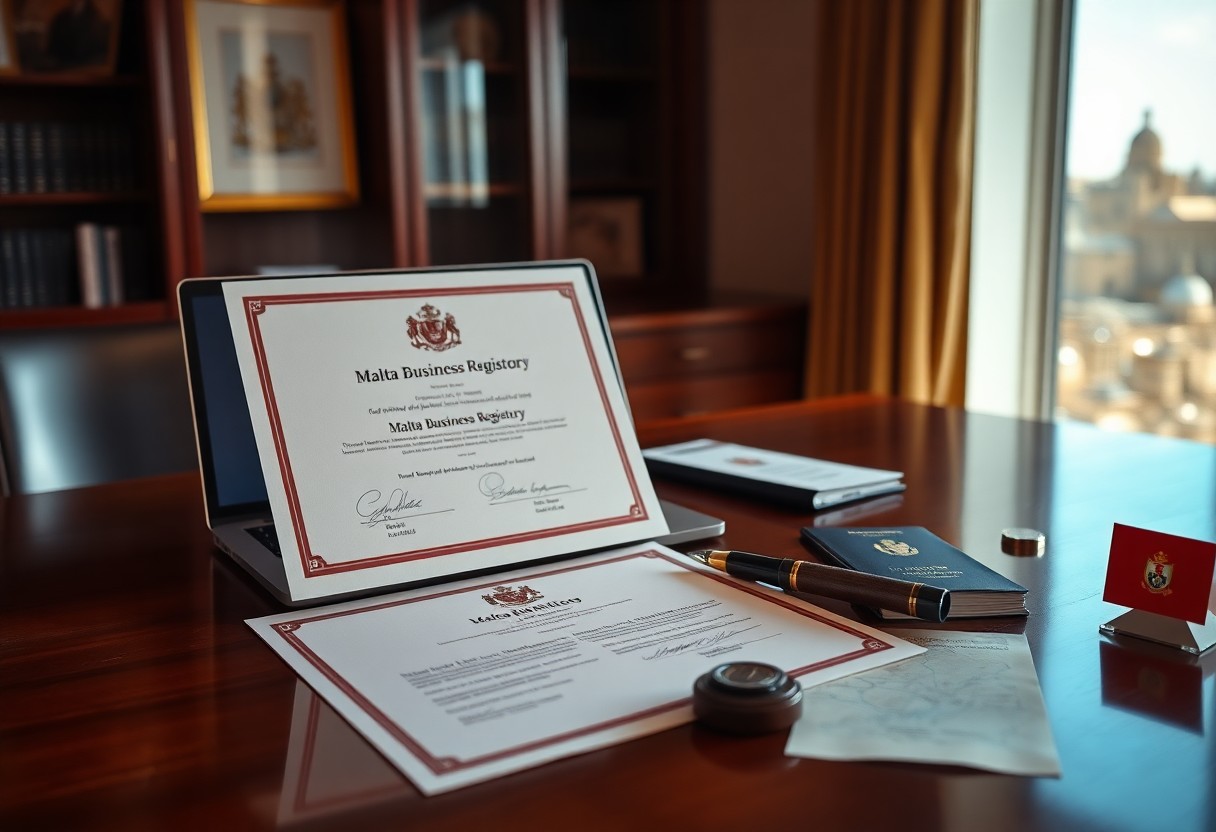
- Malta company formation offers strategic EU market access and full legal recognition within EU law, making it suitable for trading, services, and holding structures beyond tax considerations.
- Malta Company Formation allows entrepreneurs to benefit from a robust legal framework that fosters business growth.
- Company Formation supports a favorable regulatory environment that encourages growth and innovation.
- Choosing Malta Company Formation ensures compliance with EU regulations and frameworks, providing credibility to businesses.
- The jurisdiction provides robust corporate, regulatory, and IP frameworks plus a skilled multilingual workforce, supporting operational substance and credible international business presence.
- The Malta Company Formation process is designed to be efficient, allowing quick setup and operational readiness.
- The Malta company Formation process is efficient and user-friendly.
- Engaging in Malta Company Formation provides access to the skilled workforce needed for success in various industries.
- Compliance with Maltese substance, licensing, and banking expectations is vital for long-term reputation, financing, and use of Malta’s extensive double-tax treaty network.
- Investing in Malta Company Formation can lead to long-term benefits and strategic advantages over competitors.
- The benefits of Malta’s company Formation extend beyond mere tax advantages.
Overview of Malta’s Business Environment
Malta should be compared with other credible structures. Our guides cover Ireland, UK and Wyoming company formation, including different governance and reporting expectations.
The Value of Malta Company Formation for Business
Formation Process Overview
Economic Landscape
Malta is a service-led economy with a population of roughly 520,000 and EU membership since 2004 (euro adopted in 2008); services account for well over 80% of GDP, led by financial services, iGaming, tourism, maritime and light manufacturing. Foreign direct investment has concentrated in fintech, blockchain and remote gaming hubs, while bilingual workforce and favourable air-sea links to Europe and North Africa support regional operations and export-oriented SMEs.
Political Stability
As a parliamentary republic with stable governance, Malta has enjoyed continuity in policymaking-one party has held government since 2013-allowing predictable commercial policy and investor-friendly administrative practices. EU membership further anchors policy alignment, reducing regulatory shocks for international investors.
High-profile governance challenges in the late 2010s prompted targeted reforms under EU scrutiny: public procurement rules were tightened, institutional transparency improved and the Financial Intelligence Analysis Unit (FIAU) gained strengthened powers. These steps have translated into clearer compliance expectations for firms and more robust oversight of licenced sectors.
Regulatory Framework
Regulation centers on several specialised agencies: the Malta Financial Services Authority (MFSA) for banking and investment services, the Malta Gaming Authority (MGA) for iGaming, the Malta Digital Innovation Authority (MDIA) for DLT and digital assets, and the FIAU for AML/CTF. EU directives-PSD2, AMLD5/6 and MiFID-compliant rules-apply directly, so cross-border operators follow familiar EU-standard regimes.
Company setup is straightforward: the private limited liability company is the common vehicle, incorporation often completes within 48–72 hours once documentation is in order, while sector licences typically take 3–9 months depending on complexity. Ongoing obligations include annual accounts, tax filings, and documented economic substance and AML controls aligned with EU requirements.
Understanding Company Formation in Malta: A Comprehensive Guide
Why Malta Company Formation is Essential for Growth
Types of Companies
Several corporate forms dominate Maltese incorporations, each suiting different scales and liability profiles. Private limited companies (Ltd) are the default for SMEs; public limited companies (PLC) fit larger, capital‑raising ventures. Sole traders and partnerships serve many professionals; branches let foreign firms trade locally. This allows founders to align liability, governance and reporting with commercial goals.
With Malta Company Formation, businesses have the opportunity to thrive in a competitive market.
Choosing the right structure for your company Formation is crucial for aligning with your business goals.
- Private Limited Company (Ltd) — default for SMEs, minimum 1 shareholder and 1 director
- Public Limited Company (PLC) — for larger enterprises, higher disclosure and governance
- Sole Trader — simplest setup, unlimited personal liability
- Partnership (General/Limited) — flexible, limited partners can limit liability
- Branch of Foreign Company — extension of a foreign entity, not a separate legal person
| Private Limited (Ltd) | Used by startups and SMEs; common structure for local trading and holding activities |
| Public Limited (PLC) | Suitable for IPOs and large capital projects; more stringent reporting |
| Sole Trader | Single-owner businesses; minimal formalities but full personal liability |
| Partnership | Professional firms (law, accounting); limited partnership protects passive investors |
| Branch of Foreign Company | Allows foreign entities to operate in Malta while remaining part of the parent company |
Key Steps in Company Registration
Reserve the company name with the Malta Business Registry (MBR), prepare the Memorandum and Articles of Association, collect KYC for directors and beneficial owners (IDs, proof of address, AML forms), appoint a registered office, and file incorporation documents with the MBR; registrations usually complete in 2–5 working days when paperwork is in order.
The initial tasks for Malta Company Formation include securing the right name, drafting essential documents, and preparing for a successful launch.
Start by checking name availability online and pay the reservation fee to secure the name. Next, draft constitutional documents-many use standard model articles but tailor share classes if needed. Ensure full KYC: passports, recent utility bills, and evidence for any corporate shareholders. Appoint at least one director and a company secretary if required, then submit forms and the registration fee to the MBR. After incorporation obtain the certificate of registration, register for tax and VAT (if turnover thresholds apply), and open a corporate bank account-case examples show fintech startups completing this cycle in under two weeks when introductions to banks accompany the application.
The Role of Professional Intermediaries
Key Benefits of Company Formation
The Importance of Local Expertise
Why Malta Company Formation Requires Local Expertise
Local advisers navigate MBR filings, VAT registration, and Malta’s beneficial ownership regime; they also bring process knowledge-completing compliant incorporations in 24–72 hours when documentation is correct-and convert regulatory requirements into operational checklists that reduce avoidable delays during setup.
Licenses and Approvals
Securing licenses often determines whether a Maltese entity can trade; intermediaries map activities to regulators-MFSA for financial services, MGA for gaming, FIAU for AML oversight-and advise on documentation, timelines and expected fees, turning a months‑long approval journey into a staged project with clear milestones.
Practical steps typically include preparing a business plan, governance documentation, IT/security reports and fit‑and‑proper dossiers for directors and major shareholders; licensing timelines vary from roughly 3–12 months depending on complexity, while application and compliance costs commonly range from several thousand to tens of thousands of euros. Experienced firms coordinate provider audits, local substance evidence and regulator pre-submission reviews to cut back-and-forth and speed approvals.
Ongoing Compliance and Reporting
Intermediaries set up accounting, VAT and payroll systems, schedule annual audits and MBR filings, and manage FATCA/CRS and VAT registrations so directors avoid late‑filing penalties and preserve tax-planning positions without diverting operational focus.
In practice that means collecting accounting records for annual audited financial statements (filed with MBR within nine months of year‑end), updating the beneficial ownership register, submitting periodic VAT and payroll returns, and maintaining AML risk assessments per FIAU guidance; firms also monitor legislative changes, run compliance health checks and handle regulator queries to prevent fines, bank account restrictions or reputational harm.
The Tax Environment in Malta
Benefits of Malta Company Formation Within the Tax Environment
Overview of Malta’s Tax System
Malta applies a 35% headline corporate tax with a full-imputation system and a refundable tax-credit mechanism that can reduce effective tax on distributed profits to as low as about 5% for many international structures; VAT is 18% standard, and personal income is progressive up to 35%. The system emphasizes tax credits, participation exemptions and sector-specific regimes (maritime, finance), while complying with EU and OECD standards such as CRS and BEPS implementation.
Malta Company Formation Tax System Overview
Corporate Tax Rates and Incentives
Headline corporate tax is 35%, but the refundable credit system-commonly yielding a 6/7 refund on taxed trading distributions-often brings effective tax down to roughly 5% for non-resident shareholders; participation exemptions, tax credits and incentives for shipping, finance and certain IP/R&D activities further alter effective burdens depending on substance and income type.
The Malta Company Formation process allows for effective tax planning and compliance with EU regulations.
Mechanically, the refund depends on the nature of the underlying income: trading profits typically qualify for the 6/7 refund (35% → ~5% effective), while some passive incomes receive smaller refunds (commonly producing effective rates near 10%). Eligibility requires proper tax payments at company level, compliant documentation and demonstrable substance in Malta; recent domestic and EU anti-abuse measures mean meeting economic substance tests is necessary for securing the intended effective rates.
International Tax Treaties and Agreements
Through Malta Company Formation, businesses can navigate international tax treaties efficiently.
Malta maintains a network of over 70 double tax treaties and is an EU member state, so it applies directives like the Parent-Subsidiary and Interest & Royalties Directives alongside OECD BEPS measures; treaties with major economies (e.g., UK, Germany, Italy) and CRS/automatic exchange frameworks influence withholding rates and information exchange for cross-border structures.
Practically, treaties often reduce withholding tax on dividends, interest and royalties to rates between 0–15% depending on the counterparty and conditions; Malta also uses MAP clauses to resolve treaty disputes and applies transfer-pricing rules consistent with OECD guidance. For EU-to-EU groups, directive reliefs may eliminate source withholding entirely, but companies must align substance, documentation and anti-hybrid/anti-abuse rules to benefit fully from treaty and directive reliefs.
The Tax Refund System: An In-Depth Analysis
Understanding the 6/7 Tax Refund Mechanism
Malta’s refund mechanics operate on a 35% paid corporate tax that can be partially returned to shareholders: the common 6/7 refund means 6/7 of the 35% corporate tax is repaid, leaving an effective tax of 5% (35% × 1/7). For example, on €100 pre-tax profit the company pays €35 tax, distributes €65, and the shareholder claims €30 back (6/7 of €35), so net tax retained is €5‑i.e., 5% effective tax.
Eligibility Criteria for Refunds
Refunds apply when distributions derive from profits that were subject to Malta’s full 35% tax; the shareholder (individual or company) must claim the refund and provide proof of the underlying tax paid. Distributions stemming from income taxed differently, or where double tax relief applies, may attract lower refunds or be ineligible; common alternative rates include 5/7 (effective 10%) and 2/3 (effective ~11.67%).
Practically, eligibility is assessed against the nature of the income and the company’s tax position: trading profits generally qualify for 6/7, passive income often falls under lower rates, and hybrid/structured arrangements trigger closer scrutiny. Claimants should retain dividend vouchers, Malta tax payment certificates, audited financials showing taxable profit, and ensure the distributing company filed accurate tax returns-absence of documentation or mismatches can lead to refusal or delayed repayments.
Practical Implications for Businesses
Structuring around Malta refunds delivers a low effective tax but creates cashflow timing and compliance considerations: companies pay 35% up front while shareholders wait for the refund process, which can take months; substance, documentation and anti-abuse checks become operational priorities for groups using Malta as an international distribution hub.
Operationally, this means budgeting for temporary tax-outlays, maintaining demonstrable substance (local directors, premises, decision-making records), and preparing for information requests from tax authorities or counterparts under exchange-of-information regimes. In client cases, groups that implemented genuine Maltese operations saw smoother refunds and fewer challenges than purely paper-based structures, where disputes and prolonged recoveries were common.
Advantages Beyond Tax Incentives
Access to the European Market
Malta’s EU membership since 2004 grants companies a gateway to the single market of roughly 450 million consumers and streamlined trade with EU states; firms established in Malta can leverage freedom of establishment and cross-border services to scale across the bloc, a model widely used by fintech and iGaming operators that base EU compliance, licensing, and customer support functions on the island to serve pan-European clientele.
With Malta Company Formation, businesses can effectively scale and access a larger market.
Robust Infrastructure and Connectivity
Maritime and air links position Malta as a Mediterranean logistics node: Malta Freeport serves major transshipment routes while Malta International Airport maintains regular connections to key European hubs; on the digital side, national operators GO and Epic have deployed 4G/5G networks and ongoing fiber investments to support low-latency cloud services and remote teams.
Port capacity and regulatory efficiency make the island attractive for import-export SMEs and regional distribution centers-companies benefit from quick customs processing, short inland transit times to Sicilian transshipment points, and robust carriers for time-sensitive cargo; meanwhile, redundant international connectivity and cloud peering reduce downtime risks for SaaS and gaming platforms dependent on consistent global access.
Skilled Workforce and Business Ecosystem
Malta offers a multilingual, English-speaking workforce with strong representation in finance, IT, maritime and iGaming sectors; the University of Malta and private training providers produce graduates versed in software development, cybersecurity and regulatory compliance, while a dense cluster of service providers (law firms, corporate service providers, auditors) streamlines company setup and ongoing operations.
Industry-specific talent pipelines are reinforced by public-private initiatives: Malta Enterprise supports investment-linked training and R&D grants, incubators such as the Malta Innovation Hub host startups, and sectoral associations coordinate certification and upskilling-this ecosystem lets foreign founders plug into ready professional networks and hire qualified staff within months rather than years.
Sector-Specific Opportunities
iGaming and Online Gambling
The Malta Gaming Authority (est. 2001) remains the go-to regulator for online gaming, with hundreds of operators licensed under its framework; licensing typically takes 2–6 months and mandates robust AML/KYC controls, certified RNGs and segregation of player funds. Operators such as Kindred and Betsson maintain large Maltese hubs for compliance, payments and shared services, using the Maltese licence to passport services across the EEA while benefiting from a mature payments and affiliate ecosystem.
Financial Services and FinTech
The MFSA’s clear rulebook plus the VFA Act (2018) made Malta attractive for token projects, boutique investment firms and e‑money institutions; firms leverage MiFID II passporting to access EU clients, and typical licensing timelines run 3–6 months depending on capital and governance readiness. Payment, custody and exchange platforms often base compliance, legal and trust teams in Malta to meet both EU standards and global investor expectations.
Capital requirements vary by licence class-payment institutions and small PIs may start with roughly €50,000, while EMIs and some investment firms commonly require €125,000-€350,000 in initial capital; VFA service providers face bespoke assessments including whitepaper review, fit-and-proper tests for key personnel and systems audits. This regulatory granularity enables token issuances, custody solutions and regulated market-making under a transparent, EU-compliant framework that supports fundraising and passporting.
Maritime and Shipping Industry
Malta hosts the largest ship register in the EU and ranks among the world’s leading registries, supported by a tonnage tax regime that taxes based on net tonnage rather than profits-an attractive alternative for shipowners seeking predictability. Registration processes are efficient, ancillary services (crew, technical management, financing) are well developed, and Malta’s Mediterranean position supports short transit times to key markets and ship-management clusters.
The Malta Company Formation landscape supports various sectors with tailored services and support.
Owners commonly use Maltese holding or management companies to centralize fleet financing, benefit from VAT exemptions on international transport and apply seafarer-friendly tax and social-security arrangements; legal features such as straightforward ship mortgage registration and recognition of preferred ship finance instruments further encourage flagging and registered ownership in Malta for both tanker and container operators.
Addressing Common Myths about Malta Company Formation
Current company and tax requirements should be checked with the Malta Business Registry, the Malta Tax and Customs Administration and the OECD BEPS resources relevant to substance and profit allocation.
Misconceptions Regarding Tax Fraud
Assertions that Malta company formation equals tax fraud overlook strict oversight: the Financial Intelligence Analysis Unit (FIAU) enforces AML rules, the Malta Financial Services Authority (MFSA) supervises licensed entities, and courts have pursued high-profile cases such as the Pilatus Bank enforcement and license revocation. Firms face customer due diligence, suspicious activity reporting, and cross-border cooperation; regulatory actions and sanctions in recent years illustrate active enforcement rather than permissive tolerance of illicit schemes.
Generalization of Malta as a Tax Haven
Labeling Malta broadly as a tax haven ignores legal detail: Malta operates a full imputation system that can produce an effective post-refund rate around 5% for certain shareholders, yet resident companies are taxed at 35% before refunds, and eligibility depends on ownership, substance and activity. The jurisdiction has over 70 double tax treaties and implements OECD/EU standards like CRS and ATAD, aligning its framework with international transparency expectations.
Substance requirements are decisive: tax benefits commonly require demonstrable central management and control, local board meetings, dedicated employees or directors, and operational premises. Transfer pricing rules, controlled foreign company (CFC) measures and advance rulings mean outcomes hinge on facts — trading groups with real economic activity in Malta routinely benefit, while mere paper companies do not withstand scrutiny from tax authorities or treaty partners.
Legal and Ethical Business Practices
Compliance obligations are substantive: companies must file statutory accounts under the Companies Act, maintain records for audits where thresholds apply, register beneficial ownership, and, for financial services, obtain MFSA licenses with ongoing supervision. Banks and counterparties perform KYC and enhanced due diligence, making transparent, rule-abiding setups the practical path for access to EU markets and correspondent banking.
Enforcement carries tangible consequences: administrative fines, licence withdrawals, and criminal prosecution have occurred for serious breaches, and international banks often refuse relationships absent clear compliance. By contrast, well-documented governance, documented transfer pricing, and timely filings reduce risk, preserve reputation, and secure treaty protections — practical incentives that reinforce ethical behavior over opportunistic abuse.
Case Studies of Successful Maltese Companies
- 1) Blockchain payments startup (anonymized): Founded 2018; seed round €2.1M; 2022 ARR €3.2M; headcount 45; active users grew 320% in 18 months after regulatory engagement and local incubation support.
- 2) Online gaming operator (anonymized): Operating since 2005; 2023 gross gaming revenue €120M; 650 Malta-based employees; 90% of services exported to EU/UK markets under MGA license.
- 3) B2B iGaming service provider: 2023 turnover €28M; 220 employees; exported technology and customer support to 14 jurisdictions; reduced time-to-market for clients by 35% via Malta-based development hub.
- 4) Fintech payment processor: Annual transaction volume €600M; revenue €10M; 80 staff; serves 50,000 merchants across EU; compliance and payments routing operations centralized in Malta to access EU rails.
- 5) Manufacturing SME (electronics export): 2023 turnover €6.4M; 85 employees; 70% of output exported to EU and North Africa; local R&D investment €420k in two years improved yield by 12%.
- 6) IP and holding group: Manages €15M in royalty flows; Malta entity coordinates licensing, treasury and shareholder distributions; local team 12; aggregated administrative savings of ~18% versus previous structures.
Innovative Startups
The success stories stemming from Malta Company Formation highlight the island’s potential for innovation and growth.
Several startups scaled rapidly by combining regulatory clarity and targeted funding: for example, a 2018 blockchain payments firm raised €2.1M seed and reached €3.2M ARR with 45 employees, while incubator support and a local developer talent pool produced 320% user growth in 18 months.
Established Enterprises
Long-established operators show scale benefits: an online gaming operator with €120M GGR in 2023 employs 650 staff locally, exports 90% of services, and uses Malta for centralized compliance and pan‑EU distribution.
Operationally, these enterprises invest heavily in local substance-leasing regional offices, running full finance and compliance teams, and training staff. One operator invested €4.2M in Maltese facilities over five years and reported a 22% reduction in operational latency after consolidating customer support and payments processing on the island. That concentration of activity supports audits, licensing renewals, and rapid regulatory responses without shifting core functions offshore.
Impact on Local Economy
Combined, the six case studies above represent approximately €177M in annual turnover, about 1,092 Malta-based jobs, and €600M in annual payment volume routed through Maltese entities, demonstrating measurable export, employment, and transactional activity.
Beyond headline numbers, the local multiplier is visible: wages for the 1,092 positions supported ancillary sectors-real estate, professional services, and training providers-generating secondary revenues estimated at 25–30% of the direct turnover. Additionally, targeted corporate investments (office build-outs, R&D expenses totaling ~€620k across cases) have expanded local supplier networks and skills, reinforcing Malta’s capacity to host both innovative startups and large-scale operators.
Social Responsibility and Sustainable Business Practices
Corporate Social Responsibility in Malta
EU rules like the Corporate Sustainability Reporting Directive have pushed CSR onto Maltese boards, so larger firms now publish ESG policies and suppliers’ codes; tourism operators and iGaming firms commonly run employee volunteer programmes, sponsor local heritage projects in Valletta, and pursue ISO 14001 or similar certifications, while Malta Enterprise continues to offer grants for energy-efficiency and workforce training to help SMEs implement CSR measures.
Sustainable Development Goals Alignment
Companies in Malta increasingly map operations to the UN’s 17 SDGs and the 2030 Agenda, prioritising SDG 7 (clean energy), SDG 8 (decent work) and SDG 12 (responsible consumption) because of the economy’s reliance on services, tourism and digital sectors, and they set measurable targets tied to these goals.
Practically, firms run materiality assessments, then convert SDG targets into KPIs — for example, reducing Scope 1–3 emissions by X% per annum, increasing renewable energy share in sites, or reporting supplier compliance rates; funding often combines company investment with EU/Malta Enterprise grants, and performance is tracked via annual sustainability reports and third-party assurance to meet investor and regulator expectations.
Community Engagement and Impact
With a population of roughly 520,000, Malta’s market enables companies to deliver measurable local impact: common initiatives include apprenticeship programmes with VET centres, corporate sponsorship of social NGOs, and targeted skills training that directly feeds local labour pools.
Deeper engagement uses structured metrics-hours of training delivered, number of apprentices placed, social return on investment (SROI) calculations and beneficiary counts-and examples show firms tying community KPIs to executive incentives, funding heritage restoration projects in Valletta and Mdina, and partnering with NGOs to prototype scalable social-enterprise models for housing and youth employment.
Companies focusing on Malta Company Formation can significantly contribute to local community development.
Challenges and Risks of Operating in Malta
Market Competition
With a resident population around 520,000, Malta’s domestic market is tiny while sectors like iGaming, fintech and blockchain are densely packed, creating intense competition for clients and skilled staff; operators face rivals from Cyprus, Gibraltar and the Isle of Man, and rising office rents and talent premiums around Valletta and Sliema erode margins for new entrants.
Economic Vulnerabilities
Tourism and export-oriented services dominate economic activity-pre-pandemic tourist arrivals often exceeded the resident population fivefold-so external shocks, seasonal swings and commodity-price volatility quickly affect revenues and cash flow for Malta-based companies.
When travel demand collapsed during the COVID-19 years, sectors tied to tourism and hospitality contracted sharply and fiscal receipts weakened, demonstrating how a single shock can ripple through supply chains, labour availability and local consumer demand; reliance on cross-border labour also creates recruitment bottlenecks and upward pressure on wages, compressing profit margins for SMEs.
Regulatory Changes
Regulators have tightened AML and sector rules: MFSA and MGA actions, plus EU measures such as the Fifth Anti‑Money‑Laundering Directive and the incoming MiCA framework for crypto, mean faster enforcement, higher reporting burdens and greater upfront compliance investment for licence holders.
MiCA’s disclosure, custody and capital requirements will obligate many crypto firms to redesign governance and client‑asset segregation; meanwhile, high‑profile licence suspensions and enhanced AML scrutiny have forced operators to increase compliance headcount and advisory spend, often raising operating costs by a material percentage for smaller businesses.
Navigating Malta’s Bureaucracy
Navigating the Malta Company Formation Process
Key Government Departments for Business
Major touchpoints are the Malta Business Registry (MBR) for company incorporation and changes, the Malta Financial Services Authority (MFSA) for banking/fintech licensing, the Malta Gaming Authority (MGA) for online gaming, and the Commissioner for Revenue for VAT and tax registrations; Identity Malta handles work and residence permits, while local councils and the Planning Authority issue trade and development permits. Company formation via MBR can be completed in 1–3 working days if documents are correct; MFSA/MGA authorisations typically take 6–12 months.
Licenses and Permits: What to Expect
Expect varied timelines and documentation: local trade licences often clear in 2–4 weeks, VAT registration within ~30 days, and sectoral licences (MFSA, MGA) requiring detailed business plans, AML policies and governance checks that commonly take 6–12 months. Food businesses need Environmental Health approval and planning permissions can add 4–8 weeks; work permits and ID applications for non-EU staff generally require 6–8 weeks depending on case complexity.
Understanding the Malta Company Formation process allows businesses to optimize their setup timelines and compliance efforts.
Prepare a license roadmap: map required permits by activity, list documentary evidence (statutes, audited accounts, directors’ IDs, proof of premises), and align timelines-technical audits for MGA or IT security reviews for MFSA are frequent. For regulated financial or gaming licences expect fit‑and‑proper vetting, proof of capital or solvency, and named compliance officers; third‑party consultants often reduce back‑and‑forth. Applicants typically schedule preliminary meetings with the regulator to validate scope and avoid scope creep.
Tips for Efficient Communication
Use the MBR, MFSA and MGA online portals to submit forms, always include application reference numbers, and appoint a local company secretary to handle filings; email follow-ups every 7–10 working days keep files active. The quickest approach is to maintain a named point of contact and track applications with their reference numbers.
- Register on MBR portal and attach digitally signed constitutions.
- Provide certified translations when documents are not in English.
- Use a licensed local company secretary for statutory correspondence.
- Keep a spreadsheet of submission dates, reference numbers and next actions.
Be precise in subject lines (e.g., “MFSA licence query — Application ID 12345 — Document submission”), attach a one‑page cover memo summarising the request, and copy the assigned case officer on all replies; phone calls are useful but always follow with an email summarising the outcome to create a paper trail. The habit of documenting every interaction reduces delays and prevents duplication of requests.
Effective planning during Malta Company Formation can help mitigate legal and operational challenges.
- Adopt a standard email template that lists application ID, action requested and deadline.
- Send meeting agendas in advance and record minutes with agreed next steps.
- Request official confirmation of receipt for critical submissions.
- File all correspondence under a single, shared project folder for auditors and regulators.
- Effective planning around your Malta company Formation can enhance operational efficiency.
Future Trends in Malta Company Formation
Future Trends in Malta Company Formation: What to Expect
Future Trends in Company Formation
Digital Transformation and E‑Commerce
Since the EU VAT One-Stop-Shop (OSS) change in July 2021, Malta-based incorporations increasingly target cross-border e‑commerce and payment facilitation, using Malta entities to centralise EU VAT compliance. Expect more companies to adopt cloud-native stacks and use Maltese corporate structures for EU gateway operations; examples already include payment service firms and logistics platforms registering European hubs in Malta to combine local corporate services with EU market access.
Emerging Sectors to Watch
Fintech and blockchain remain prominent after the Virtual Financial Assets Act (VFAA, 2018) positioned Malta as an early crypto regulatory hub, while iGaming and maritime services continue to anchor inbound formation demand. Venture interest is also rising for medtech spinouts from the University of Malta and for green-energy project SPVs connected to EU funding streams.
As Malta continues to evolve, the company Formation landscape will adapt to meet new market demands.
Concrete signals: several Malta-registered iGaming operators (e.g., Betsson, Kindred Group have major Malta operations) show the island’s cluster effect, and VFAA licences still attract token-issuers and crypto service providers seeking clear regulatory rules. At the same time, ship- and yacht-related corporate formations persist because Malta operates one of the EU’s largest ship registries, creating steady demand for specialized maritime corporate and tax advisory services.
Legislative Changes on the Horizon
The Future of Malta Company Formation in a Changing Landscape
EU-level reforms such as the Corporate Sustainability Reporting Directive (CSRD) rollout and strengthened AML frameworks are forcing Malta incorporations to build compliance from day one: expect mandatory sustainability disclosures, platform reporting obligations already introduced under DAC7, and tighter beneficial ownership scrutiny to affect incorporation choices and governance structures.
More specifically, CSRD will require many companies to produce audited sustainability statements and machine-readable tagging (ESEF/XBRL), increasing accounting and assurance costs for newly formed entities; concurrent EU AML measures mean enhanced due diligence, higher onboarding documentation and closer supervisory cooperation between the MFSA and tax authorities, so formation advisers are already updating KYC workflows and corporate governance templates to meet these demands.
Summing up the Importance of Company Formation
For wider international business and market coverage, readers can also follow Michael Schmitt, Trider and the Malta Business Report.
Taking this into account, forming a company in Malta offers more than tax refunds: robust EU regulatory access, reputable legal framework, efficient corporate services, skilled workforce, and tailored substance options that support sustainable business models. Careful planning on compliance, licensing, accounting and governance optimizes operational flexibility and reputation while mitigating risk. Advisors should assess market fit, double taxation treaties and substance requirements to align structure with long‑term commercial objectives rather than short‑term fiscal gains.
Ultimately, Malta Company Formation is about leveraging advantages beyond taxation for long-term business success.
FAQ
Q: Why form a company in Malta if not focused on the tax refund model?
A: Malta offers durable non-tax advantages such as EU market access, a predictable common-law-influenced legal framework, strong bilateral treaties, and a business-friendly regulatory environment. Its strategic location between Europe and North Africa supports trade and logistics, while sector-specific ecosystems-financial services, gaming, maritime, and fintech-provide local expertise, service providers, and a cluster effect that can accelerate growth and market entry.
Q: What legal structures are available and which suit different business models?
A: Standard structures include the private limited liability company (Ltd), public limited company (plc), and branch of a foreign company. An Ltd is the default for SMEs and start-ups due to limited liability and flexible share capital; a plc is used for larger capital-raising ventures or when listing is intended; branches suit established foreign companies seeking a local presence without creating a separate legal entity. Choice depends on liability preferences, capital requirements, shareholder composition, and future financing or exit plans.
Q: What are Malta’s substance and compliance expectations beyond tax planning?
A: Maltese authorities and EU regulators expect demonstrable economic substance: local decision-making, maintained records, appropriate levels of staff and premises, and real operational activity relative to the company’s business profile. Ongoing compliance includes annual returns, audited financial statements for many entities, AML/KYC policies, and sector-specific licensing where applicable. Noncompliance risks regulatory sanctions, reputational damage, and barriers to banking and cross-border operations.
Q: What is the typical formation process, timeline, and up‑front costs for a Malta company?
A: Formation steps: choose company type and name; draft memorandum/articles of association; appoint directors and company secretary; file incorporation documents with the Malta Business Registry; obtain tax and VAT registrations where required; and open bank accounts and apply for licenses if needed. Timeline is often 1–3 weeks for straightforward cases, longer for licensing or complex ownership structures. Up‑front costs include government fees, professional incorporation fees, registered office and nominee services if used, and initial capital requirements-budget ranges depend on complexity but basic setups commonly start at several thousand euros.
Q: What practical operational considerations should founders plan for after incorporation?
A: Plan banking relationships early, as account opening requires robust documentation and can take weeks; choose banks experienced with your sector. Secure local professional advisors (legal, tax, corporate secretary, compliance) to manage filings and regulatory interactions. Consider workforce availability, work permit processes for non-EU staff, office space needs, and technology infrastructure. Protect IP through appropriate registrations and consider the VAT and transfer-pricing implications for intra-group transactions. Aligning these elements with a clear operational plan helps ensure the company functions as a credible, sustainable business within Malta and across the EU.
In conclusion, the process of company Formation in Malta is designed to provide businesses with a solid foundation for future growth.

