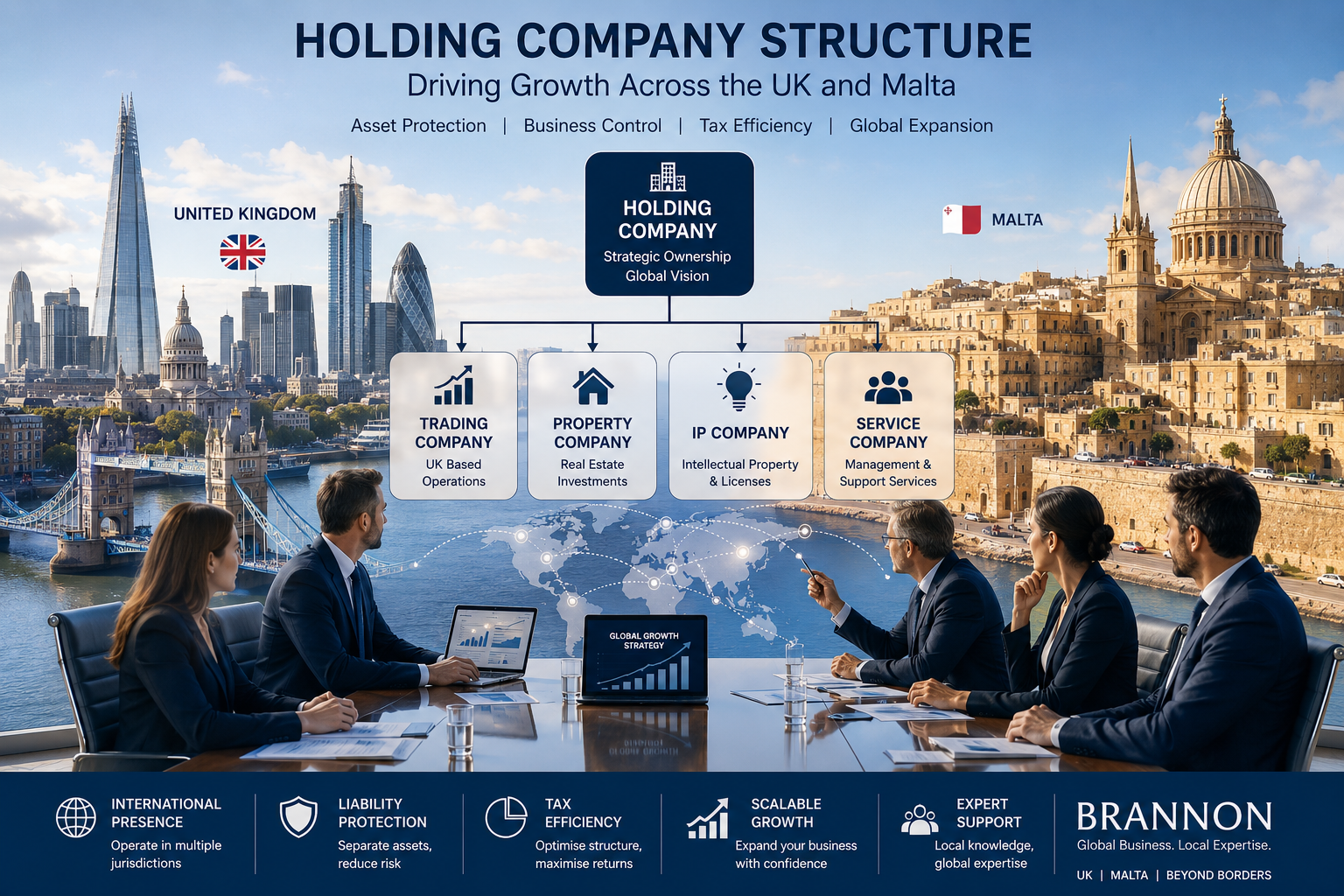
It’s important to distinguish trusts and foundations when structuring shareholdings: they differ in legal personality, governance, asset protection, tax treatment and succession consequences, so choice affects control, transparency and fiduciary duties. This article compares operational mechanics, regulatory regimes and practical considerations to help owners, advisors and directors choose the most suitable structure.
Key Takeaways:

- Governance and control: trusts vest legal title in trustees who manage shares for beneficiaries, offering high flexibility; foundations have separate legal personality with a council/board enforcing the founder’s objects, better suited to formal corporate governance and long-term succession.
- Asset protection and succession: foundations often provide clearer separation of assets and perpetual existence for long-term holdco structures; trusts can provide strong protection but effectiveness depends on trustee arrangements and governing law.
- Tax, compliance and cost: tax treatment and reporting vary by jurisdiction; foundations usually carry greater setup and ongoing formalities and costs, while trusts can be cheaper and more adaptable but may face stricter scrutiny in some jurisdictions.
Understanding Trusts
The ownership vehicle must be coordinated with the underlying company. Our guides cover UK, Ireland and Wyoming company formation.
Definition and Key Characteristics
A trust separates legal title (held by trustees) from beneficial ownership (held by beneficiaries), created by a settlor to manage assets under fiduciary duties; trustees owe loyalty, prudence and impartiality, and can hold cash, shares or property. Common uses include succession planning, asset protection and tax structuring, with structures varying by revocability, duration and powers granted to trustees.
Types of Trusts
Discretionary trusts give trustees allocation discretion and are common in family wealth planning; fixed-interest trusts allocate defined shares; unit trusts operate like pooled funds with tradable units; bare trusts vest assets directly in named beneficiaries once conditions are met; charitable trusts support public-benefit purposes and face regulator oversight.
Discretionary trusts often protect assets from creditors and allow income splitting among beneficiaries, but may attract higher trustee-level reporting; fixed-interest trusts simplify tax allocation because beneficiaries have ascertainable entitlements; unit trusts are widely used in investment funds-examples include retail unit trusts and REIT-like structures; bare trusts are efficient for minors’ holdings; charitable trusts must meet registration and governance tests in most jurisdictions.
- Discretionary — flexibility for income and capital distributions, useful where future needs are uncertain.
- Fixed-interest — clarity of entitlement, suits predictable inheritance shares.
- Unit trusts — liquidity and marketability for pooled investments, often regulated as collective investment schemes.
- Bare trust — minimal trustee intervention, beneficiary gains full control at a stipulated age or event.
- Assume that the settlor retains appointment powers or veto rights, which can alter tax and control outcomes.
| Discretionary | Trustees decide distributions; common in family succession and creditor protection |
| Fixed-interest | Beneficiaries hold defined shares; used for clear inheritance divisions |
| Unit trust | Units represent proportional interests; used for collective investments and funds |
| Bare trust | Beneficiary entitled to capital/income when conditions met; simple nominee arrangements |
| Charitable trust | Established for public benefit; subject to charity law and regulator reporting |
Legal Framework Surrounding Trusts
Trusts are governed by a mix of common law principles and statute: trustees’ fiduciary duties, statutory investment powers, mandatory record-keeping and anti-money-laundering checks. Registration and tax reporting vary-many jurisdictions require register entries for tax-resident trusts and impose specific filing obligations on trustees or agents.
For example, the UK’s Trust Registration Service requires many trusts to register for tax purposes and expanded its scope in recent years; several common-law jurisdictions have codified trustee duties and powers (e.g., modern Trustee Acts), while the U.S. relies on state statutes and reforms such as variations of the Uniform Trust Code to address decanting, modification and trustee investment powers. Non-compliance can trigger audits, penalties and loss of intended tax treatment, so trustees routinely appoint professional administrators for complex shareholding structures.
Understanding Foundations
Definition and Key Characteristics
Foundations are autonomous legal entities created by a founder who dedicates assets to a defined purpose, often with no members; they hold a separate patrimony, operate through a governing council or board, and balance fiduciary duties to beneficiaries with the foundation’s stated purpose, frequently allowing perpetual existence and centralized asset management for succession, philanthropy, or corporate structuring.
Types of Foundations
Most jurisdictions recognise 2–3 principal types: private (family or beneficiary-focused) foundations for succession and asset protection, public/charitable foundations for philanthropy and grant-making, and commercial or corporate foundations used as holding vehicles or for business-related purposes, each differing in governance, tax treatment, and disclosure obligations.
- Private foundations: commonly used for intergenerational planning and concentrated shareholding control.
- Charitable foundations: often qualify for tax benefits and must meet public-benefit tests in many states.
- Corporate or commercial foundations: serve as holding entities for group shares or as an operating business vehicle.
- After registration and initial capitalization, ongoing governance and reporting obligations typically follow.
| Private foundation | Family succession, concentrated shareholding, bespoke governance rules |
| Charitable/public | Grant-making, public-benefit requirements, potential tax exemptions |
| Corporate foundation | Shareholding vehicle, CSR activities, can hold group assets |
| Hybrid/commercial | Active investments or trading permitted in some regimes with stricter oversight |
| Jurisdiction examples | Common choices include Malta, Panama, Liechtenstein and other civil-law regimes |
Private foundations are frequently structured to retain voting control over shares while segregating economic benefits for beneficiaries; typical governance models use a council of directors, often 2–5 members, with founder influence preserved through reserved powers or protector roles, and practical examples include family foundations holding 100% of a private company’s shares to manage succession while distributing dividends to beneficiaries under defined rules.
Legal Framework Surrounding Foundations
Foundations are governed by statutory foundation acts or civil-law codes that require a constitutive instrument, registration in many jurisdictions, designated governance bodies, and compliance with corporate and tax law; transparency and AML rules increasingly affect beneficiary disclosure and reporting, and penalties for non-compliance can include fines or loss of legal privileges.
- Constitutive deed or charter: sets purpose, assets, and governance mechanics.
- Registration: many states require entry in a public registry or supervisory registry.
- Supervision and reporting: annual accounts, audits, or supervisory authority oversight in several jurisdictions.
- After establishment, AML and beneficial ownership rules often mandate additional disclosures and ongoing compliance.
| Constitutive document | Deed/charter specifying purpose, assets, beneficiaries, and governance |
| Registration | Public or supervised registry required in many countries |
| Governance | Board/council, optional protector, fiduciary duties enforceable by law |
| Reporting | Annual accounts, audits, and filings vary by jurisdiction |
| Tax and AML | Tax treatment varies; post-2018 AML measures increase transparency obligations |
Recent regulatory trends show tighter cross-border supervision: for example, EU member states have expanded beneficial ownership rules and impose regular reporting cycles, while non-EU jurisdictions have adopted similar AML standards; pragmatically, sponsors should expect registration timelines measured in weeks to months, potential requirements for resident directors or local agents, and jurisdiction-specific tax elections that materially affect the foundation’s utility as a shareholding vehicle.
Comparative Analysis: Trusts vs. Foundations
Comparative Overview
| Trusts Legal form: equitable arrangement (no separate legal personality in many jurisdictions). Control: trustee holds legal title, beneficiaries hold equitable interests; settlor influence via powers/letters of wishes. Duration: often limited by perpetuity rules (commonly 80–125 years or subject to local dynasty-trust regimes). Typical uses: estate planning, confidentiality, creditor planning. Common jurisdictions: Cayman Islands, BVI, Delaware, South Dakota. |
Foundations Legal form: separate legal entity under civil-law regimes. Control: governed by council/board per charter; founder may be beneficiary but formal powers are codified. Duration: can be perpetual in several jurisdictions. Typical uses: family governance, philanthropic structures, shareholdings with voting control. Common jurisdictions: Liechtenstein, Panama, Jersey, Gibraltar. |
| Formality & Governance Trusts require trustee appointments, trust deed, and fiduciary record-keeping; flexibility to tailor powers but greater reliance on trustee discretion. |
Formality & Governance Foundations require formal charter/bylaws, registration and a council; changes require formal amendments and board resolutions, increasing predictability. |
| Privacy & Transparency Trusts often offer high initial privacy offshore but face increasing disclosure (CRS, beneficial ownership registers). Courts may scrutinize beneficial ownership. |
Privacy & Transparency Foundations’ registers vary by jurisdiction; some require public filings, others keep founder/beneficiary details private subject to international transparency rules. |
| Asset Protection Protection depends on timing of transfers, fraudulent-transfer lookbacks (commonly 2–6 years) and settlor retention of powers; effective when transfers are arm’s‑length and properly documented. |
Asset Protection Separate legal personality often makes assets bankruptcy-remote, but protection weakens if founder retains de facto control or assets are commingled; choice of jurisdiction matters. |
| Tax Treatment Varies: trusts can be transparent (taxed to beneficiaries) or opaque (taxed as separate taxpayer). Specific tax charges (e.g., UK ten-year trust charge up to 6%) may apply. |
Tax Treatment Foundations typically taxed as entities unless local law provides exemptions for non-commercial/private foundations; treaty access and substance rules influence outcomes. |
Ownership and Control Dynamics
Trusts vest legal title in trustees who exercise fiduciary duties while beneficiaries hold equitable interests; settlors influence succession through reserved powers, letters of wishes or protector roles. Foundations centralize ownership in a council or board under a charter, making control more formalized for shareholdings and enabling clearer voting block strategies-for example, a three-member foundation board can hold 100% of voting shares while beneficiaries receive economic entitlements.
Asset Protection Considerations
Foundations often provide stronger separation because they own assets in their own name and can be structured as bankruptcy-remote entities, but effectiveness depends on independent governance and jurisdictional law; trusts can protect assets if transfers precede creditor claims and avoid retention of settlor control, noting fraudulent-transfer lookbacks typically span 2–6 years in many systems.
More detail: courts probe the substance of transfers-if a founder keeps exclusive control, courts may recharacterize transfers and attach assets. Practical safeguards include using independent directors/professional trustees, maintaining separate bank accounts, documenting commercial consideration for transfers, and observing waiting periods before relying on protection; jurisdictions with strong foundation statutes (e.g., Liechtenstein, Panama, Jersey) tend to produce more predictable enforcement outcomes.
Tax Implications and Benefits
Trusts can be tax-transparent (income taxed to beneficiaries) or opaque (taxed at entity level), and specific regimes impose periodic or exit charges-UK trusts, for instance, face up to a 6% charge on ten-year anniversaries above the nil-rate band. Foundations are generally treated as separate taxpayers and may face corporate-like taxation unless local exemptions for private foundations apply; treaty access and residency determine rates and reliefs.
More detail: tax outcomes hinge on residency, substance and purpose‑e.g., a Delaware dynasty trust can avoid state income tax if neither grantor nor beneficiaries are resident, while a foundation without economic substance risks being denied treaty benefits and facing withholding/controlled foreign company rules. Structuring options include distributing taxable income to beneficiaries in lower-tax jurisdictions, locating governing bodies where beneficial tax rules apply, and ensuring documented commercial activity to satisfy BEPS/substance expectations.
Governance Structures
Trust Governance: Roles and Responsibilities
Trustees hold legal title and fiduciary duties to beneficiaries, must follow the trust instrument, manage assets prudently, and provide regular accounting; settlors may appoint protectors with veto powers. Professional trustees are common in cross-border structures to ensure continuity, with typical boards of two to three trustees meeting quarterly and producing annual accounts and distributions in line with trust terms and tax reporting obligations.
Foundation Governance: Board Composition and Duties
Foundations are governed by a board or council-often 3–5 members-responsible for administering the charter, approving budgets, overseeing investments, and ensuring the foundation’s purpose is fulfilled; founders can appoint protectors or supervisory councils, and many jurisdictions require annual filings and audited financials to maintain statutory compliance.
Boards commonly meet four times a year, adopt written investment and conflict‑of‑interest policies, and delegate day‑to‑day management to professional managers; for example, a Liechtenstein or Swiss family foundation will typically separate a management board (executive) from a supervisory council (oversight) to balance control and continuity.
Foundation Board: Roles and Duties
| Role | Duties / Examples |
| Board/Council | Set strategy, approve grants/distributions, sign annual accounts; typical size 3–5 members, quarterly meetings. |
| Founder/Settlor | Defines purpose in charter, may retain appointment rights or a protector role under statute. |
| Protector/Advisor | Veto or appointment powers, dispute mediation; used in 30–40% of wealth‑management foundations for added control. |
Comparative Governance Effectiveness
Trusts offer flexibility and court‑backed enforcement in common-law systems, while foundations provide a corporate governance model with statutory clarity in civil-law jurisdictions; trusts are often preferred for rapid asset transfers and tax-driven planning, whereas foundations excel for long‑term stewardship, philanthropic objectives, and situations requiring an independent governing organ.
Comparative strengths depend on context: trusts give beneficiaries clearer equitable remedies, foundations provide stable institutional governance for multi-generational plans. In cross-border cases, advisors often pair a trust for tax efficiency with a foundation for governance, using joint reporting and synchronized meeting cycles to reduce conflicts and improve transparency.
Comparative Governance: Trusts vs Foundations
| Aspect | Trusts / Foundations |
| Oversight | Court supervision and beneficiary remedies / Statutory regulator filings and internal supervisory councils |
| Decision‑making | Trustees exercise discretionary powers under deed / Board acts per charter with corporate resolutions |
| Transparency | Variable; depends on jurisdiction and settlor documents / Higher due to mandatory filings in many jurisdictions |
| Dispute resolution | Equity courts and trust law precedents / Administrative review plus civil remedies and contractual protections |
Regulatory Compliance and Reporting Requirements
Trusts: Compliance Issues and Reporting Obligations
Trustees must handle tax filings, fiduciary duties, and AML/KYC checks; FATCA (2010) and the OECD Common Reporting Standard force financial reporting of trust income and beneficiaries, and many states now require trust registers (for example, the UK Trust Registration Service for UK‑connected or taxable trusts). Trustees face potential personal liability for reporting failures, mandatory due‑diligence on beneficiaries, and ongoing sanctions and AML screening for cross‑border distributions.
Foundations: Regulatory Oversight and Accountability
Foundations are often treated as legal persons and therefore subject to formal registration, statutory filings, and bookkeeping; jurisdictions such as Liechtenstein, Malta and Cyprus require registration and can impose supervisory oversight, while AML/KYC plus CRS/FATCA reporting obligations apply to foundation controllers and beneficial owners.
Regulatory trends since 2016 have increased scrutiny: Liechtenstein’s framework empowers supervisors to inspect and demand disclosure, Malta and Cyprus mandate annual returns and accounting records, and Panama strengthened foundation oversight after the Panama Papers. Consequently, many jurisdictions trigger independent audits or supervisory reviews when asset levels, distributions or external activity cross regulatory thresholds, and banks routinely require full beneficial‑owner documentation during onboarding.
Differences in Public Disclosure and Transparency
Foundations are generally more registry‑visible than bare trusts: foundations commonly file statutes and governing bodies with a registry, while trusts remain private unless covered by a national trust register or court order, making foundations easier for regulators and counterparties to verify.
Access regimes vary: EU AML directives and OECD pressure have spurred beneficial‑ownership registers, yet public availability differs — company and foundation registers are often searchable, whereas trust registers typically restrict access to competent authorities or those demonstrating a legitimate interest. That difference materially affects M&A due diligence and bank onboarding timelines: registry‑based verification of foundations can take days, while trusts often require lawyer‑certified disclosures and extended KYC processing.
Setting Up Trusts and Foundations
Steps to Establish a Trust
Decide the trust type (discretionary, fixed, protective), appoint a professional or corporate trustee and optional protector, and draft a detailed trust deed defining powers, distributions, and duration. Transfer shares via a share transfer form and update the company register, complete AML/KYC for settlor and beneficiaries, obtain tax/registration numbers where required, and budget for setup fees of roughly $3,000–20,000 and trustee fees $2,000–15,000 annually; typical setup time is 1–4 weeks.
Steps to Establish a Foundation
Select the jurisdiction and foundation form, prepare a charter and bylaws setting objects and governance, appoint the council/board and any protector, provide the required initial endowment or capital, file incorporation documents with the local registry, and obtain tax/beneficial owner registrations. Setup commonly takes 2–6 weeks with professional fees often in the $5,000–25,000 range; annual reporting and trustee/council fees then apply.
Governance practicalities matter: foundations cannot hold beneficiaries’ equitable title the same way trusts do, so bylaws must state objects and distribution mechanisms precisely. For example, Panama private interest foundations often register within days and keep beneficiary data out of public records, while jurisdictions like Liechtenstein or Switzerland impose stricter governance and reporting and may require local representatives or longer lead times; plan for board resolutions, possible share valuations, and jurisdiction-specific tax characterizations before transferring shares.
Common Challenges and Considerations
Anticipate tax residency and substance tests, conflicts between trustee discretion and shareholder control, stamp or transfer taxes on share transfers, and differing beneficiary rights under trust deeds versus foundation bylaws. Expect ongoing AML/CTF filings and beneficial ownership disclosures in many jurisdictions, plus potential valuation disputes and cross-border enforcement issues; these factors often influence whether a trust or a foundation is the better vehicle for a given shareholding structure.
Tax and regulatory risk often drives structure choice: jurisdictions now enforce economic substance rules requiring local directors, office space, and qualified staff for certain activities, and tax authorities (e.g., in the EU, UK, or US) apply residency and CFC/controlled-entity rules that can trigger taxation despite offshore vehicle use. Operationally, mitigate disputes by drafting clear powers and distribution triggers, retaining independent trustees or professional board members, obtaining pre-transfer tax rulings where available, and documenting meetings/minutes to demonstrate real governance and substance.
Trusts and Foundations in Estate Planning
Role of Trusts in Wealth Transfer
Irrevocable and revocable trusts enable transfer of shares outside probate, reducing administrative delay and offering creditor protection; trustees execute succession plans like staggered distributions (for example, 25% at age 30, 50% at 40) and can enforce buy‑sell mechanisms to preserve business continuity. Courts defer to trustee fiduciary duties, and properly drafted trusts can limit estate-tax exposure and provide clear rules for minority beneficiaries and voting rights.
Utilization of Foundations for Philanthropic Goals
Foundations serve as long‑term vehicles for grant‑making and public benefit, allowing families to endow scholarships, community programs, or impact investments while separating legal ownership from operational control; they often provide perpetual existence, formal governance through a council or board, and tax advantages for donors in many jurisdictions, making them effective for legacy philanthropy and reputational stewardship.
Operationally, private foundations in the U.S. must meet a minimum annual distribution of about 5% of assets, which shapes spending policy and investment strategy; many families combine a foundation holding company and a trust so the foundation retains voting control of operating shares while the trust provides income to beneficiaries, and structures often include a protector, investment committee, and reporting obligations to meet both regulatory and philanthropic objectives.
Tailoring Shareholding Structures to Individual Needs
Combining trusts, foundations, and share classes allows customization: a holding company whose economic shares sit in a trust can provide beneficiary income while a foundation holds voting shares to ensure continuity; planners weigh liquidity needs, tax residency, minority protections, and governance-using shareholder agreements, staggered distributions, or class A voting versus class B economic shares to reflect each family’s priorities.
Practical techniques include issuing dual share classes (voting vs economic), embedding put/call options tied to death or incapacity, and specifying dividend policies to provide cash flow without transferring control; cross‑border families should map double‑tax treaties and residence rules, and often appoint professional trustees or a foundation council to manage conflicts, citing real cases where a foundation retained 60% voting control while trusts provided phased beneficiary payouts for three generations.
Case Studies: Successful Use of Trusts
Owners should review HMRC trust guidance, the FATF beneficial-ownership standards and the OECD tax-transparency resources.
- Case 1 — Singapore family trust (2016): A discretionary family trust was established to hold 65% of a manufacturing SME. Outcome: probate avoided, control retained through trustee-delegated voting, and an estimated estate tax exposure reduction of ~20% on a S$28M asset pool over two generations.
- Case 2 — Offshore asset protection (Cayman, 2018): An offshore discretionary trust received US$12.5M in liquid securities pre-litigation. Result: creditors’ claims were extinguished after courts recognized the bona fide transfer; beneficiaries preserved 100% of trust corpus.
- Case 3 — VC/unit trust vehicle (Delaware, 2019): A unit trust structure aggregated capital from 48 investors, managed US$250M AUM across 120 portfolio companies. Outcome: simplified profit distribution, 12% higher IRR retention due to trustee-level tax pooling.
- Case 4 — Cross-border holding trust (Jersey, 2020): EU-based family moved a 40% stake in a UK-listed business into a Jersey trust. Outcome: restructured dividends and reduced withholding tax leakage by ~€1.8M over three years while maintaining voting alignment.
- Case 5 — Litigation shielding (Australia, 2017): A spendthrift trust protected A$3.2M in family assets during five separate creditor actions. Outcome: only pre-trust transfers within the statutory look-back period were challenged; the bulk of assets remained insulated.
- Case 6 — Employee share trust (Switzerland, 2021): A centralized trustee-held employee share plan acquired 2.5% of equity for incentives. Outcome: employee retention rose 18% in 24 months and dilution was managed centrally without altering shareholder registry complexity.
Trusts in Family Businesses
A family used a discretionary trust to hold 70% of a mid-market business, allowing trustees to set a formal dividend policy and approve executive appointments. That arrangement preserved operational control for senior family members, enabled staged succession transfers (30% to next-gen over five years), and reduced intra-family disputes by codifying decision rules and distribution standards.
Trusts for Asset Protection
Anonymized case data shows discretionary and spendthrift trusts prevented loss of over US$15M across multiple disputes when transfers occurred outside statutory clawback windows and were supported by independent trustee governance. Trustees’ discretionary powers and ring-fencing clauses effectively separated beneficial ownership from creditor reach.
More detail: effective asset-protection trusts combine several elements-clear settlement timing, independent trustees, spendthrift provisions, and choice of a protective jurisdiction (e.g., Cayman, Jersey, Nevada). Fraudulent-transfer rules and statutory look-back periods matter: in jurisdictions with two- to four-year clawback windows, transfers older than the window are rarely set aside. Proper documentation and arm’s‑length funding (receipts, valuation) reduce attack vectors; empirical firm data indicates properly structured trusts face successful creditor challenges in fewer than 10% of contested matters.
Trusts as a Tool for Succession Planning
Trusts facilitated phased succession in a multi-generation owner group by transferring economic benefits immediately while preserving voting control via trustees and a family charter. That approach enabled a planned 40% gradual transfer of economic interests over seven years, smoothing tax timing and maintaining business continuity.
More detail: practical succession trusts often use staggered distribution schedules, protective covenants, and a protector role to balance successor readiness with founder intent. For example, a common model keeps 60% voting influence with trustees while allocating 50–70% of distributable income to new generations as they meet performance or education milestones. Tax modeling typically shows deferral or smoothing benefits; in one modelled scenario, family tax liabilities were spread over three tax periods, reducing peak-year exposure by approximately 25% versus an outright transfer.
Case Studies: Successful Use of Foundations
- Case Study 1 — Nordic Medical Foundation (est. 1989): endowment €9.2bn; holds 28% of PharmaCo voting shares; receives ~€360m in annual dividends and allocates €150m/year to long-term R&D grants, supporting 420 research positions across five countries.
- Case Study 2 — Family Manufacturing Foundation (est. 2002): foundation owns 62% of the operating group; group EBITDA €120m (FY2023); dividends to the foundation averaged €30m/year over 2019–2023, with 40% retained for growth and 60% funding intergenerational family scholarships and capital upgrades.
- Case Study 3 — Retail Holding Foundation (Stichting model, est. 1975): controls 100% of holding company with consolidated revenues ~€40bn; foundation grant program distributes €800m annually while maintaining a strategic reserve of €6.5bn to secure independence and reinvestment capacity.
- Case Study 4 — Social Enterprise Catalyst Foundation (est. 2014): endowment €120m; equity stake 30% in a dedicated impact holding; deployed €15m in catalytic equity/loan facilities to 23 social enterprises, leveraging €45m in co-investment (3:1 leverage) and creating 1,200 sustainable jobs.
- Case Study 5 — Tech Founder Foundation (est. 2010): structured to hold 15% voting control and c.40% economic interest via holding vehicle; provided €50m patient capital for platform scaling and successfully resisted a €1.2bn hostile bid in 2018, preserving long-term strategy.
Philanthropy through Foundations
One foundation from the list channels a stable dividend stream into grantmaking: with a €9.2bn endowment and €360m annual dividends, it commits €150m yearly to medical R&D‑about 42% of its grants-funding targeted fellowships, clinical trials, and open-data platforms that accelerate translational research.
Foundations in Supporting Social Enterprises
Several foundations use equity and concessionary finance to scale impact: the Social Enterprise Catalyst deployed €15m across 23 ventures, leveraging an additional €45m in private co-investment (3:1), demonstrating how foundation capital can unlock significantly larger funding pools for mission-driven firms.
That model combines small equity tickets (€200k-€1.5m) with repayable grants and technical assistance; by taking first-loss positions and standardizing outcome metrics, the foundation reduced perceived investor risk, attracted commercial partners, and increased portfolio follow-on funding by 180% over five years, while tracking job creation and social outcome KPIs.
Foundation Governance Success Stories
Governance reforms within foundation-owned groups have stabilized leadership and clarified succession: the Family Manufacturing Foundation adopted fixed board terms, an independent chair, and a legacy charter, cutting intra-family disputes and enabling three orderly leadership transitions without asset fragmentation.
More detail shows the mechanics: instituting a five-member independent advisory panel, publishing a 10-year capitalization policy, and linking CEO incentives to both financial and ESG targets improved performance metrics-return on invested capital rose 2.1 percentage points over four years-and ensured dividends remained predictable for philanthropic programs while protecting operational autonomy.
Jurisdictional Variations
Trusts Across Different Jurisdictions
England and Wales rely on express trusts and equitable remedies for shareholder protection, while the U.S. landscape varies by state: Alaska (first DAPT statute, 1997) and Delaware now permit domestic asset‑protection trusts with directed trust options. Offshore centers such as the Cook Islands and Nevis remain popular for their claimant‑unfriendly limitation periods and litigation hurdles. Tax‑information regimes (FATCA, CRS) and treaty networks materially affect anonymity, treaty benefits and the practical effectiveness of any trust-based shareholding structure.
Foundations by Country
Civil‑law jurisdictions treat foundations as separate legal persons able to own shares directly; typical examples include Liechtenstein (well‑developed stiftung practice), Panama private interest foundations and EU options in Malta and Cyprus. These vehicles usually require a council or board, can be used for succession and governance, and often impose registration or filing obligations-affecting confidentiality and access to double‑taxation treaties compared with trust structures.
For illustration, a family could centralize €200 million of corporate and portfolio holdings into a Liechtenstein foundation with a three‑member council and a protector to manage succession and trustee oversight under a supervisory regime. By contrast, a Panama private interest foundation might be chosen to hold a single operating company with minimal formation capital and greater privacy, but it may face limited treaty relief and increased scrutiny under CRS reporting.
Trusts and Foundations in International Context
Cross-Border Issues with Trusts
Conflicts of law often arise when common-law trusts operate across civil-law states that lack trust doctrine; enforcement can require bespoke recognition steps. FATCA (2010) and the OECD CRS (adopted 2014, rolled out from 2017) expanded reporting of trust beneficiaries and income. UK measures since 2016 (PSC register) and the 2020 HMRC trust register increased disclosure, creating compliance and tax residency risks for settlors and trustees moving assets across borders.
International Foundations: Opportunities and Challenges
Foundations in jurisdictions such as the Netherlands (stichting), Liechtenstein and Panama offer corporate-like governance, perpetual succession and use in M&A or family governance, while presenting challenges around tax residency, substance rules and rising AML scrutiny. They often provide better board-controlled shareholding structures than trusts but require clearer statutory frameworks to be accepted across EU and civil-law regimes.
Foundations benefit from legal personality and can act as corporate shareholders without the same fiduciary layering of trusts; for example, Dutch stichtingen are frequently used as defensive holdco vehicles in takeover scenarios. Increased EU AML directives and OECD BEPS actions now demand demonstrable substance-local directors, premises and economically significant activity-so foundations in low-substance jurisdictions face higher denial or tax-adjustment risk.
International Foundation Examples
| Netherlands (Stichting) | Widely used as a non-distributive holder for shares and anti-takeover mechanisms; flexible governance and recognized across EU markets. |
| Liechtenstein | Long history of private foundations with robust asset-protection features; recent reforms increased transparency and substance expectations. |
| Panama | Flexible formation and low upfront cost; scrutiny rose after 2016 Panama Papers, prompting stronger registration and due diligence requirements. |
Comparative Analysis of Global Trends
Regulators are converging on transparency and substance: trust registers, UBO disclosure and automatic information exchange have pressed both vehicles toward greater visibility. Foundations gain traction for corporate governance and M&A uses, while trusts remain preferred for bespoke estate planning; cross-border tax disputes and treaty-shopping scrutiny have increased since the Panama Papers (2016).
Practical effects differ by trend: foundations face formal substance tests to serve as tax residents, whereas trusts encounter challenges proving beneficial ownership across civil-law jurisdictions. Market practice shows more transactional use of foundations in continental Europe and growing trust restructuring in Anglophone wealth centres to meet CRS/FATCA and BEPS compliance.
Comparative Trends and Impacts
| Transparency & Reporting | CRS/FATCA and post-2016 reforms pushed trust and foundation disclosure; many jurisdictions added UBO or trust registers increasing administrative burden. |
| Substance Requirements | OECD BEPS and EU rules require local directors, premises and economic activity; low-substance entities face tax denial or recharacterization. |
| Use Case Divergence | Foundations favored for corporate shareholding and governance (e.g., Dutch stichting); trusts retained for bespoke succession and asset flexibility. |
| Enforcement & Litigation | Cross-border enforcement remains uneven: civil-law courts may not fully recognize trusts, while foundations with statutory personality generally enjoy clearer standing. |
Future Trends in Trusts and Foundations
Evolving Legal Landscapes
Regulators are increasing transparency and alignment: the Panama Papers (11.5 million documents, 2016) accelerated adoption of beneficial‑ownership registers and tighter AML rules like AMLD5/6 in the EU, while FATF guidance pressures fiduciaries worldwide. Courts are clarifying equitable doctrines against veil‑piercing, and civil‑law foundations borrow trust techniques (e.g., discretionary benefits, protective clauses), producing hybrid structures that require bespoke governance and updated trust deeds or foundation statutes to withstand cross‑border scrutiny.
Impact of Globalization on Trust and Foundation Structures
Cross‑border families and corporate groups increasingly combine trusts and foundations to match jurisdictional strengths: trusts for fiduciary flexibility in Jersey, Cayman or the UK; foundations for asset segregation in Liechtenstein, the Netherlands or Panama. CRS (OECD) information exchange across 100+ jurisdictions and expanding tax‑transparency regimes force advisors to design structures with clear substance, treaty analysis, and coordinated reporting to avoid unintended tax exposure.
Practical effects include greater use of dual structures-an onshore foundation holding shares of an offshore trust vehicle-to balance succession law, tax treaties and creditor protection. Economic substance rules enacted by many offshore jurisdictions since 2019 require demonstrable local activities (board meetings, qualified staff), shifting service models toward genuine family offices and regional fiduciary hubs (Singapore, Switzerland). Transactional work now demands concurrent tax opinion, substance testing, and operational policies to satisfy multiple regulators during M&A, wealth transfers, or private equity exits.
Technology’s Role in Trust and Foundation Management
Distributed ledger technology, e‑signatures and digital identity are transforming administration: blockchain can provide immutable share registers and audit trails, while e‑ID frameworks (e.g., EU eIDAS) enable remote onboarding and notarization. Pilot projects and vendor reports cite efficiency gains (often 20–40%) in KYC, reporting and document management, prompting fiduciaries to invest in secure, interoperable platforms to reduce manual overhead and accelerate compliance.
Tokenization of shareholdings is a concrete use case: private companies and fund managers are experimenting with tokenized equity to streamline transfers and enable programmable shareholder rights via smart contracts. Jurisdictions such as Malta and some Swiss sandboxes have clarified treatment of token instruments, and U.S. states like Delaware explored blockchain filings to support digital records. Nevertheless, legal recognition of smart contracts, custody of cryptographic keys, cross‑border data privacy and cyber resilience remain active issues; governance models now routinely combine traditional trustee duties with IT risk frameworks, insured key‑management solutions, and layered access controls to reconcile legal obligations with technological capabilities.
Common Misconceptions
Myths Surrounding Trusts
Trusts are often portrayed as automatic tax shields and absolute privacy vehicles, but grantor-trust rules in the U.S., Canada and Australia can tax settlor-retained powers to the settlor; courts have disregarded trusts where the settlor acted as owner. Financial institutions and tax authorities now demand FATCA/CRS disclosures, and trustees face fiduciary duties with potential removal or personal liability for breaches, so structure and documentation matter more than folklore.
Myths Surrounding Foundations
People assume foundations are just trusts with a different name or that they always carry tax-exempt status. In reality, foundations are legal persons in many civil-law regimes and can own shares, enter contracts and be governed by statutes; tax treatment depends on purpose and jurisdiction, so a private family foundation does not automatically enjoy charitable exemptions.
More detail shows practical differences: foundations typically have a founder, council or board and optionally a protector, providing corporate-style governance and continuity-used extensively in Liechtenstein and Panama for succession and asset-holding. Unlike discretionary trusts where trustees hold legal title, a foundation’s assets belong to the foundation itself, simplifying shareholdings and corporate participation, but regulators will examine substance, e.g., beneficiaries’ rights and control mechanisms, when assessing tax and regulatory treatment.
Clarifying Legal and Operational Misunderstandings
Control should not be conflated with legal ownership: settlors who retain appointment, veto or revocation powers risk being treated as owners for tax and creditor claims; similarly, foundation council members can incur duties and liabilities. Cross-border recognition varies-Hague Trusts Convention (1985) aids recognition among signatories-so operational compliance, registration and AML/KYC remain decisive.
On operational clarity, courts and tax authorities apply substance-over-form tests and will look at who actually controls distributions, beneficiary access, and governance records; documented meeting minutes, independent fiduciaries, periodic audits and clear distribution policies reduce challenge risk. Professional trustees and licensed foundation service providers often require audited accounts and annual returns-failure to meet those standards has led in multiple jurisdictions to recharacterisation, penalties, or piercing of asset protection attempts.
To wrap up
For wider international business and market coverage, readers can also follow Michael Schmitt, Trider and the Malta Business Report.
From above, trusts and foundations each offer distinct benefits for shareholding structures: trusts provide flexible control and beneficiary-focused distribution, while foundations deliver statutory permanence, clearer governance and enhanced asset protection. Choice depends on tax and regulatory environment, desired control, reporting transparency and succession goals; professional governance and tailored drafting determine effectiveness in aligning ownership, management and liability protection.
FAQ
Q: What are the fundamental legal differences between a trust and a foundation when used to hold shares?
A: A trust is an arrangement in which a trustee holds legal title to assets (including shares) for the benefit of beneficiaries; it is a personal, equitable construct without separate legal personality in most common-law jurisdictions. A foundation is a separate legal entity, typically established by charter and bylaws, that owns assets in its own name and is governed by a council or board; it is common in civil-law and hybrid jurisdictions. These differences affect formalities (foundation charters vs. trust deeds), registration and public-record requirements, and how courts treat ownership disputes. Because a foundation is an entity, it can enter contracts, sue and be sued directly; a trust relies on trustees to act on behalf of beneficiaries and can raise additional considerations for enforceability in cross-border contexts.
Q: How do control rights and governance differ between trusts and foundations for shareholding structures?
A: In a trust, control is exercised through the trustee who must follow the trust deed and beneficiary interests; the settlor can retain influence through reserved powers, letters of wishes, or appointing a protector, but overly retained control risks recharacterisation. In a foundation, governance is exercised by a council or board under the foundation charter and bylaws; the founder can define objectives and beneficiary classes but typically cedes direct day-to-day control to the foundation organs. Foundations usually offer clearer, entity-based governance mechanisms (board resolutions, supervisory bodies), while trusts provide greater flexibility for bespoke distributions and discretionary management. For shareholding, both can implement share transfer restrictions, voting policies and nominee arrangements, but a foundation’s corporate-like governance often makes shareholder engagement and creditor interactions more straightforward.
Q: What are the typical tax and reporting implications for holding shares through a trust versus a foundation?
A: Tax outcomes depend on residence of the vehicle, beneficiaries, and the underlying company: trusts are frequently treated as transparent or opaque for tax purposes depending on local rules, which can lead to taxable events at the beneficiary or trustee level; foundations are often treated as separate taxpayers if resident. Both vehicles can trigger reporting obligations under CRS/FATCA and local anti-money-laundering regimes; some jurisdictions require foundation registration or public registers of controllers while many trusts now face enhanced beneficial ownership disclosure. Substance requirements, controlled foreign company rules, and anti-avoidance provisions can neutralize expected tax benefits, so structure, governance, and economic activity must align with the chosen tax profile. Professional tax analysis is necessary, as minor changes in residency or beneficiary composition can materially alter tax exposure.
Q: Which structure offers stronger asset protection for shareholdings, and what limitations should be considered?
A: Both trusts and foundations can provide significant asset protection if properly drafted and supported by jurisdictional choice, timing of transfers, and adherence to formalities; foundations’ status as separate legal persons can make direct creditor claims more complex, while trusts can shield beneficial interests behind equitable ownership. Limitations include fraudulent-transfer rules, insolvency clawbacks, and public policy exceptions-transfers made to defeat known creditors or during insolvency can be set aside regardless of vehicle. Protective features such as spendthrift clauses, discretionary distribution powers, and staggered distributions are available in trusts; foundations can use reserved powers and beneficiary limitation clauses. Protection strength depends on jurisdictional law, how overtly control is retained by founders, and the presence of compelling nexus (e.g., local management and substance) rather than nominal steps.
Q: How should a shareholder choose between a trust and a foundation for succession planning and long-term corporate strategy?
A: Choose based on objectives: use a trust when flexibility, discretionary distributions, and beneficiary-focused estate planning are priorities, especially where trustees must adapt to changing family circumstances; use a foundation when a durable, entity-based vehicle with a formal governance framework, clearer public face, and perpetual or long-term mission is preferred. Consider governance needs (will you need a board with standing authority?), succession mechanics (are beneficiaries fixed or evolving?), tax residency and compliance burdens, cost and administrative capacity, and the legal environment for enforcement of trustee or board duties. Hybrid solutions and protective layers (e.g., parent foundation with underlying trusts, or nominee shareholdings subject to trustee instructions) can combine advantages, but complexity increases compliance risk. Conduct jurisdiction-specific legal, tax, and corporate-governance due diligence before selecting the vehicle and document precise powers, distribution rules, and dispute-resolution mechanisms aligned with the shareholder’s long-term corporate strategy.