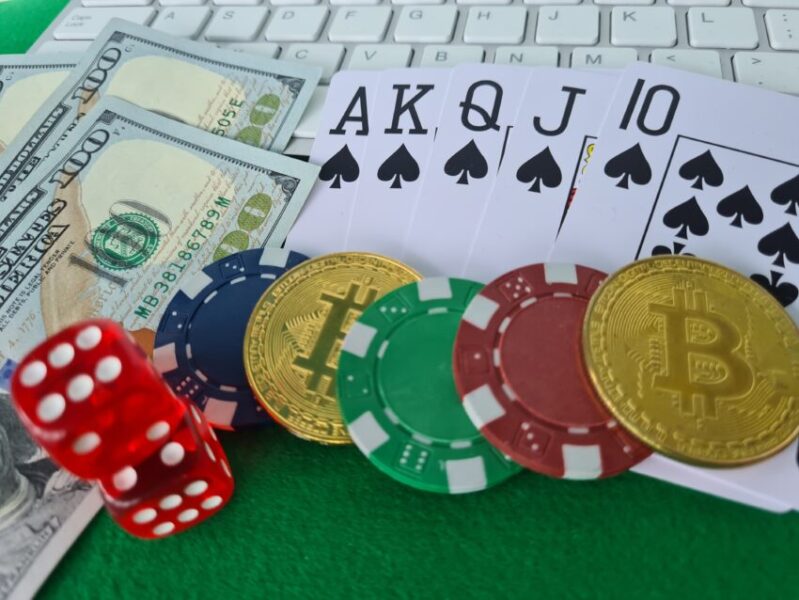
The rise of cryptocurrencies has brought about a revolution in many industries, and gambling is no exception. In recent years, decentralized platforms have begun to reshape the online gambling landscape, ushering in a new era of transparency, security and player autonomy.
By leveraging blockchain technology, decentralized gaming platforms eliminate the need for intermediaries, provide provably fair gaming, and enable greater privacy in transactions. In this blog, we will explore how decentralized platforms are changing the future of crypto gambling and what this means for players and the industry as a whole.
What are decentralized gambling platforms?
Decentralized gambling platforms are online casinos or betting platforms based on blockchain technology where the entire operation — from games to payments — is decentralized. Unlike traditional online casinos that rely on a central authority or company to manage their operations, decentralized platforms are based on smart contracts and distributed networks. This decentralized structure eliminates the need for a middleman and ensures players have more control over their funds and a higher level of transparency.
Key Features of Decentralized Gambling Platforms
- Smart Contracts: Smart contracts automate and enforce the rules of the game, ensuring all outcomes are fair and payments are processed instantly.
- Transparency: All transactions and game results are recorded on a public blockchain, so operators cannot manipulate the results.
- Anonymity: Players can play without revealing their identity as decentralized platforms often enable anonymous cryptocurrency transactions.
- Provably Fair Games: Blockchain-based gambling ensures that games are provably fair, meaning players can verify the randomness and fairness of game outcomes.
The benefits of decentralized crypto gambling platforms
Decentralized gambling platforms offer several advantages over traditional online casinos, especially for players looking for more control and security in their gaming experiences. Here are some of the key benefits:
1. Transparency and fairness
One of the main advantages of decentralized gambling platforms is the transparency they offer. On these platforms, all transactions and game results are recorded on a blockchain, a public and immutable ledger. This means that players can independently verify the fairness of each bet, ensuring that the operator cannot manipulate the results in their favor.
Provably fair games
Provably fair gambling has become a key selling point for decentralized platforms. Using cryptographic algorithms, decentralized casinos provide proof that game results were generated fairly and without manipulation. Players can check this information in real time, which significantly increases trust between players and operators.
2. Player control and autonomy
Traditional online casinos often require players to deposit funds into a central account controlled by the operator. In contrast, decentralized platforms give players full control over their funds. By using smart contracts, players can place bets directly from their crypto wallets and winnings are paid out automatically without the need for a third-party intermediary.
Elimination of the house edge
Some decentralized platforms operate without a traditional “house edge,” meaning players are betting against other players rather than against the casino. This peer-to-peer betting model reduces the operator’s advantage and can result in better odds for players.
3. Increased privacy and anonymity
Privacy is an important concern for many online gamblers, especially in regions where gambling is heavily regulated or restricted. Trusted Gambling Sites Fix this problem by allowing players to play anonymously. Since these platforms use cryptocurrencies for transactions, players are not required to provide personal information such as their name or banking details, improving their privacy and reducing the risk of identity theft.
4. Lower fees and faster transactions
Another advantage of decentralized gambling platforms is that they typically offer lower fees compared to traditional online casinos. Since there are no intermediaries involved in payment processing, transaction fees are significantly reduced. Additionally, because transactions take place on the blockchain, deposits and withdrawals are processed much faster than traditional systems, often within minutes.
Instant payouts
With smart contracts handling the withdrawal process, winnings are instantly transferred to a player’s wallet once the outcome is determined. This eliminates the delays commonly experienced at traditional online casinos, where withdrawals can take several days to process.
The challenges of decentralized gambling platforms
Although decentralized gambling platforms offer many advantages, they are not without their challenges. As this technology continues to develop, there are several hurdles that need to be overcome to ensure the long-term success of decentralized gaming.
1. Regulatory uncertainty
One of the biggest challenges for decentralized gambling platforms is the regulatory landscape. Because these platforms operate globally and often allow anonymous participation, they operate in a gray area when it comes to regulation. Many countries have strict gambling laws, and the decentralized nature of these platforms makes it difficult for regulators to enforce these laws.
The Impact of Regulation on Decentralized Gambling
Regulatory uncertainty could impact the growth of decentralized platforms if governments impose stricter rules or try to block access to these sites. Additionally, the lack of regulation may deter some players from using decentralized platforms as they may feel less protected compared to licensed and regulated traditional casinos.
2. User acceptance and trust
Decentralized gambling platforms are still relatively new and many players may be hesitant to switch from traditional online casinos because they are unfamiliar with blockchain technology. Educating users about the benefits of decentralized platforms and building trust in the technology will be critical to widespread adoption.
Overcome trust issues
While blockchain technology provides transparency, the anonymity and decentralized nature of these platforms can make it difficult for users to identify who is behind the platform. To build trust, decentralized gambling platforms must focus on educating players on how the technology works and highlighting the security and fairness aspects of blockchain-based gambling.
3. Scalability and network congestion
As decentralized gambling platforms become more popular, scalability could become a major issue. Most decentralized platforms run on Ethereum or other blockchain networks, which can be congested during periods of high activity. This may result in slower transaction times, higher fees and potentially impact the user experience.
Scalability solutions
To address these issues, some decentralized platforms are exploring solutions such as Layer 2 scaling, sidechains, or moving to more scalable blockchain networks such as Solana or Binance Smart Chain. These solutions aim to improve transaction speeds and reduce fees to make decentralized gambling more accessible to a larger audience.
The future of crypto gambling on decentralized platforms
Despite the challenges, the future of crypto gambling on decentralized platforms looks promising. As more and more players become aware of the benefits of blockchain technology and decentralized finance (DeFi), demand for decentralized gaming platforms is expected to increase. The ability to offer transparency, lower fees and greater player control is what sets these platforms apart from traditional online casinos.
Integration with DeFi and NFTs
In the future, there may be even greater integration between decentralized gaming platforms and decentralized finance (DeFi) protocols. For example, players could earn interest on their crypto holdings as they play or use decentralized liquidity pools to bet against other players. Additionally, non-fungible tokens (NFTs) could play a role in the gambling ecosystem, offering players unique rewards or experiences.
Expanding the variety of games
As decentralized platforms continue to grow, we can expect a greater variety of games available. In addition to classic casino games, these platforms could introduce more innovative games that take full advantage of blockchain technology, such as tokenized sports betting or multiplayer games that utilize peer-to-peer betting.
Diploma
Decentralized platforms are changing the future of crypto gambling by offering more transparency, player control and privacy than traditional online casinos. Although there are challenges to overcome, such as: Such as regulatory uncertainty and scalability, the benefits of decentralized gaming are likely to drive its further growth. As blockchain technology advances, decentralized platforms will continue to evolve, offering players new and innovative ways to play in a safe, fair and autonomous environment.