


Search engine optimized blogging is all about volume, keyword volume, specific article volume, and most importantly, blog post volume in general. So the most difficult aspect here is where to start. How do I create SEO rich blog topics, regularly enough to keep a blog alive and thriving?
So if you have the desire to start the next big blog but don’t know where to start, or even if you’re a veteran who’s in a creative slump, it might be helpful to take some time and to refresh the topic creation.
Because you can’t get followers without articles, and you can’t have articles without killer topics.
1. Find your niche
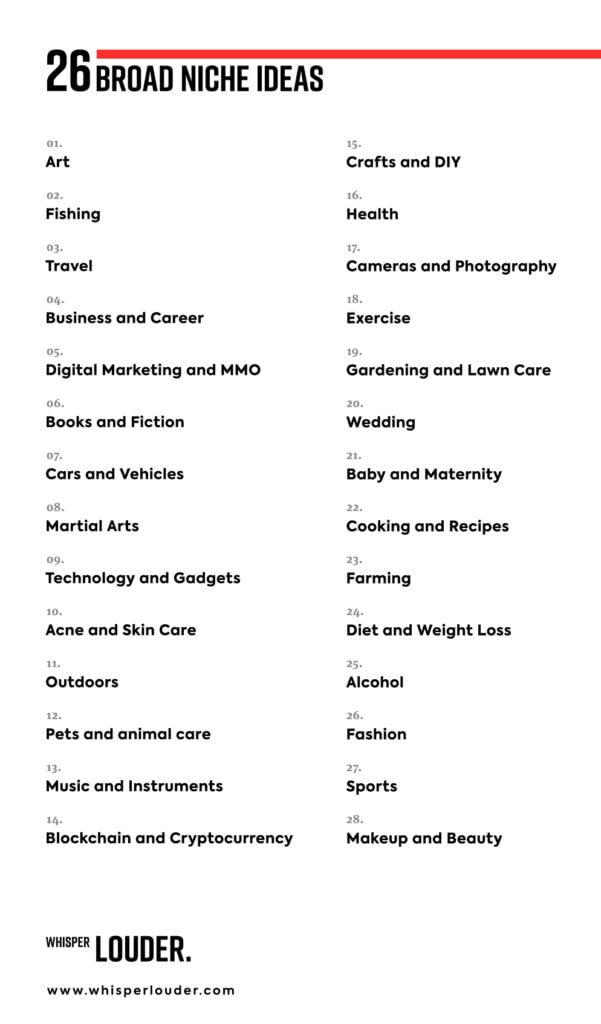
When thinking about what topics you want to write about, there are a few things you need to figure out first. The most important thing is what niche you want to conquer with your blog. There are quite a few blogs out there, and you need to narrow your focus to a niche if you want to get noticed.
Choose something that is close to your heart
Maybe you have a hobby or passion project you’ve been working on. You may also turn out to be an expert in a particular field. Take the things that already interest you and build on them.
When you anchor yourself in something that interests you deeply, not only will you stay engaged, but so will your readers. This is because readers can see that the author of what they are reading also enjoys the topic.
What are others passionate about?
When looking for topics for blogs and blog posts in general, you want to think about what your audience actually wants to read. It can be difficult to get people sufficiently interested in your blog. Getting them to return can be even more difficult.
Choosing a hobby as a niche is one of the most popular and successful ways to reach an engaged audience. When people are passionate about something, they are more likely to search for content about it and return to the content they like.
Remember, an engaged audience leads to clicks and ultimately advertising revenue.
2. See what is in demand
There are different ways to find out what your potential readers are interested in. An excellent place to start is by examining the questions your audience is asking.
Questions are one of the most frequently searched terms on the Internet. Answering the most frequently asked questions as best you can is a great way to rise in the SEO rankings. “How do you find these answers?” you may ask.
Google Trends is a great starting point for finding in-demand topics. Keyword tools are also another alternative. First, search for a popular keyword and see what words it searches for. This will give you a good idea of what questions are asked most frequently.
Optimizing your content according to reader searches will help you reach a larger organic audience. This can also help you make your themes much more unique and increase the chances of them catching the attention of a new viewer.
3. Steal
There’s a saying: “Good artists borrow, great artists steal.” Of course, a lot of sensitivity is required here, but there’s no shame in being inspired by the people around you.
Taking a successful idea that you like and choosing to emulate it is a great way to accompany any waves of success you already have. After all, nothing is truly original; It’s more about how you write it and less about what you write here.
A great way to take this even further is to take these already successful ideas to the next level. “5 recipes that will take your barbecue to the next level” might sound a lot better if it read “10 recipes that will make your summer barbecue the event of the summer.”
Play around here and have fun with it. Building on what already exists is a good place to start.
Bonus: Learn how to repurpose old blog content for social media
4. Store ideas
This may seem like a no-brainer, but it’s a great habit to get into when you’re in a crisis or just starting out. Creating a database of topic ideas can go a long way in content creation.
Creating a database
Creating a database can be done using an Excel spreadsheet and can be designed however makes sense for you. Add keywords and sub-keywords to your topics and you’ll have an extremely helpful tool for creating SEO-rich blog topics in no time.
brainstorming
Another good habit is to take the time to brainstorm. This process can be slow at first, but once you find yourself updating your spreadsheets regularly, you’ll be surprised at how many topics you’ve collected.
5. Crowdsource your audience
Sometimes the group that knows the most about what your audience wants to read about is your audience itself. A passionate audience will be happy to share with you topics and topics they are interested in.
At the end of your articles, you can include a call to action and a way to get in touch. The prompt might be something like, “I’d love your feedback!” Is there something you’d like to see more of, or a different topic entirely?”
If they tell you they want to see something specific, you may want to believe them. Whatever it is, remember to stick to your voice and have fun with it.
For those in the back
Who knew how much money could be put into developing a blog topic? From finding competitive blogs to optimizing your content for search engines, there are countless resources available to an aspiring blogger.
Once many of these steps are done a few times, it will become second nature and you’ll be putting down blog topics like it’s nothing. Make it a routine and nothing can stop you from becoming a blog topic machine.

